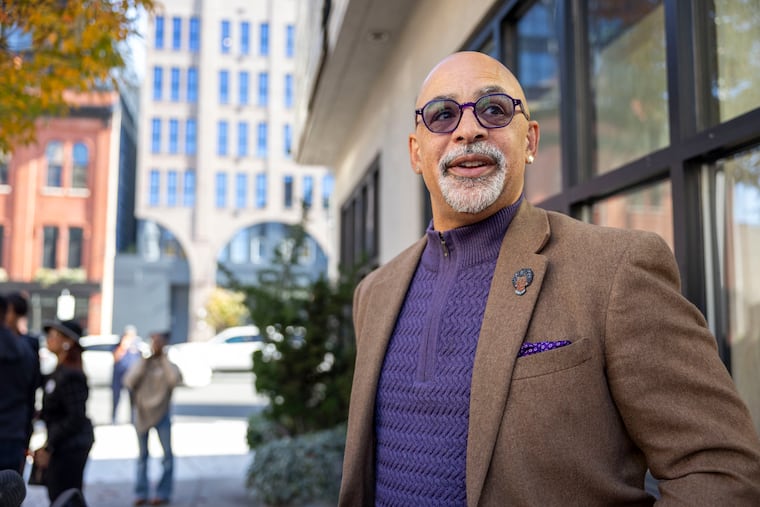
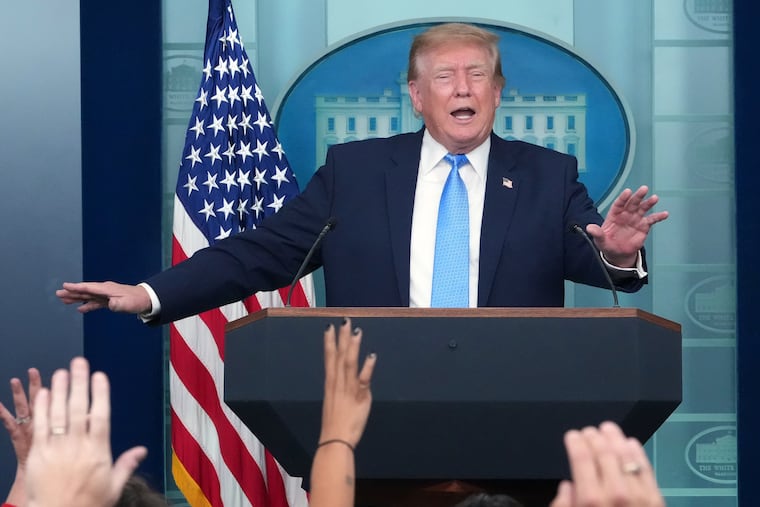
The surprising new face of the MAHA-MAGA alliance: Stephen Miller
The new White House chief of staff has spoken forcefully about his connection to the MAHA movement, saying last year that he was shocked to “learn how filled our whole world is with toxins.”
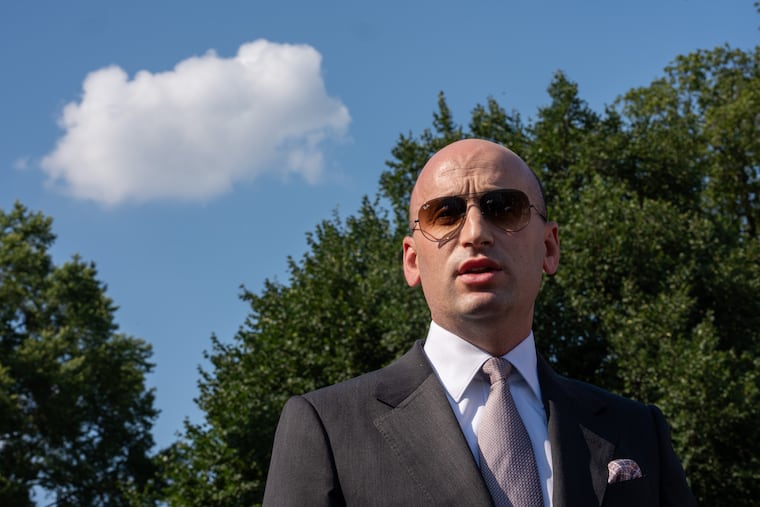
Two weeks ago, Health Secretary Robert F. Kennedy Jr. went to the home of one of President Donald Trump’s most loyal aides, Stephen Miller. The two men and their wives chatted about their shared enthusiasm for a movement whose supporters had grown increasingly disillusioned: Make America Healthy Again.
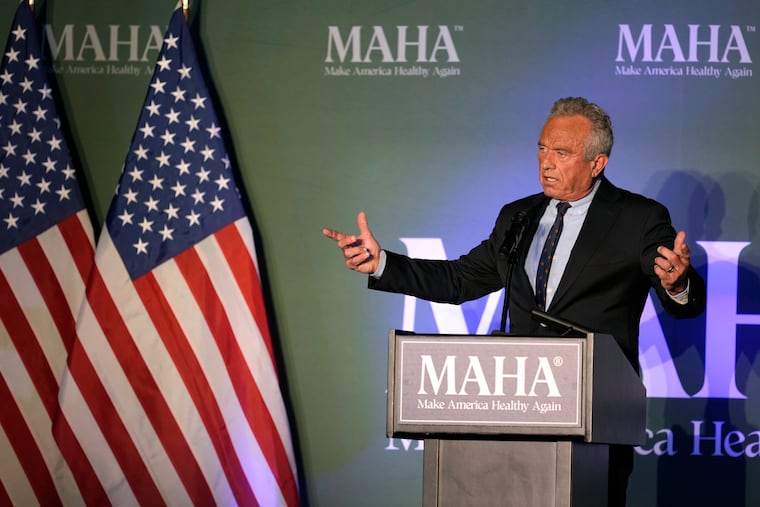
“During that dinner, [Miller] said to me, ‘I’m the only one in the administration who’s more radical than you are on MAHA,’” Kennedy recalled at an event last week hosted by MAHA Action, an advocacy group. Kennedy told the activists that Miller, who had been focused on the administration’s controversial immigration crackdown for the past two years, wanted to make MAHA his “top priority” after the midterms.
Now Miller, Trump’s new chief of staff, has the power to transform that private pledge into a reality. His wife, Katie Miller, whom he has described as a “MAHA mom,” previously worked in the Trump administration and has hosted a podcast tackling topics including concerns regarding ultra-processed foods, vaccines, and baby formula ingredients. Miller has spoken forcefully about his connection to the MAHA movement, saying at a White House event last year that he was shocked to “learn how filled our whole world is with toxins.”
Though the MAHA movement was born out of Trump and Kennedy’s 2024 political alignment, its support for the administration was shaky leading into this year’s midterms. Prominent supporters had openly expressed frustration over the lack of progress on some of their priorities, such as cracking down on ingredients in the nation’s food supply, tighter regulations over pesticides, and altering vaccine recommendations.
But Miller’s ascension, which drew swift condemnation from Democrats and some public health experts, has been viewed as a boon for the movement. Kennedy has seemed invigorated by Miller’s promotion, said one person familiar with the matter. He touted it at a staff retreat at Camp David last week, according to a Department of Health and Human Services official.
It’s “the best possible thing to happen to Bobby,” said another person familiar with the matter, who, like others interviewed for this article, spoke on the condition of anonymity to describe private conversations and internal matters.
Miller’s new role comes at a crossroads for the administration after Democrats’ sweeping electoral victory, which has prompted Republican finger-pointing over the causes of the wipeout.
House Minority Leader Hakeem Jeffries, the New York Democrat in line to be the next speaker, called Miller a “stone-cold racist” and said he had “zero interest in working with” him. Some public health experts and Democratic-aligned groups blasted the administration’s treatment of immigrants and its deportation campaign, and said they believe Miller’s selection will deepen the rift between the public health community and MAHA supporters. They have particularly expressed concern over Trump-backed efforts to change federal vaccine recommendations, saying such moves could leave children more exposed to infectious diseases.
“Stephen Miller’s appointment is a signal that the administration plans to double down on their reckless anti-vaccine agenda,” said Shaughnessy Naughton, president of 314 Action, which helps elect Democrats with a background in science.
Miller has credited his wife, who helped with Kennedy’s contentious Senate confirmation battle, with educating him about MAHA issues after the births of their children. He has expressed concerns about consumption of ultra-processed foods, exposure to industrial chemicals in yards and in foods, and the number of vaccines on the childhood schedule.
“Stephen Miller has spent more than a decade advancing President Trump’s populist, America First agenda,” Taylor Rogers, a White House spokesperson, said in a statement. “He has led the implementation of these policies, from public safety reforms to expanded access to clean drinking water and healthier food options, and overall efforts to make the country safer and healthier for families. Meanwhile, the Democrats have consistently fought to block this agenda.”
Under Miller, Kennedy will be given more freedom to push his plans forward, according to two people familiar with the matter.
“The next two years are likely going to be the most consequential years of Secretary Kennedy’s time as HHS secretary, and I believe will be in large part because of the freedom and the alignment that comes from Stephen Miller,” said Zach Lahn, a Republican allied with MAHA who lost his bid for Iowa governor this month.
Katie Miller’s podcast, which she announced she would end as her husband became chief of staff, had become a regular platform for Trump officials and conservative celebrities. Kennedy appeared on the show in January, where Katie Miller asked him to identify the major obstacles facing the MAHA agenda.
“The biggest roadblock is the power of vested interests, of the pharmaceutical cartel, of Big Food, and an economic system that through nobody’s particular fault has rewarded very, very addictive foods,” Kennedy said.
After Trump announced Miller as his new chief of staff, Kennedy posted on social media, “It’s time to unleash the Kraken.”
Katie Miller, on an episode of her podcast, discussed her decision on whether to vaccinate her children. She said her oldest child is fully vaccinated and another one of her children is not immunized, adding that child was fully breastfed until age 1 and is her “healthiest.”
The Millers do not have ultra-processed food in their house, and they exclusively bake and cook from scratch, according to a person familiar with the matter, who spoke on the condition of anonymity to describe a personal subject.
The MAHA movement wasn’t a main focus of Miller’s portfolio as deputy chief of staff for policy and homeland security adviser, roles in which he helped devise immigration policies such as aggressive deportation campaigns sending federal agents into American cities. Aside from issues related to HHS’ refugee resettlement office, he was not largely involved in that department’s operations, according to two former HHS officials and another person familiar with the matter.
But his personal interest in the issue, coupled with new allegations from Calley Means, a Kennedy ally and former White House adviser, accusing other advisers and aides in Trump’s orbit of catering to special interests and prioritizing money for the midterms, could provide a fresh opening for Miller to press forward on MAHA issues.
Means pushed aggressively for MAHA policies, particularly related to food, while at the White House and HHS. He decided to quit his job in the Trump administration in late October, he said, after the White House delayed releasing a definition of ultra-processed foods and a new rule aimed at healthier school meals.
Means has said Susie Wiles, who departed the White House this month after serving as Trump’s chief of staff since the start of his second term, and others had blocked progress on some MAHA priorities, such as the definition of ultra-processed foods and another effort aimed at determining the safety of certain ingredients they contain. Some of Trump’s advisers have disputed allegations of corruption; Wiles told CBS News that Trump “did more for MAHA” than any other past president and probably any future president.
Miller has already sought to crack down on staff meetings with lobbyists. In a memo issued Thursday, Miller’s office said that White House staff members must receive “prior approval” from the White House counsel’s office for meetings on-site related to government policy with registered lobbyists. The memo was first reported by Benny Johnson, a conservative commentator.
Means praised Miller on Nov. 8 as wanting “to get transformative things done with Bobby.” Miller is taking charge as federal officials are also facing deadlines for other decisions important to MAHA activists, such as reevaluating the weed killer glyphosate and planning to reduce and space out the schedule for administering childhood vaccines.
Emily Hilliard, an HHS spokesperson, said that Kennedy “welcomes” the appointment of Miller.
“Together, we will put prevention at the center of healthcare and reform America’s food supply to end the chronic disease epidemic and Make America Healthy Again,” Hilliard said in a statement.
Polls have shown the majority of Americans agree there is insufficient regulation of chemical additives in food, as well as pesticides used to grow crops. But vaccine policy is more divisive, with about 4 in 10 voters approving of the administration’s handling of immunizations, according to KFF, a health policy research and news organization.
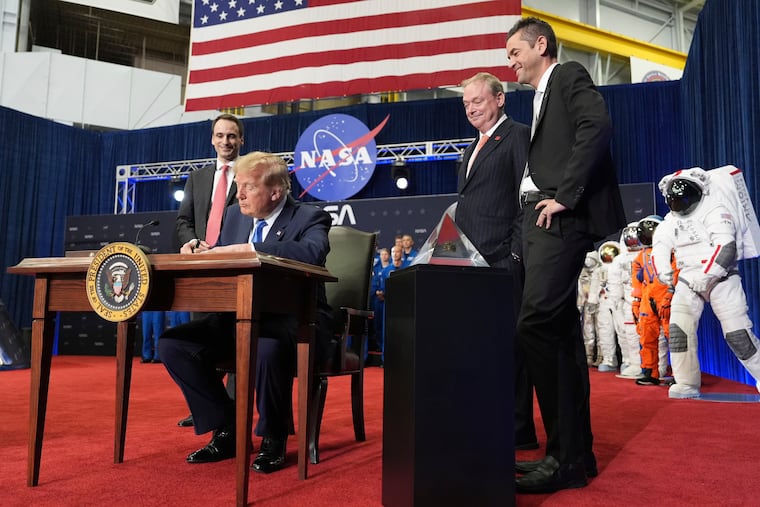
At an August Oval Office signing ceremony for an executive order aimed at reducing the number of recommended childhood vaccines, spacing out the shots, and splitting up the measles, mumps, and rubella vaccine, Miller stood near the president. He turned to him and said, “The fact that you had the courage to push this forward knowing the unfair criticisms from some in the establishment and to give the chance for Bobby, who spent decades representing parents, to stand here today, it’s such a profound moment.”
The effort, which has not yet been finalized, defies guidance from major medical associations, which decried the move.
Alex Clark, a prominent conservative wellness influencer and podcaster aligned with the MAHA movement, was among a group of activists who met with top administration officials at the White House in April. She said Miller was “vocal and passionate” about issues such as chemicals in food, pesticides sprayed on crops, and some of the immunizations that children commonly receive.
“The most controversial, most unpopular policies, sure — with Democrats on illegal immigration — he’s not afraid to go toe-to-toe,” Clark said, “and so that gives me a lot of hope when it comes to some of the most controversial MAHA initiatives that we would like to get done, especially surrounding chemicals and pesticides.”
It’s unclear if Miller has a specific opinion on glyphosate, which is a widely used weed killer that is the subject of extensive lawsuits alleging it causes non-Hodgkin lymphoma. But at a May 2025 event for the MAHA Commission, an interagency effort to issue policy recommendations that Trump established last year, Miller suggested that environmental factors could be driving up the nation’s rates of pediatric cancer. “What is happening in our environment, in our food supply, in our lives, in our medical protocols, that is causing us to be so sick?” he asked.