House passes bill taking aim at data center electricity costs
The bill would direct state utility regulators to consider adopting federal rules requiring data centers to cover any higher costs associated with their large-scale power use.
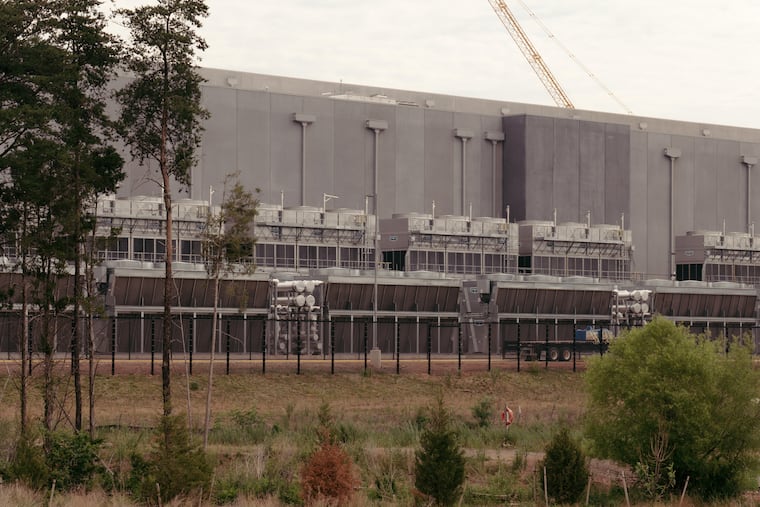
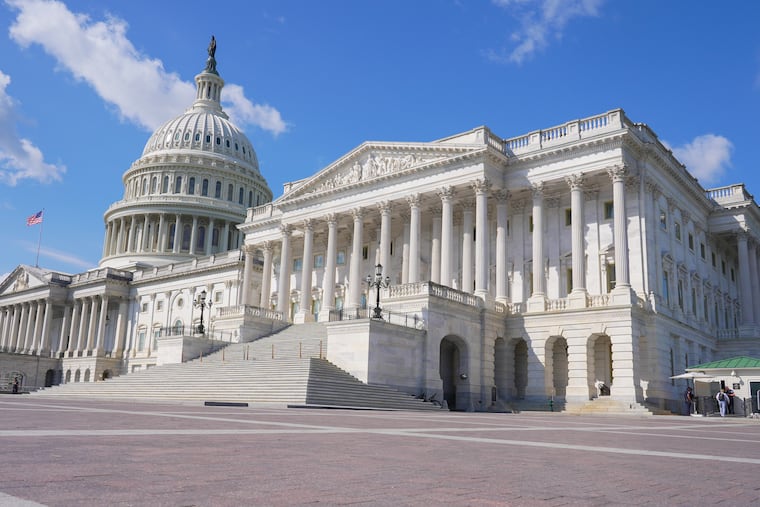
WASHINGTON — The House on Wednesday overwhelmingly passed a bipartisan bill that encourages state utility regulators to insulate consumers from rising energy costs tied to data centers, as members of Congress rush to address a voter outcry over the rapid advance of artificial intelligence.
It was unclear whether the legislation, introduced by Reps. Gabe Evans, R-Colo., and Kathy Castor, D-Fla., would have its intended effect. The bill would direct state utility regulators to consider adopting federal rules requiring data centers to cover any higher costs associated with their large-scale power use. But under current law, Congress cannot force state regulators to follow federal standards when they are setting electricity rates.
Still, as the boom in data center construction has become a potent issue in November’s midterm elections, lawmakers in both parties have been eager to have a legislative achievement that they could cite on the campaign trail. It would still have to pass the Senate and be signed by President Donald Trump before it could become law.
Across the country, Americans in both parties are concerned about rising electricity prices and water use. Data centers, the large complexes of servers that are crucial to powering AI development, have become the most visible avatar of voters’ fears over the growth of AI and the power of big tech companies.
That issue took on new political urgency this week, after concerns over the safety of AI emerged into wider view and key tech leaders began calling for a slowdown in the pace of development.
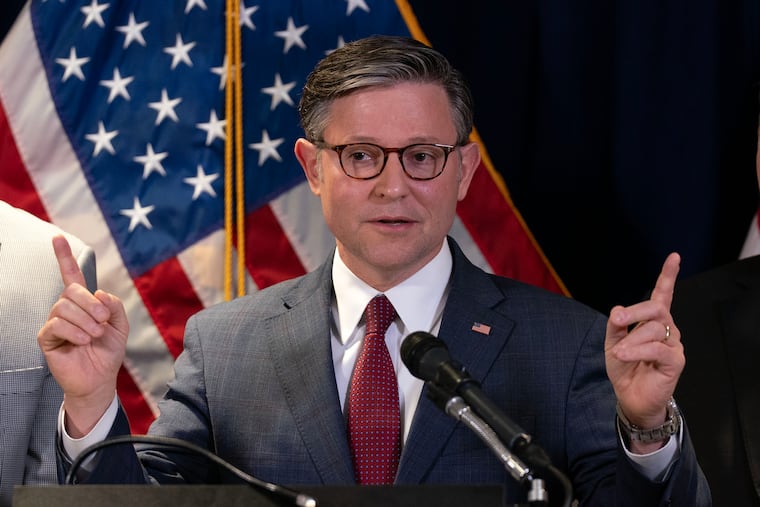
Lawmakers in both parties have called on Congress to impose guardrails on AI, though there is no clear bipartisan consensus on how to do so, and Trump has rejected calls for regulation. Speaker Mike Johnson said Tuesday that he and the president would convene a meeting with AI executives at the White House next week.
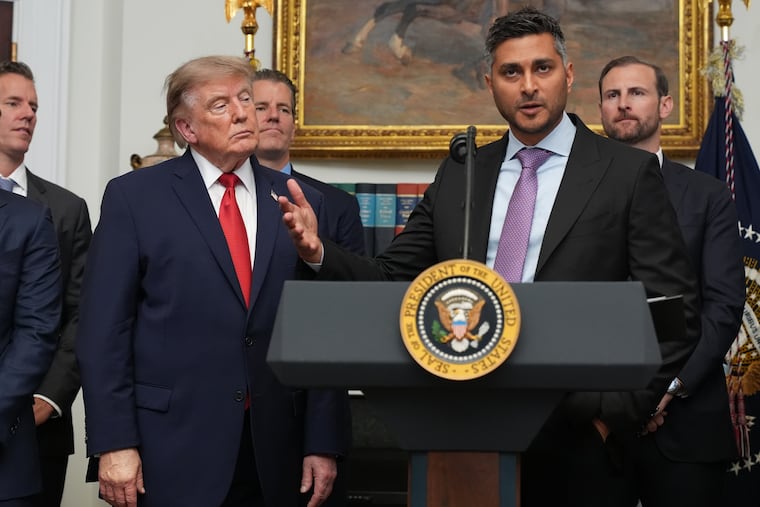
When asked about their plans to address the issue, some House Republicans pointed to the utility legislation, which does not address AI safety concerns. The measure mirrors a voluntary pledge that tech executives made at the White House this year, when they promised to shoulder a larger share of the energy costs associated with data centers.
“It makes sure that the ratepayers are protected as you’re building out AI infrastructure,” said Rep. Steve Scalise of Louisiana, the No. 2 Republican. “That it’s got to be supported by the local community, and that it’s not going to adversely impact ratepayers.”
Wednesday’s vote, 417-3, reflected the increasingly bipartisan nature of the data center backlash and a growing concern among Republicans that they are particularly vulnerable on the issue after their signature domestic policy bill included tax breaks that benefited developers of data centers. It also marked a turnabout from just a year ago, when almost all House Republicans backed a version of that measure that put a moratorium on any state regulation of AI, though the provision was later stripped by the Senate.
With the House leaving town Wednesday until after Election Day, this week was lawmakers’ last chance to pass a bill showing they were responsive to voters’ concerns about data centers.
Evans, who introduced the utility bill, is among the most politically vulnerable Republicans in the House. It is unclear whether the Senate will take up the legislation before October, when it is scheduled to recess until after November’s elections. Its version of the bill was put forward by Sen. Jon Husted, R-Ohio, who is in a competitive race in which Democrats have sought to make data centers a central issue.
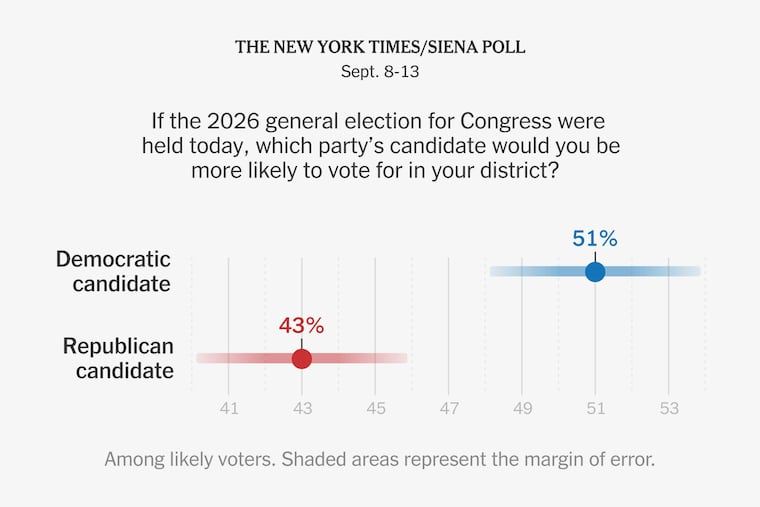
A poll conducted this month by The New York Times and Siena University found that 61% of voters said they opposed the construction of data centers and were about split on which party was better positioned to address it, with a considerable bloc saying they did not know which side to trust.
When Republicans last year passed their sweeping tax and spending cut bill, they expanded significant tax advantages for businesses for research costs and new investments. They also adjusted a tax break program meant to encourage development in poorer areas so that it would incentivize more development in rural areas.
Democrats have argued that those provisions have helped technology companies looking to build new data centers, and they have accused Republicans of being indifferent to voters’ worries that such construction is raising their electricity costs and changing their neighborhoods.
“Unfortunately, these very real concerns are repeatedly swept to the sidelines, minimized or ridiculed by President Trump and Republican congressional leaders,” said Rep. Frank Pallone Jr., D-N.J.
Some Republicans have argued that regulations on AI would hinder America’s ability to stay ahead of China in developing the technology. On the House floor, Evans presented his bill as a way to allow for data center development while ensuring that states had a mechanism to address implications for communities.
The bill, he said, “keeps costs low for Americans and helps us build the energy backbone required to compete and win in the AI race.”
This article originally appeared in The New York Times.