President Donald Trump admires Theodore Roosevelt — but he isn’t following the former president’s lead
Roosevelt believed that character — and taking on the wealthy and powerful — were essential to good leadership.
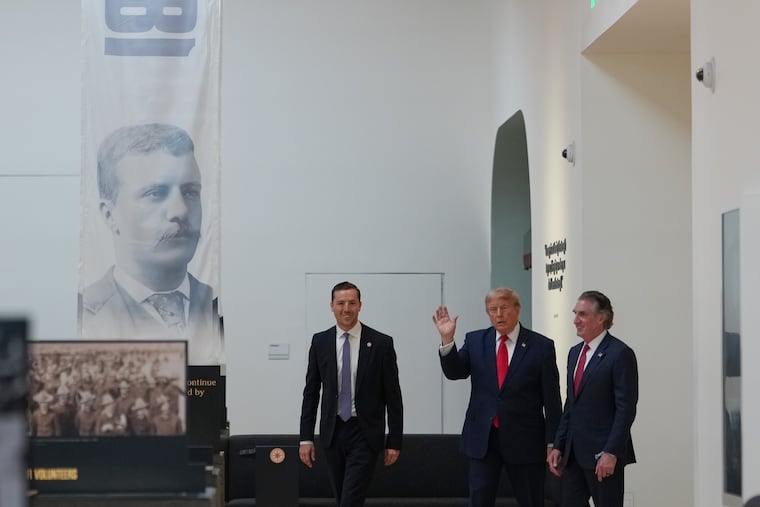
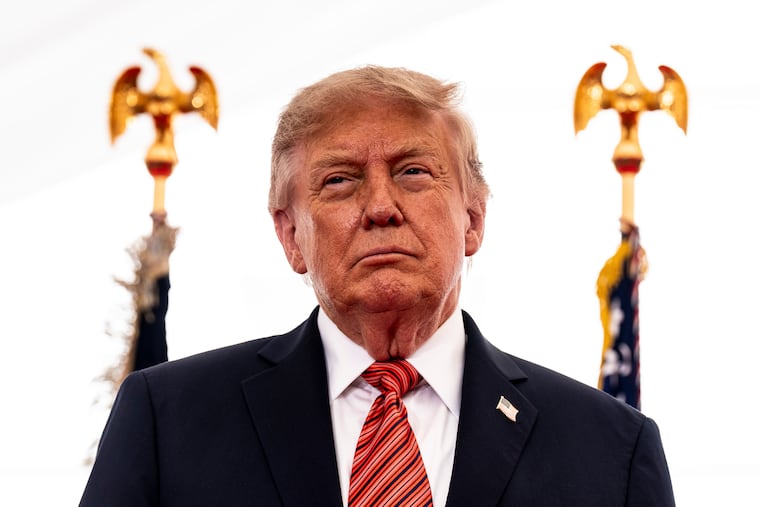
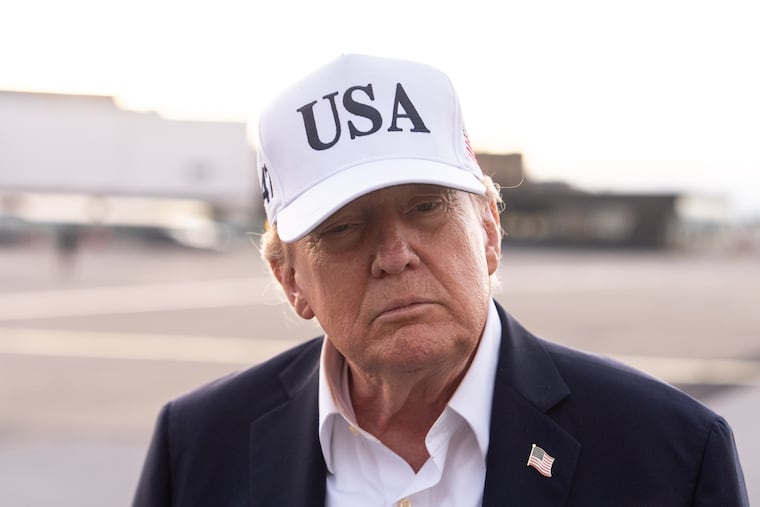
In July, President Donald Trump dedicated a new museum in North Dakota honoring Theodore Roosevelt. Addressing an enthusiastic crowd of supporters, Trump praised his predecessor for his military courage and physical strength, as well as for successfully shepherding construction of the Panama Canal. Trump then drew an interesting parallel between himself and Roosevelt saying they both like “big things — big prairies, big forests and mountains, big wheat fields, big, tremendous railroads, [and] big factories and steamboats.”
Trump wasn’t the only one who saw similarities between the two presidents. In his tribute to Roosevelt, Interior Secretary Doug Burgum noted, “The parallels between Theodore Roosevelt and President Trump just keep adding up.”
Up close, however, the differences between these two native New Yorkers are far more substantial. Roosevelt broke the monopolies and brought the Gilded Age to a close. He established 230 million acres of public land and created the United States Forest Service.
Today, by contrast, Trump is creating a 21st century Gilded Age by empowering business titans through reduced regulation, approval of mergers and handing them plum government positions. Moreover, he is undoing environmental laws and opening previously protected land, policies Ted Roosevelt IV says his great-grandfather would find “appalling.” Aaron Weiss, executive director of the Center for Western Priorities, maintains that the Trump administration’s record “reads like a checklist assault on everything that Teddy Roosevelt has built.”
The differences between Trump and Roosevelt are starkest when it comes to character — and the role it plays in executing public policy.
When Roosevelt ran for a seat in the New York State legislature in 1881, he was endorsed by the powerful men in his district for his “high character, honesty, and integrity.” These traits were essential to Roosevelt’s vision of leadership. Yet, few would apply these adjectives to Trump.
Roosevelt’s vision of character and integrity guided his policy and actions on everything from treatment of racial minorities to his handling of the business interests who dominated American society when he entered the White House.
He maintained that “the best test of true love of liberty in any country is the way in which minorities are treated.” In 1901, therefore, he set aside his racial prejudices and invited Booker T. Washington to dine with him at the White House, the first president to issue such an invitation to a Black American.
The reaction was immediate. One southern newspaper called it “a blunder worse than a crime.” Another called it a “damnable outrage.” But Washington praised Roosevelt’s courage and wrote that the controversy was “providential,” noting that “good is going to come out of it.”
Roosevelt’s willingness to risk blowback to do what he thought was right was also evident in his handling of big business. In his annual address to Congress, the new president acknowledged the public revulsion to the monopolies controlled by the ultra-wealthy. He maintained that the federal government must intervene whenever such companies “are found to exercise a license working to the public injury.” To that end, he took on John D. Rockefeller’s Standard Oil and J.P. Morgan’s railroad conglomerate in the name of reinstituting fair competition in the marketplace.
Assessing his presidency, Roosevelt wrote in his autobiography, “The one bond of interest among all of us was the desire to make the Government the most effective instrument in advancing the interests of the people as a whole.” The then British ambassador to the U.S. agreed, telling Roosevelt that he had never seen “a more eager, high-minded, and efficient set of public servants, men more useful and credible to their country than the men doing the work of the American Government.”
While historians praise Roosevelt for his role in taking on the wealthy and the powerful, these testaments speak to how integral his character — and his ability to surround himself with high character individuals — was to these efforts.
In 1910, Roosevelt delivered one of his most famous speeches — what became known as the “Man in the Arena” address — at the Sorbonne in Paris. It summarized his thinking on the importance of virtue in a republic.
The former president argued that the success of a republic was contingent upon the character of its citizenry and its leaders. Speaking of the broader public, Roosevelt likened the character of a country’s average citizen to a stream, noting that “the stream will not rise higher than the main source.” National greatness, therefore, could only be achieved if the average citizen adhered to a high moral standard.
But if the average citizen must be of sound character, it was up to the nation’s leaders to maintain an even higher standard.
According to Roosevelt, danger lurked when voters chose “men of inherited wealth and position” for elected office. Such men, Roosevelt declared, could yield to a “cheap temptation” to set aside one’s morality and become a cynic to whom “good and evil are as one.” And when those amoral leaders exploited the less fortunate, Roosevelt maintained they were “at heart the same as the greedy and violent demagogue who excites those who have not property to plunder those who have.” In such cases, those wealthy officials were no longer of “useful service.”
Roosevelt’s warning represented his view toward the wealthy more broadly. He neither admired nor accorded them high status merely based on wealth alone. To him, those whose sole purpose was to accumulate money without returning any “corresponding benefit to the nation as a whole” were “unworthy citizens.”
Roosevelt’s audience surely would have caught his allusions to the titans of the Gilded Age like Rockefeller and Morgan, who he had taken on during his presidency.
Trump brings to the presidency a very different understanding of the role of wealth and diversity in society. Running for a second term, he declared that minority groups are “poisoning the blood of our country,” and are “genetically disposed” to commit crimes. Rather than risking backlash to model inclusivity, Trump stoked prejudices to advance his electoral fortunes.
When it comes to wealth, the president often spends weekends at Mar-A-Lago and Trump Bedminster, private clubs with hefty buy ins and dues, surrounded by elites. He has also elevated wealthy and powerful businesspeople to important government positions, including selecting the wealthiest man in the world, Elon Musk, to head what became known as the Department of Government Efficiency. As if to advertise his admiration for the wealthy, Trump assembled the richest Cabinet in U.S. history with a combined net worth of $7.5 billion.
Trump’s glorification of the wealthy has extended to his own behavior during his second term in office. In May 2025, the president hosted an exclusive dinner for top sellers of the $TRUMP$ meme coins, which brought $148 million into his family’s coffers. This was just one example of how Trump has profited from the presidency. One investigation estimated that he and his family made more than $2 billion in profit during the first year of his second term. Ironically, to get to North Dakota to fete Roosevelt, Trump rode on a $400 million airplane gifted by the Qatari government.
Trump has long aspired to add his face to those of George Washington, Thomas Jefferson, Abraham Lincoln and Roosevelt on Mount Rushmore. But Trump fundamentally misunderstands what made Roosevelt such a great president, worthy of having his face carved into granite on one of the nation’s most famous monuments: character and the willingness to focus on the needs of the less fortunate, not the rich and powerful. In his 1910 speech, Roosevelt asserted that presidents must surround themselves with people “who possess the gifts of sympathy with plain people and devotion to great ideals.”
Every American, including Trump, should read Roosevelt’s address. He challenges all of us to maintain high standards in our personal and public conduct. And in times of crisis, Roosevelt argued that both ordinary citizens and national leaders must exhibit “heroic virtues.”
Praising Roosevelt, Trump declared that he was a “man who I have long admired. He’s one of the few — I don’t admire too many people.” But Trump would do well not just to admire Roosevelt, but also to understand the former president and the lessons he hoped would shape America.
John Kenneth White is a professor emeritus at The Catholic University of America who writes on Substack. His latest book, co-authored with Matthew R. Kerbel, is titled “Democracy on the Edge: The Trump Elections and the Future of American Politics.”
Made by History takes readers beyond the headlines with articles written and edited by professional historians. Opinions expressed do not necessarily reflect the views of The Inquirer.