Democrats are ‘on probation’ as they tackle affordability agenda and navigate party divides
Pennsylvania Democrats are among those who appear to be united around tackling cost of living issues, first and foremost. How they do it is another question.
Democratic lawmakers will return to Capitol Hill on Monday after the massive “blue tsunami” with a short but complicated question: Now what?
The 2026 midterms have set the Democratic Party up to take back the gavels in January with its largest majorities since 2009, giving it a mandate to act on voters’ intense affordability concerns and frustrations with President Donald Trump.
Even after a year that showcased deep ideological divides in their ranks, both the incoming progressives and traditionally moderate Democrats have said in the days since the election that reducing the cost of living must drive their agenda.
How they go about doing that — and how much they can realistically lower the price of gas, groceries, electricity bills, housing and more — are other questions entirely.
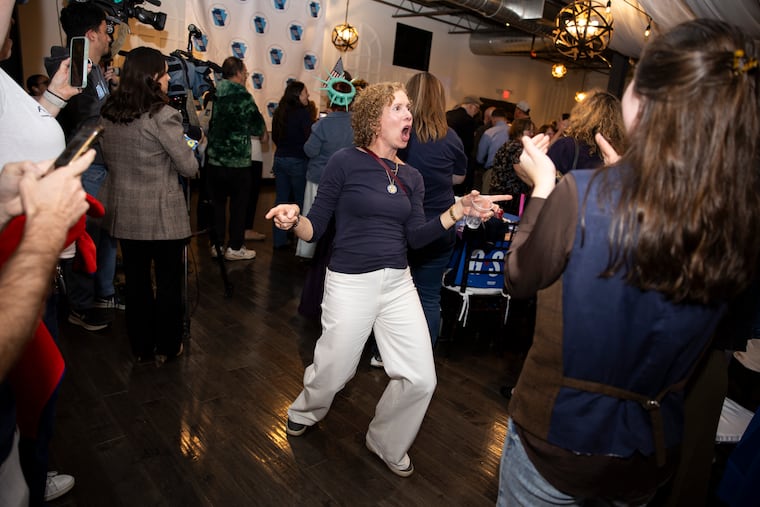
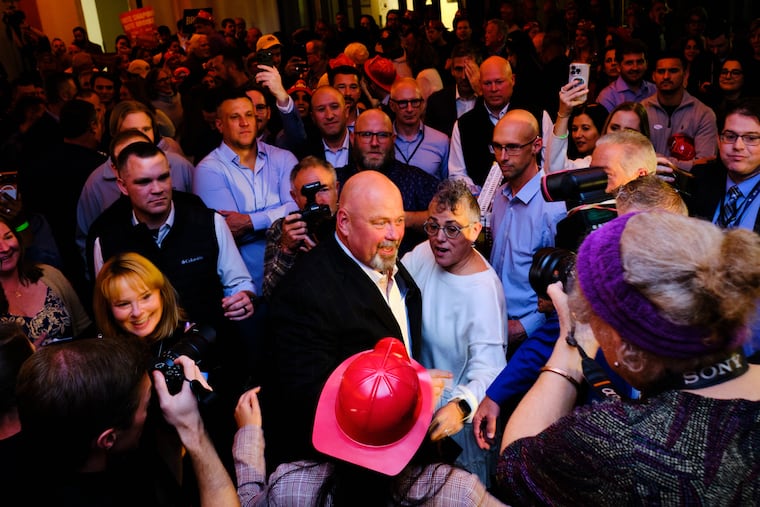
“We’re giving Democrats a chance. But they’re on probation,” Allentown Mayor Matt Tuerk, a Democrat and the first Latino mayor of Pennsylvania’s third-largest city, said in an interview at the election night party for Bob Brooks in the Lehigh Valley’s congressional district.
Tuerk said he believes Brooks and the other incoming Democrats in Pennsylvania’s congressional delegation recognize the stakes. He said Latino voters in particular who swung toward Trump in 2024 and back toward Democrats this year are watching for them to do everything they can to lower costs and fight the administration, including on immigration enforcement.
“That’s what we expect out of Bob. That’s what we expect out of Paige Cognetti,” who unseated a Republican in a Scranton-based district, Tuerk said. “That’s what we expect from our congressional leaders across the country.”
U.S. Rep. Brendan Boyle, the Philadelphia Democrat set to become chair of the powerful House Budget Committee, said his party is already gearing up to prove themselves “from the very first day, from the very first week.”
He said he’s optimistic that the large, ideologically diverse caucus “will all be able to be on the same page about the affordability agenda.” And the places to start, he said, are rolling back Trump’s tariffs, restoring previous and upcoming healthcare cuts, and bringing an end to the war in Iran — three major drivers of inflation. It will take time to get results.
“I don’t think this economy is getting better anytime soon, unfortunately,” said Boyle, who closely tracks economic forecasts and will have a key role in crafting his party’s approach. “The consensus is even if we’re able to reverse these things, we won’t immediately see prices drop right away.”
Each of Pennsylvania’s five incoming Democratic U.S. House members have stressed some of the same Day One priorities — from Chris Rabb, Philadelphia’s first democratic socialist elected to Congress, to Janelle Stelson and Cognetti, who both beat Republican incumbents, in part, by claiming their independence from either party.
Rabb, asked during a post-election CNN interview about his more transformational goals like universal basic income and expanding the U.S. Supreme Court, said the first step is affordability. Stelson, who hammered her opponent in a Harrisburg-based district over the Iran war’s impact on gas prices, said during her victory night speech that ending the war would be her foremost goal.
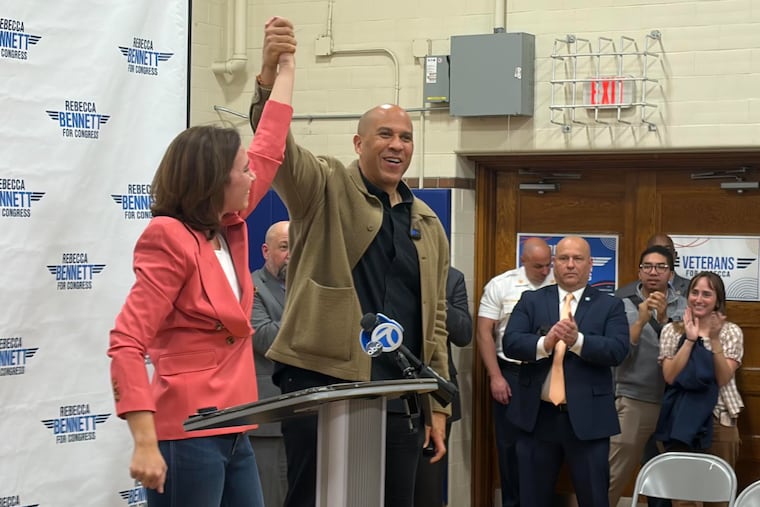
Brooks, in his own victory speech after unseating a Republican, mentioned the cost of diesel, tariffs and healthcare cuts before rattling off a list of other priorities — ban congressional stock trading, stop corporate money in campaigns, implement term limits, release the Epstein files.
“If we’re going to fix DC, we’ve got to put the fire out first,” the former Bethlehem firefighter said. “That means ripping out the corruption from its roots.”
It was the type of message that appeared to strike a chord on all sides of the Democratic spectrum. After Election Day, Brooks was one of just three Democrats mentioned in congratulatory statements from both the moderate Blue Dog PAC and U.S. Sen. Bernie Sanders (I, Vt.), the democratic socialist who has championed Medicare for All.
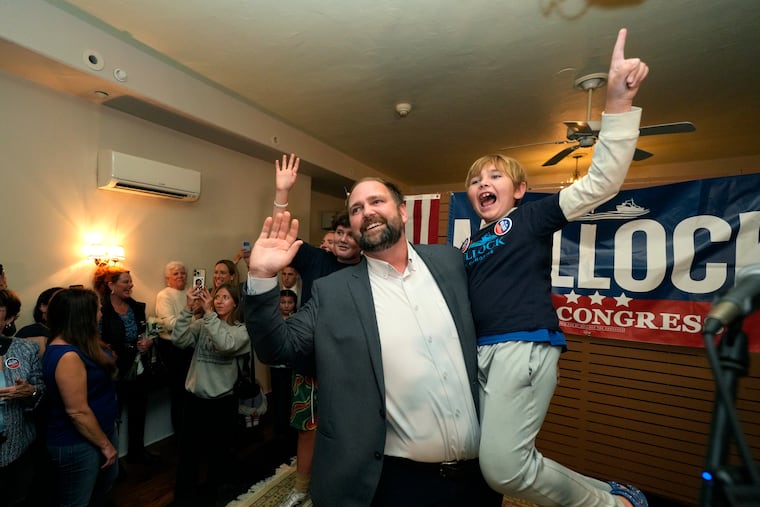
Sanders indicated Brooks was among the “great progressive victories.” The Blue Dog PAC lumped him in with Zack Mullock, the Cape May mayor who said he beat Republican U.S. Rep. Jeff Van Drew as a pragmatist rather than replicating “the socialist kind of things” elsewhere.
But bridging that divide when Democrats take control and battle over the details of their agenda could be a challenge.
Dan Parker, co-chair of the Philadelphia chapter of the Democratic Socialists of America, said Democrats have a clear mandate to provide immediate relief to people struggling to afford everyday costs.
“What happens next, beyond that, is still going to be a fight as to how far we can take things,” Parker said.
The chapter is “elated” by Rabb’s victory, Parker said. He was one of five nationally endorsed DSA candidates who will now join the “largest bloc of socialists in Congress in its history,” according to the national organization.
But that’s a small faction in a large caucus, making them unable to challenge Hakeem Jeffries, the Democrat in line to become House Speaker. Parker said DSA members believe Jeffries is “probably the very last person fit for this moment” because they see him as too closely aligned with corporate interests. They may not have the votes now to challenge Jeffries, Parker said, but they intend to keep pushing.
“Our star is ascendant — and as a socialist and progressive force are not going to be able to be swatted away in the coming congressional term,” Parker said. “So, many of our demands are going to need to be met, and we’re going to continue to build our movement to ensure that they are.”
Early indications of how Democrats plan to come together will begin in the coming weeks as they officially choose their leaders and preview their agenda. On Thursday, a long list of high-profile Democrats — including rumored 2028 presidential contenders — will gather in Denver for discussions about what just happened and, in the name of the conference itself, “What’s next.” Among the planned attendees: New Jersey’s U.S. Sens. Cory Booker and Andy Kim, Gov. Mikie Sherill and U.S. Rep. Chris Deluzio, an Allegheny County Democrat considering running for U.S. Sen. John Fetterman’s seat.
In another similarly named “Now what?” conversation on Friday, U.S. Rep. Madeleine Dean (D., Montgomery) told the historian and author Timothy Snyder that she was looking forward to a diverse Democratic caucus that was motivated to make the most of their opportunity in Congress.
“We have to come in and be aggressive, but really competent. We can’t just flail,” Dean said. “We have to really be competent around affordability, what matters, what’s hurting Americans right now — what they responded to — and accountability. We’ve got to go down both rails.”