‘Blue tsunami’ sweeps from Harrisburg to Washington in a historic repudiation of Trump and the GOP
Now, Democrats — looking toward a new political order once they are sworn into office in January — must find a way to govern amid deep fractures within their own party.

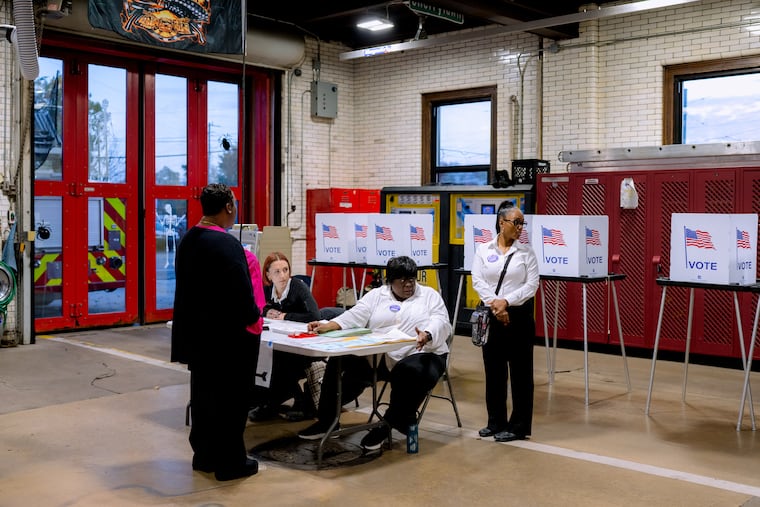
Voters across the country, in a stunning display of dissatisfaction with President Donald Trump, threw their support behind Democrats in historic fashion on Tuesday, delivering the opposition party widespread control from Harrisburg to Washington after lifting Trump’s GOP to power just two years ago.
The decisive wins were up and down the ballot, with strategists on both sides of the aisle declaring a “blue tsunami.” Democrats won control of both chambers of Congress, including a clean sweep of four battleground districts in Pennsylvania. Republican stalwarts like U.S. Reps. Brian Fitzpatrick and Scott Perry went down. New Jersey looks poised to send only one Republican to Washington.
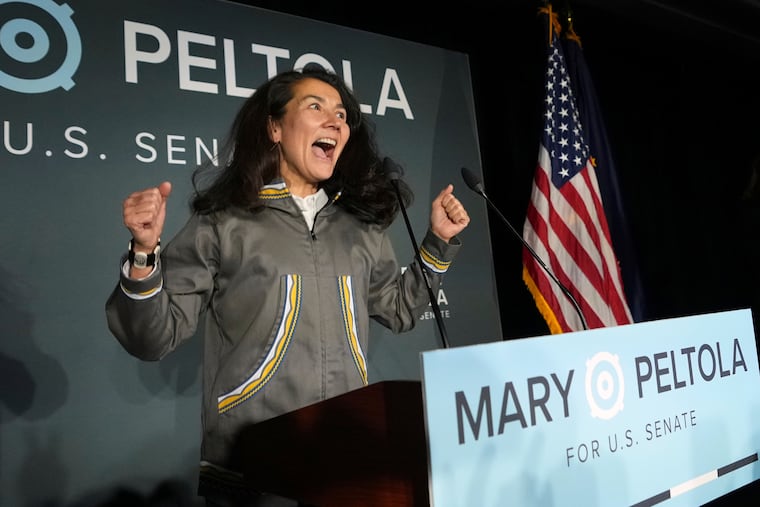
The party flipped at least seven seats in the U.S. Senate, including in states long seen as deep-red territory such as South Carolina and Kansas, securing a commanding majority that was unthinkable just a few months ago.
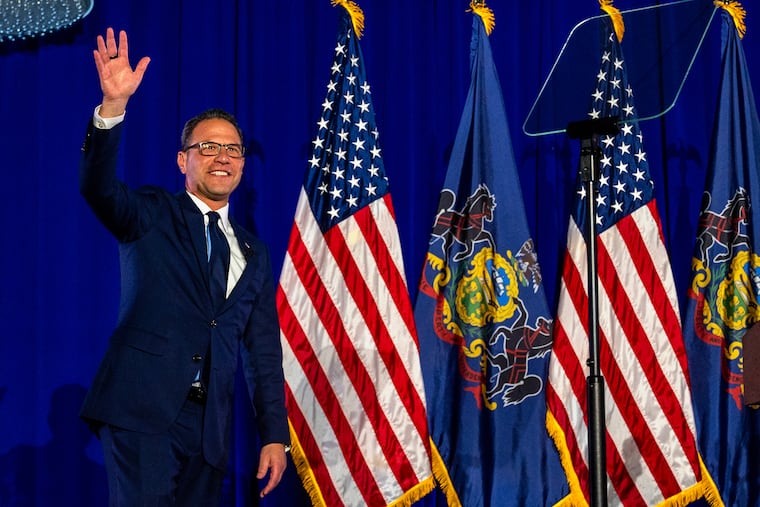
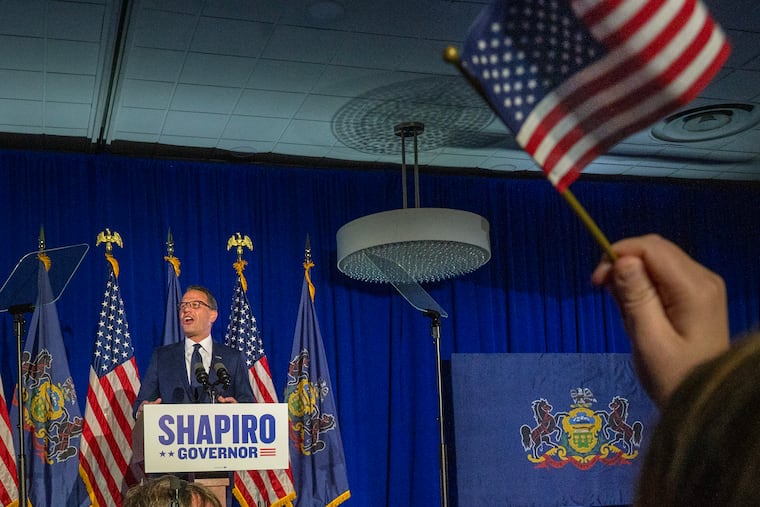
In Pennsylvania, Gov. Josh Shapiro did not just win reelection, as was telegraphed in polls. Unofficial returns showed that, as of early Wednesday, he was leading his GOP opponent by more than 20 percentage points, and he was ahead in 10 counties that Trump won in 2024.
And Democrats, for the first time in more than 30 years, won a trifecta in Harrisburg, meaning they will have control of the state House, state Senate, and the governor’s mansion.
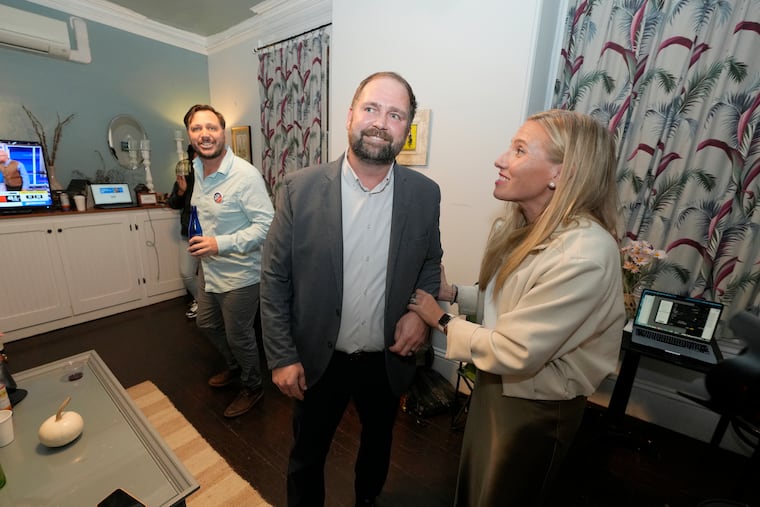
Even those smaller, local races broke Democrats’ way. In Bucks County’s closely-watched 6th State Senate District, where issues like data centers and inflation drove the campaign, Democrat Eileen Hartnett Albillar, the county clerk of courts and a social worker by trade, toppled Republican State Sen. Frank Farry.
“Sometimes in this political life you’re the windshield, and sometimes you’re the bug,” said Christopher Nicholas, a veteran GOP strategist. “Pennsylvania voters have totally reversed what they did in 2024.”
» READ MORE: Democrats win trifecta control of Pennsylvania Senate, House and governorship for the first time since 1993
Now, Democrats — looking toward a new political order once they are sworn into office in January — must find a way to govern amid deep fractures within their own party.
“We’re going to have a lot of serious conversations after today to see about what this big tent actually means,” State Rep. Chris Rabb, a democratic socialist who will represent a large swath of Philadelphia in Congress, said Tuesday.
A clear rebuke of the president
Neil Makhija, a Montgomery County commissioner who stumped for Democrats across the state, compared the results to 2006, when the party won back power with George W. Bush in the White House as voters rejected an unpopular war.
“Back then, I remember feeling stunned that we were winning states we weren’t supposed to win,” Makhija said. “This kind of election expands people’s view of what’s possible.”
Democrats this week romped to victory in U.S. House races and were expected to best Republicans by about 13 percentage points nationally, according to The New York Times. That would be the most significant across-the-board congressional win of either party in at least 50 years.
Republican U.S. Rep. Jeff Van Drew, a South Jersey institution who lost on Tuesday, compared the results to the post-Watergate wave of 1974 that ousted Republicans from power.
“It was not only a normal wave election,” Van Drew said after conceding. “What I said all along was, ‘I’ll be fine as long as it isn’t Watergate.’ And it kind of is a Watergate, where it’s larger-than-life and just swept people along with it who weren’t necessarily doing anything wrong.”
Strategists said the results showed that voters are fed up with the party in power, even those who just two years ago cast a ballot for the president.
Samuel Chen, a GOP strategist, said voters often feel a sense of regret in midterm elections if they don’t feel like they’re getting what they bargained for.
But amid rising inflation and the unpopular war in Iran, the dissatisfaction ran deeper. Even some Trump voters, Chen said, “felt a sense of betrayal.”
“They didn’t want forever wars, they didn’t want prices to go back up, and they did,” Chen said. “And the president is saying ‘the economy is not that bad, suck it up.’”
Those factors even sunk Republicans who tried to distance themselves from Trump. Fitzpatrick, of Bucks County, is seen as one of the most independent members of Congress. He has voted against the White House and the GOP more than any of his colleagues.
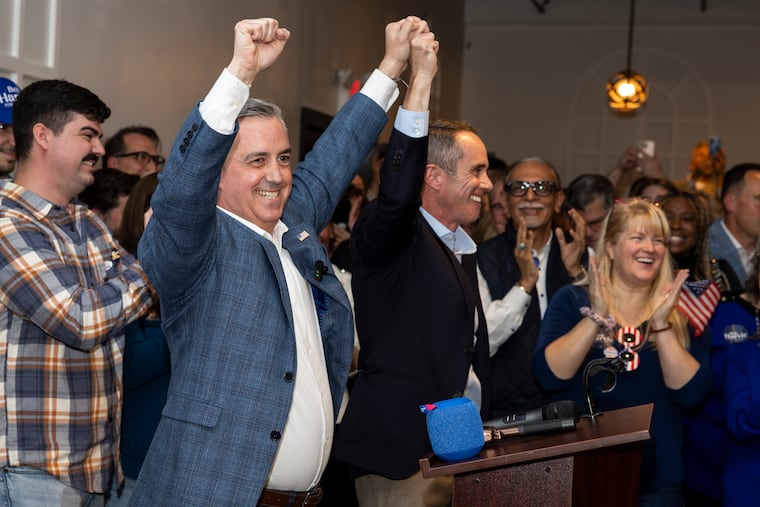
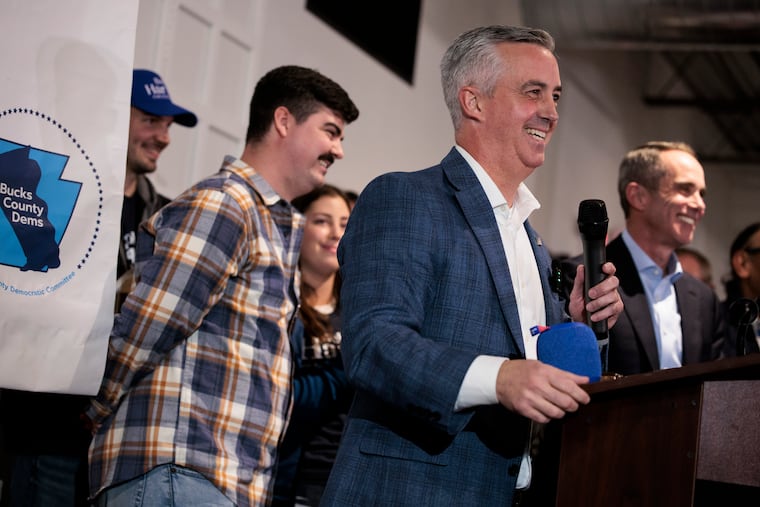
» READ MORE: Bob Harvie ousts Brian Fitzpatrick in Bucks County, flipping a House seat Republicans have held for over a decade
Members of both parties said the race between Fitzpatrick and Democrat Bob Harvie to represent Pennsylvania’s 1st District was a canary in the coal mine for Republicans. If he fell, it would mean many others would, too.
“We saw him as the hardest to beat,” said Democratic strategist Anthony Campisi.
But disaffection with the president appeared too much for even the most bipartisan member of Congress to overcome.
“When the president is talking about the Reflecting Pool instead of the cost of living the night before the election,” Campisi said, “it’s kind of like an allegory.”
A still-divided Democratic Party
The euphoria among Democrats Wednesday in some ways masked the deep ideological fissures within the party.
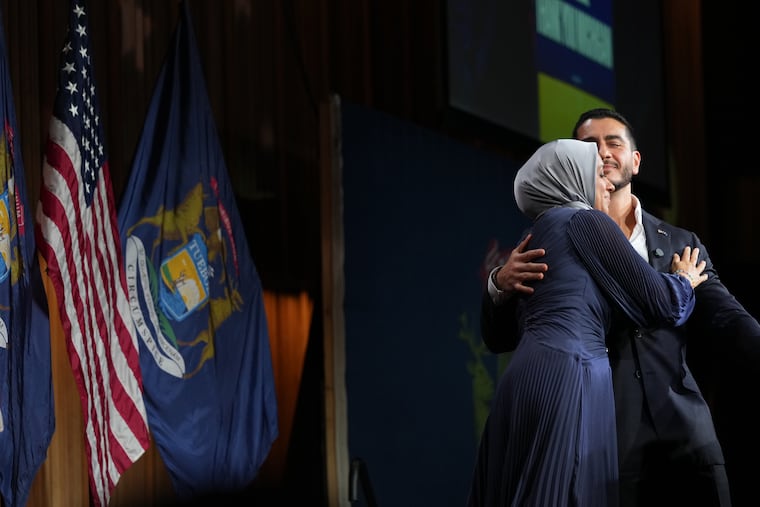
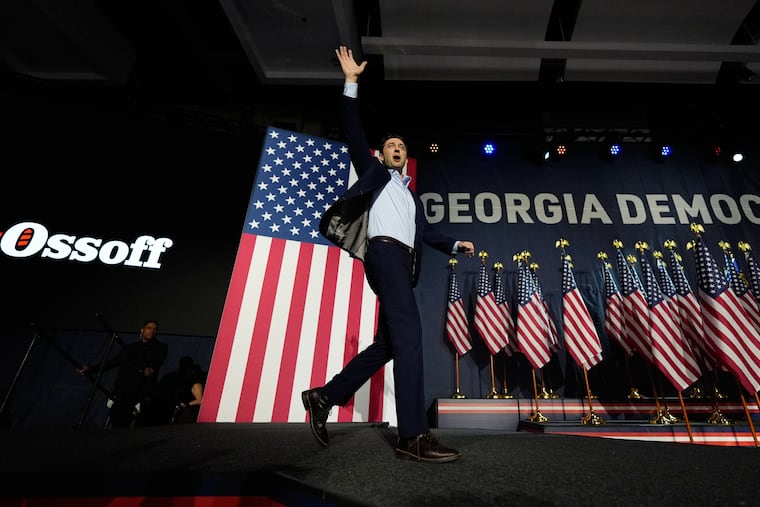
Nowhere were those divides laid bare more than in Michigan, where Democrat Abdul El-Sayed, a progressive and a staunch critic of Israel, won a bitter race in the swing state against Republican Mike Rogers. That was despite a last-minute defection by U.S. Rep. Haley Stevens, whom El-Sayed beat in the Democratic primary and who announced this week that she would vote for Rogers, saying that El-Sayed had not adequately defended Israel and American Jews.
The conflict in the Middle East drove substantial tension between the progressive wing of the party and more establishment-aligned Democrats during the primary season. That includes in the race to represent Philadelphia’s 3rd Congressional District, and those disagreements over whether the United States should continue to arm Israel amid its military campaign in Gaza are not likely to disappear.
» READ MORE: How the Middle East and the word 'genocide' became the defining issue of the Philly congressional race
Rabb, a longtime state representative who has been critical of both the Republican Party and the Democratic establishment, endorsed El-Sayed and campaigned for him in Michigan. The longtime state representative from Northwest Philly, who was elected on Tuesday to become Philadelphia’s first democratic socialist in Congress, will now govern alongside Democrats — including from his own state — who have a wildly different worldview.
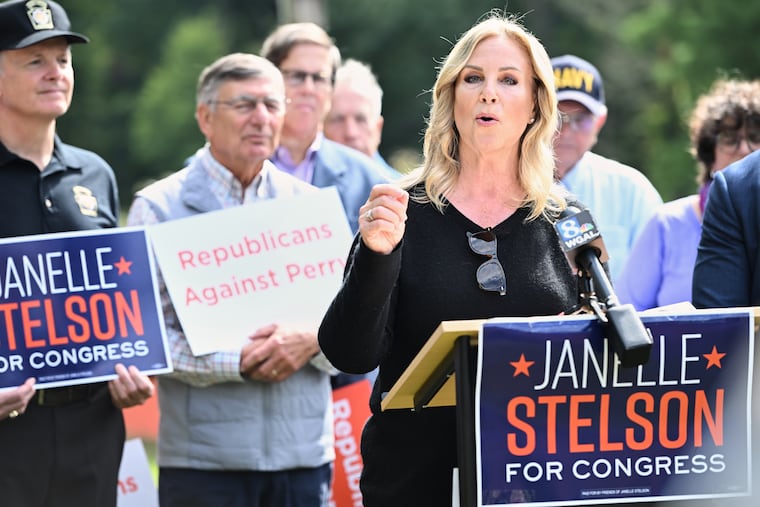
For example, Janelle Stelson, the former TV anchor who brought down the Trump-aligned Perry, campaigned as a political moderate and a defender of Israel who does not support a Medicare-for-all style healthcare system.
And in New Jersey, Cape May Mayor Zack Mullock, who beat Van Drew, said he won because he ran as a pragmatist willing to work across the aisle who could appeal to independents and Republicans.
“What you’re seeing on the national level, some of the socialist kind of things?” Mullock said. “If you look at Cape May, it’s not Leningrad.”
But Rabb said Tuesday that an El-Sayed win in purple Michigan amid other progressive gains would demonstrate that leftist candidates are not just winning in deep-blue districts, but that “there is a hue and cry for transformational change across the country.”
Those divides will also no doubt be present in Harrisburg, where far-left state representatives could grow frustrated with Democratic senators who have a history of centrist ideologies and bipartisan dealings.
Still, the party said it is unified in its day-one priorities for the Democratic trifecta: Shapiro has said he will sign legislation to raise the state minimum wage, which has been a Democratic priority for decades.
Rabb and others of his political ilk said they agree that would make a material difference for a large swath of Pennsylvanians, including those in Philadelphia, the poorest big city in the nation.
Makhija said that Democrats were delivered a mandate to focus on improving the cost of living for Americans, and that intraparty debate over the best ways to achieve that goal are healthy.
“We can have debates over whether this healthcare policy is going to be more effective versus another,” he said. “But as long as we are having that debate and trying to do something that helps people, the voters will recognize that and appreciate that we are on their side.”
Staff writers Amy S. Rosenberg, Aliya Schneider, Fallon Roth, Sam Janesch, and Sean Collins Walsh contributed to this article.