Josh Shapiro’s measles response — and its backlash — reignites COVID-19 fury
The criticism of Gov. Josh Shapiro's handling of measles and his administration's proposed health regulations has a familiar ring six years after COVID-19.
A contagious airborne disease spreads. The tally of cases climbs higher as a vaccine debate rages among the public and their elected officials. Politicians point fingers at each other, arguing over the release of information and the steps that some consider “draconian.”
The measles outbreak this year represents a far different public health crisis than the COVID-19 pandemic that wreaked havoc across the nation and the rest of the world six years ago.
But with Pennsylvania at the center of a national conversation around a disease once considered eradicated in the U.S. because of widespread vaccination, the ensuing political rhetoric on measles has a familiar ring.
Republican critics of Gov. Josh Shapiro’s announcement last week of two measles-associated deaths in Lancaster County — the first reported in the country this year — have repeatedly evoked the COVID pandemic in their critiques.
Shapiro, as the Democratic nominee for governor four years ago, said during his last campaign that his party got parts of its COVID response wrong, such as vaccine mandates. But he defended the party line in court because of his role as the state’s attorney general.
Now two months before voters decide on whether to reelect him, the governor’s detractors have condemned both his handling of the measles deaths and his administration’s simultaneous push for a string of new regulations aimed at fighting infectious diseases.
“IT’S COVID ALL OVER AGAIN — BUT WORSE!!!” State Rep. Russ Diamond, a conservative Republican from Lebanon County, wrote Sunday in a lengthy social media post that led with three fire alarm emoji. The post followed other online comments in which Diamond speculated that Shapiro was broadcasting the measles deaths to “justify the draconian” regulatory proposal.
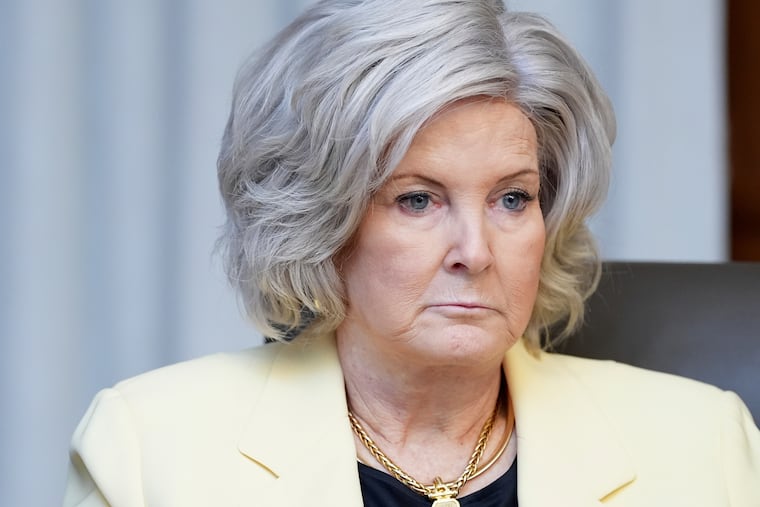
Treasurer Stacy Garrity, the governor’s Republican challenger this fall, has echoed those recent comments from others in her party as she seeks to close a gap in the polls. She’s leaning into a message that appears strikingly similar to the one used by State Sen. Doug Mastriano, Shapiro’s 2022 Republican opponent who lost by double digits.
In a video on social media, Garrity said Shapiro proposed “mandates that would make draconian COVID-era restrictions blush.” His “highly staged, partisan news conference” about measles, she added, “demonstrated just how dangerous his proposed mandates could be.”
Shapiro’s Department of Health proposed the regulations earlier this year, before the state reported its first measles-associated deaths in three decades. The 502-page proposal, according to the state, would bolster officials’ ability to manage the outbreak of diseases, including isolation protocols and the reporting of identified cases. It’s been in the works for years and does not specifically refer to the 2026 measles outbreak, though it could play a role in managing such crises.
“People want to raise some level of panic and anxiety here,” said Ericka Hayes, the senior medical director of infection prevention at the Children’s Hospital of Philadelphia, who has reviewed the proposal and is concerned about the “alarmist rhetoric” emerging around it. “But the spirit of this, and what is written in the document, as far as I’ve read, really is focused on appropriate measures for response to public health, infectious disease crises.”
The governor’s office said the regulations were not yet final, and the governor will weigh in after public comment concludes later this month.
“Disease outbreaks are serious, and Pennsylvania is confronting that reality right now,” Rosie Lapowsky, Shapiro’s spokesperson, said in a statement, which pointed to the reported 540 measles cases in the state.
“The Governor’s philosophy that will guide the final regulations is that public health depends on trust, and building that trust means respecting individual rights, involving parents in decisions that affect their children, and ensuring government works closely with the people it serves,” she said.
Shapiro also emphasized trust last week when he publicly clashed with U.S. Health and Human Services Secretary Robert F. Kennedy Jr., whom he blamed for spreading vaccine misinformation, saying Pennsylvania was seeing the negative consequences in the growing outbreak of a vaccine-preventable disease.
» READ MORE: What to know about two deaths reported in Pennsylvania's measles outbreak
Democrats like State Rep. Tarik Khan, a Philadelphia Democrat and nurse practitioner, have come to Shapiro’s defense. In a livestreamed conversation with other legislators who are also healthcare professionals, Khan said the governor “rightly spoke truth to power” by targeting Kennedy.
Still, the way Shapiro took a leading role in announcing the measles-related deaths made what could have been two disconnected issues — the outbreak and the separate regulations proposal — “into a conflagration” that is giving “lots of people flashbacks to” COVID, particularly conservatives who believed there was government overreach, said Chris Nicholas, a Harrisburg-based GOP consultant.
“We’re getting back into a situation where all the usual subjects are going to be relitigating the COVID pandemic restrictions or rules because this has given everyone an excuse to dredge it back up again,” Nicholas said. “I don’t know if the general public is ready for that. But the politicos are certainly ready for that.”
COVID, measles, and mitigation
The pandemic was unlike the measles outbreak in Pennsylvania in many ways.
When the COVID-19 virus started widely spreading in early 2020, the effects and severity for different parts of the population were unknown. Public health officials scrambled to track and contain the virus. For a year, vaccines were not widely available.
On the other hand, doctors have been writing about measles since at least the ninth century, according to the CDC. And healthcare providers have been required to report the disease to federal authorities since 1912.
Vaccines, available since the 1960s, are required for children to start school, although Pennsylvania has some of the nation’s most lenient exemption rules. The measles, mumps, and rubella combination shot currently in use is one of the “most-studied vaccines” in part because of misinformation that has circulated about its safety over the last several decades. For example, studies have shown, over and over, that childhood vaccination is not linked to autism.
Kennedy, a longtime anti-vaccine activist, has sought to upend federal vaccine policy at the helm of the country’s top health agency at a time when rising vaccine hesitancy increasingly divides Republicans and Democrats, and measles outbreaks are resurging.
Across the country this year, 47 states have reported 2,887 confirmed cases of measles, according to the Centers for Disease Control and Prevention’s weekly update last Thursday.
Pennsylvania’s Department of Health reported 540 cases as of Wednesday. The two “measles-associated deaths” — which state health officials consider as deaths where evidence of measles is present — that were identified by the state last week remained the only such deaths.
Shapiro’s decision to withhold any identifying information about the cases his administration reported — such as the victims’ ages, or if they had other health conditions — quickly led to an information vacuum that allowed skeptics — including Kennedy — to question the deaths, independent public health experts said. Shapiro’s administration, however, maintains that state law bars the governor from sharing more information about the individual victims.
Lancaster County Coroner Stephen Diamantoni, an elected Republican and a physician, drew wide attention for saying he did not believe measles contributed to a newborn’s death. Diamantoni said measles was noted as a significant condition “contributing to death but not resulting in the underlying cause” on the death certificate because the baby tested positive for measles.
» READ MORE: What do we know about the deaths reported in Pa.’s measles outbreak?
National Institutes of Health Director Jay Bhattacharaya, in a Fox News appearance on Saturday, said Shapiro was “politicizing the issue.”
“What the governor is doing is he’s playing this out over the airwaves for political purposes just like what happened during COVID,” said Bhattacharaya, an appointee of President Donald Trump.
The pandemic comparisons erupted as Pennsylvania Republicans began to connect the measles outbreak to the regulatory proposal, which is currently being reviewed by the state’s Independent Regulatory Review Commission. The proposal became public on Aug. 8 and is open for public comment until Sept. 21.
The lengthy document details what the department described as “much needed amendments” to align the state with recommendations from experts like the CDC and the American Academy of Pediatrics.
The proposed changes are numerous — including expanding the list of diseases that must be reported to the state and the protocols for pulling children out of school if they contract certain illnesses.
Instead of the current 24-hour requirement for healthcare practitioners to disclose measles cases, the cases would need to be reported “immediately by telephone” to the state.
State House Minority Leader Jesse Topper, a Bedford County Republican, compared the regulations to “oppressive COVID-era policies” and called on Shapiro to rescind them. In a statement, he said they would allow the state to interview students in school without notifying their legal guardian.
Garrity said in her statement Saturday that the regulations would allow the administration to “conduct warrantless searches of private property, access patients’ confidential medical records and require schools to give those officials one-on-one, private access to students.”
She did not elaborate on which specific regulations raised those concerns when responding to a request for comment from The Inquirer. The Department of Health pushed back on Garrity’s claims as inaccurate.
Hayes, the CHOP expert, said the regulations are a step toward “further fleshing out” long-used practices like contact tracing, which involves identifying individuals exposed to an infectious case to keep them from infecting more people. Those methods are “really important” in the context of the ongoing measles outbreak, she said, given that measles is so contagious that nine in 10 unvaccinated people will be infected if exposed, and children are especially vulnerable.
Critics who misrepresent the state’s proposal as a way to invade people’s privacy or take their property is deeply worrying, she said.
“They’re trying to vilify a work process for controlling infectious outbreaks that has been in place for centuries, and it’s dangerous,” Hayes said.
COVID flashback
Under Shapiro’s predecessor, Pennsylvania took an aggressive approach to public safety surrounding the COVID-19 pandemic.
Former Democratic Gov. Tom Wolf’s moves included a requirement that children wear masks in school — a rule later struck down by the Pennsylvania Supreme Court — and the temporary closure of “nonessential” businesses.
As attorney general at the time, Shapiro defended the state’s actions in court as his legal duty. In a video that has reemerged and been widely shared since his measles news conference, Shapiro appears with his son to warn the public that “yes, you can” get in trouble for having a gathering at home or in public.
By March of 2021, just 40% of Pennsylvanians approved of Wolf’s handling of the crisis, according to a Muhlenberg College poll. Shapiro’s eventual opponent, Mastriano, in some ways became the face of the public opposition.
But as Shapiro campaigned for governor in 2022, he began to distance himself from Wolf’s actions, saying “too many Pennsylvanians could not get the help they needed during COVID,” and government needed to be more responsive — though Republicans continued to tie them together.
By the summer of that year, Shapiro had fully broken with fellow Democrats on mask and vaccine mandates, saying he opposed them.
“This is an area where I think folks got it wrong,” Shapiro said of school and business shutdowns, in an August 2022 interview with the Associated Press. “And to me, that’s the approach we need to take more broadly as a public, which is to educate, empower, and respect people’s personal decisions and respect their personal freedom to make those choices.”
Campaign messaging
Shapiro’s campaign did not respond to questions about Garrity and others tying his measles response and regulatory proposal to the pandemic — a new messaging strategy in a race where the Republican nominee has at times struggled to find her footing.
“It feels like this is probably just what’s going to happen for the next 60 days,” said J.J. Abbott, a Democratic consultant and former spokesperson for Wolf.
Abbott said he believed the criticisms are likely aimed at energizing a base of Republican voters who have not shown the same enthusiasm for Garrity and other GOP candidates as they did in 2024, when Trump won Pennsylvania and Republicans swept the other statewide races.
Garrity’s statement alludes to some of that potential energy while also contending she showed restraint by waiting for “four days for additional information before issuing a statement about Josh Shapiro’s latest political stunt, despite calls from members of my own base to attack Josh Shapiro.”
Whether or not voters will be swayed by attacks on Shapiro’s handling of the issue is an open question.
Shapiro already beat a candidate who ran on nearly the same message on government overreach during a health crisis. That fact, combined with the vast differences between the novel coronavirus and measles, could mean those criticisms largely fall flat with voters, Abbott said.
“Something that comes off as anti-vaccine for measles isn’t going to be very persuasive or appealing to the vast majority of voters, because most of them are vaccinated and almost all of them get their kids vaccinated,” Abbott said.
Nicholas, the Republican consultant, said the latest developments had resonated with many conservatives who were still concerned about government overreach during COVID.
He also pointed to the fact that both Shapiro, during his reelection as attorney general, and Garrity, in her first campaign for treasurer, won campaigns during the pandemic in 2020 and that he wasn’t surprised both sides were bringing up familiar themes six years later.
“Politicians love things that are familiar,” Nicholas said.
Staff writer Aubrey Whelan contributed to this article.
This story was updated to reflect that the governor plans to weigh in on the Department of Health’s proposed regulations once public comment concludes on Sept. 21.