What do we know about the deaths reported in Pennsylvania’s measles outbreak?
Gov. Shapiro and Health Secretary RFK Jr. clashed over the state's announcement of the first measles-related deaths in more than 30 years amid an ongoing measles outbreak in Pennsylvania.
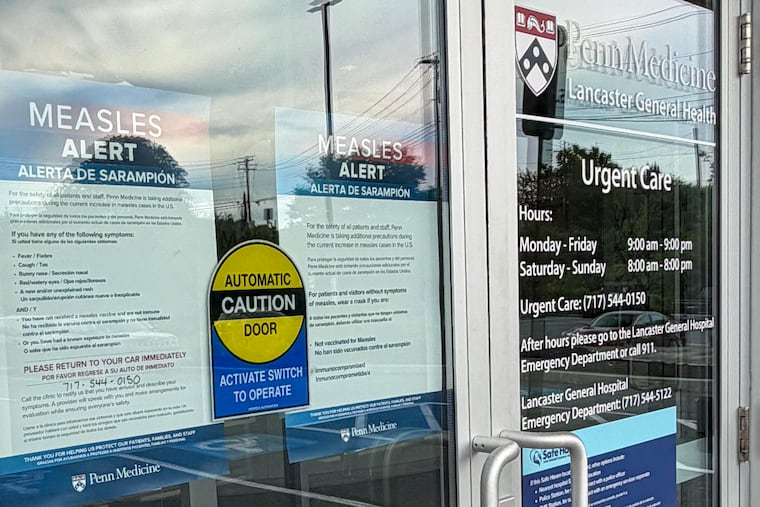
Pennsylvania officials reported two deaths associated with measles last week, amid a growing outbreak that has already sickened more than 500 people in the state this year.
Gov. Josh Shapiro, a Democrat, has clashed over the state’s characterization of the deaths with President Donald Trump’s head of the Department of Health and Human Services, Robert F. Kennedy Jr., as the outbreak has rapidly become one of the nation’s largest this year.
Shapiro has said Kennedy, a longtime anti-vaccine activist, is spreading misinformation about the safety of vaccines long recommended to prevent measles. Kennedy has disputed what Shapiro and state health officials have disclosed about the deaths, going so far as to accuse the administration of “fabricating” them.
Here’s what’s known about the deaths, the state’s first involving the highly infectious disease in more than 30 years, and the ongoing measles outbreak in Pennsylvania.
What do we know about the measles-associated deaths in Pennsylvania?
State officials announced two measles-associated deaths in unvaccinated Lancaster County residents last Tuesday, but initially provided no further information about the patients’ ages, medical conditions, or what had been investigated.
The state later explained that it defines a measles-associated death as deaths of people where evidence of measles is present, even when the disease may not be assessed by the coroner as the immediate cause of death.
Lancaster County coroner Stephen Diamantoni said the same day that his office was investigating one death involving a newborn who had measles and died shortly after birth. Later, the state confirmed that this was one of the measles-associated deaths they had announced.
According to Diamantoni, an elected Republican who is also a physician, postmortem testing of the child’s lung tissue showed the infant had a measles infection acquired before birth. But he said he does not believe measles contributed to the child’s death. He said the child died of a lacerated spleen, citing trauma to the torso. He said he was not sure how the lacerated spleen or trauma occurred.
Subsequently, Diamantoni said a forensic pathologist had included “measles” on the newborn’s death certificate under a section that lists “significant conditions contributing to death but not resulting in the underlying cause.” He said the condition was listed on the death certificate because the baby tested positive for measles and the pathologist said he would put any “significant finding” in that section.
The state’s decision to call the deaths measles-associated came after the state health department’s “epidemiology team thoroughly investigated and verified both individuals tested positive for measles,” Pennsylvania Health Secretary Debra Bogen said in a statement.
Experts like physician Paul Offit, head of the Vaccine Education Center at the Children’s Hospital of Philadelphia, have pointed out that measles can cause the spleen to become fragile, and that the trauma of birth can cause it to rupture. Offit says the coroner needs to explain more about his conclusions, if he does not believe measles contributed to the death.
The state has not released any information about the second measles-associated death, citing privacy laws.
Diamantoni told The Inquirer that his office is reviewing another instance where measles was listed on a person’s death certificate. “It’s a death of a child who had measles,” he said. On Wednesday, he said the child was an infant.
He declined to say how “measles” was characterized on that child’s death certificate. A healthcare provider signed the death certificate, he said, and his office was not involved at the time. The child did not die at a hospital, he said.
It is not clear if the case was the second measles-affiliated death announced by state officials.
Pennsylvania officials have cited state laws protecting privacy in saying that they can’t disclose more about the deaths without compromising patient confidentiality and the community’s trust.
Several prominent public health experts have criticized the Shapiro administration for not revealing more information, like the ages or causes of death of the victims, saying not doing so created a void for conspiracy theorists to spread misinformation.
What is the CDC saying?
The Centers for Disease Control and Prevention omitted the two measles-associated deaths in Pennsylvania from its last measles outbreak update on Monday.
The agency said that the deaths were not included because ”available information does not establish whether measles caused or contributed to the deaths or whether the individuals died from other causes while infected with measles,” in an update posted to the CDC’s website Sunday.
Kennedy also said Shapiro’s administration is not cooperating with the CDC in giving information on the deaths.
Pennsylvania “thoroughly reviews” all reported measles cases to ensure they meet CDC definitions and has provided “all required epidemiological data” on the measles-associated deaths to the CDC, state health department spokesperson Neil Ruhland said in a statement on Monday.
How far has measles spread in Pennsylvania? Where is it now?
Measles cases have been reported in 36 counties in Pennsylvania, with 530 cases confirmed this year as of Wednesday. The outbreak is centered in Lancaster County, which has reported 242 cases.
Chester County has reported the second-highest case count, with 52 cases so far this year. Health officials there believe many infections are going unreported, and say measles is generally circulating in the western area of the county.
Montgomery County reported three cases in a separate outbreak this winter.
Allegheny County, Pennsylvania’s second most-populous county after Philadelphia, has reported measles exposures at a children’s hospital in Pittsburgh, but no cases in residents.
Philadelphia has not identified any cases, although several people who tested positive for measles have traveled through the city this year. The last outbreak reported in the city sickened nine people, with six requiring hospitalization, in 2024.
How is measles transmitted? How contagious is it? Can you get measles if you’re vaccinated?
Measles is transmitted through the air, when an infected person coughs or sneezes, according to the CDC. It can linger in the air for up to two hours.
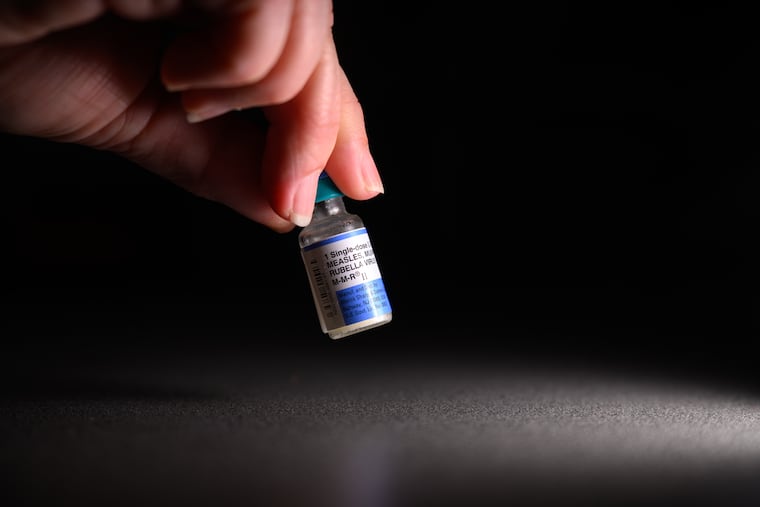
Two doses of the measles, mumps, and rubella vaccine has proven 97% effective at preventing the disease, the CDC says. The more people who are vaccinated, the less likely it is for measles to spread. Scientists say that about 95% of a community should be vaccinated to prevent spread. Nine in 10 unvaccinated people exposed to measles will acquire the disease.
No one who has gotten measles in Pennsylvania this year was fully vaccinated.
According to the CDC, it is possible but extremely rare to acquire measles if you’re vaccinated. The CDC says that about 3 in 100 people with two doses of a measles vaccine will still get the disease if exposed.
Sometimes this occurs if someone’s immune system “did not respond as well” to the vaccine, the CDC says. Other times, vaccinated people can get the virus if they’re exposed for a long period to the disease — like living in a house where multiple unvaccinated people have measles. Vaccinated people tend to have a milder illness if infected, and they’re less likely to spread measles to others.
In 2025, Bucks County reported a case of measles in a vaccinated resident who had recently traveled to Texas, then the site of a major measles outbreak. The person’s symptoms were mild.
What are measles symptoms?
Typical measles symptoms appear one to two weeks after exposure, but sometimes they can take up to 21 days to manifest. They include a high fever, a cough, runny nose, red, watery eyes, and a rash.
How deadly is measles?
About three in 1,000 children who contract measles will die. Measles can cause severe complications, especially in young children, including pneumonia and brain swelling. Physicians on the front lines of the Pennsylvania outbreak have reported treating patients with these symptoms, as well as organ damage from the disease.
Editor’s note: This story has been updated with additional detail from the Lancaster County coroner’s office.