The 1960s blueprint for fighting against data centers
Today's battles over data centers echo the ones fought in California in the 1950s and 1960s over building high tech industrial campuses.
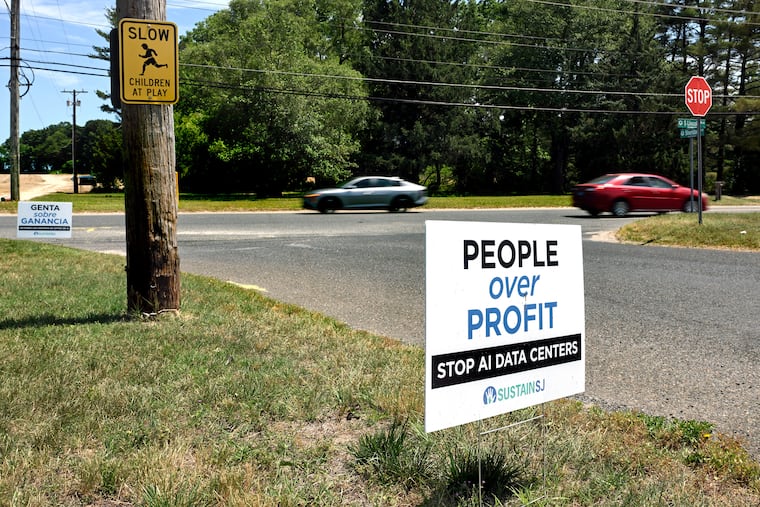
When hundreds of Upper Merion residents came to a township planning meeting in the spring of 2026 to oppose construction of five proposed data centers in King of Prussia, they discovered that, according to the developer, they had little recourse. The plans were code compliant, Brian J. O’Neill of MLP Ventures claimed. They required no rezoning, no variances — and no vote from township officials.
Yet, the residents didn’t just roll over. Instead, they set about organizing. A petition against the proposal garnered roughly 18,000 signatures — a majority of the township’s population. After an intense three-month campaign against the plans, the township Board of Supervisors rejected them in August. O’Neill vowed to appeal, and accused the board of violating state and local planning codes (which they denied), so the fight may not be over.
The board’s action reflected how fierce blowback across the country has politicians across the ideological spectrum rushing to limit data center construction. Both Texas Republican Gov. Greg Abbott and Pennsylvania Democratic Gov. Josh Shapiro recently placed limits on data center construction.
As the campaign against data centers proceeds, opponents can learn from the experiences of towns caught up in the high-tech manufacturing boom of the mid-20th century. That history shows what happens when residents disagree with politicians on these initiatives. And, while not every locality will succeed in stopping a data center, what residents build in these campaigns can outlast the fight itself.
In the 1950s and 1960s, city councils throughout the San Francisco Bay Area eagerly courted technology industries to build campuses in their cities. Officials in these places saw high-tech as the future of American industrialization. They hoped that these new facilities would become an economic boon for their cities and sought to capture new tax dollars from businesses and new residents. Some places, like San José, went so far as to give land to companies like IBM without following the usual avenues for development.
Cities weren’t the only ones that saw high-tech industry as the economy of the future. Stanford University, under the guidance of administrators who had worked in scientific research during World War II, saw high-tech research and development as an engine for economic growth for the university. They developed new programs around electrical engineering and electronics research, created industry-university worker programs that allowed employees to enroll in Stanford classes and encouraged students to found their own companies.
In 1954, Stanford used a piece of its vast landholdings to create the Stanford Industrial Park (later, Stanford Research Park), which attracted the likes of Fairchild Semiconductor and Kodak, alongside companies founded by one-time Stanford students such as Varian Associates and Hewlett-Packard. Business developers at the university were right: within a decade, the new office park was generating millions of dollars of new revenue for the university.
In 1960, the university and City of Palo Alto announced that the Ampex Corporation planned to build an office campus in the research park outside Los Altos Hills. The city council had already approved rezoning the land for light industry, and the plan appeared poised to proceed.
Neighboring residents, however, were not so keen on the university’s plans. Stanford neglected to consider the impact of the development on the local communities. Residents expressed concern about increased traffic and smog, as well as the potential environmental degradation of the pastoral foothills. They were also irritated by Stanford’s seemingly smug attitude toward community relations.
Through community and alumni networks, residents formed the Citizens Committee on Regional Planning (CCRP) to organize resistance to the Ampex plans. Within a month, CCRP organized community meetings, editorials and letter writing campaigns so forceful that Stanford University President Wallace Sterling referred to the event as the “Battle of the Hills.” One resident expressed dismay to Sterling, noting that “we now have smog, congestion, and acres of asphalt where we once had fresh air and freedom of movement in a beautiful countryside — one of the finest climates on earth!”
Hundreds of letters in opposition to the planned construction poured into the Sterling’s office: within four months of announcing the plan, nearly 400 such letters had reached the university president. Meanwhile, residents flooded the letters-to-the-editor section of the Palo Alto Times with opposition to the plan.
In response, the university’s business manager, Alf Brandin, took to the pages of the newspaper to cast the university as a reluctant developer, writing that Stanford was “doing everything we possibly can to produce income” to support the university’s mission. Stanford also pushed back against criticism by reminding residents of the role the university had played in preserving open spaces — in the form of its campus lands — and in encouraging economic development that benefited the community.
When the letter and editorial campaigns failed to budge Stanford, residents turned to their next tool: the referendum. In June, five months after Stanford announced its plans, organizers began circulating petitions throughout Palo Alto calling on the city council to rescind its decision to rezone the land for industry and allow residents to vote on the issue. Four days before the rezoning ordinance became official, organizers filed a petition with the city clerk with 2,000 signatures, double the amount required to force a vote.
Placed on the ballot that November, the Stanford lands were now in the hands of residents. A “yes” vote would keep the city council’s rezoning in place and allow Ampex to proceed with construction, while a no vote would kill the development.
The debate continued to play out in the pages of the Palo Alto Times. The newspaper’s editorial board came out in favor of Stanford’s plans, arguing that residents’ concerns over the loss of a foothill overlooked the way in which Stanford’s landholdings “constituted a free park” for Palo Alto and its surrounding communities.
This sort of argument proved persuasive. In November, the referendum to stop the construction lost in a close vote. Stanford’s grassroots campaigning had helped to convince voters to bless the construction plans.
Yet, this win proved to be a pyrrhic victory. The yearlong political campaign had spooked Ampex, which decided to build its new facilities elsewhere.
Ultimately, the neighbors won in another way as well: their campaign against the Ampex development had created a durable organizing network. Those involved in the fight continued organizing against high-tech development plans, forming new conservation and environmental groups and galvanizing networks that successfully shaped future decisions and plans.
Within five years, new waves of conservation-minded city council candidates displaced their more developer-friendly predecessors. High-tech developers now had to contend with the concerns of communities.
The successors and offshoots of the high-tech entrepreneurs and companies who propelled the rise of high-tech industry in California in the 1950s and 1960s are now building data centers. Residents in Pennsylvania, California, Texas, Virginia, Nevada, Nebraska, Ohio and elsewhere have come out in heavy opposition to their plans, concerned over their footprint, water use, electricity needs and taxes. They see these downsides as outweighing the economic benefits and new jobs that boosters promise the data centers will bring to communities — O’Neill released an economic impact study claiming that building the King of Prussia data centers would have created 10,000 construction jobs and more than $55 million per year in local tax revenue.
States and counties across the United States have passed moratoriums on data center construction while congressional and gubernatorial candidates find themselves taking a stand on the issue as well. Congress is also getting involved. Among the most forceful proposed efforts is California Rep. Ro Khanna’s Data Center Bill of Rights, which seeks to establish zoning restrictions, require independent environmental and economic impact statements for any project, and protect residents from higher utility bills.
The history of the fight over high-tech industry in the 1950s and 1960s suggests that those crusading against data centers may not win the short-term fight. Residents and local governments might find the economic arguments of data center backers persuasive just as pro-development arguments won over the voters in Palo Alto decades ago. Yet, even when they fail in the short term, these campaigns might spook companies and can seed organizing networks that will shape local development for years to come.
Jason A. Heppler is the senior developer at the Roy Rosenzweig Center for History and New Media and Adjunct Professor in the Department of History and Art History at George Mason University. He is the author of Silicon Valley and the Environmental Inequalities of High-Tech Urbanism
Made by History takes readers beyond the headlines with articles written and edited by professional historians. Opinions expressed do not necessarily reflect the views of The Inquirer.