Philly laws conflate drag shows with strip clubs. City Council wants to change that.
A bill proposed by Councilmember Rue Landau would remove references to “male or female impersonators” in a part of the zoning code that regulates strip clubs, topless bars, and other adult venues.
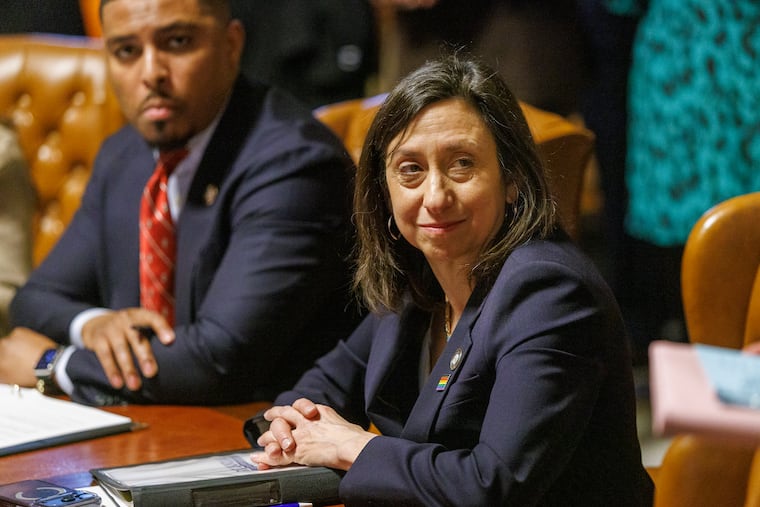
A line in Philadelphia’s zoning code conflates drag performances with strip clubs, topless bars, and other adult cabaret venues. It’s a definition that City Council hopes to change.
Councilmember Rue Landau introduced legislation on Thursday to remove references to “male or female impersonators” in a section of the zoning code that regulates “Adult Oriented Services.”
As currently written, Philadelphia defines an adult cabaret as a place that “features topless dancers, go-go dancers, exotic dancers, strippers, male or female impersonators or similar entertainers … dancing, performing or acting in a lewd, sexually erotic, exciting or stimulating manner.”
The distinction is similar to one found in a Tennessee law that prohibits so-called “adult cabarets” featuring “male or female impersonators” from being staged anywhere minors might see it. It also mirrors language used in similar drag bans struck down this year by judges in Texas and Montana, and one currently up for consideration by the Idaho Senate.
If passed, Landau’s proposal would strike the provision regarding male and female impersonators.
The bill will first be considered by City Council’s Rules Committee. The legislation has the support of Mayor Cherelle L. Parker’s administration, Landau said, and has also been shared with her colleagues in City Council, who Landau described as “supportive.”
Landau’s bill is inspired by recent events at South Street bar Tattooed Mom, which has long been a go-to venue for Philly’s LGBTQ+ artists, and particularly drag performers, in part because it doesn’t charge acts.
In March, the Department of Licenses and Inspections ordered Tattooed Mom to cease all events with music — including drag shows and karaoke nights — after a February inspection found that Tattooed Mom lacked the requisite special assembly license. The revelation forced the bar to cancel more than 30 drag, karaoke, and music events.
Tattooed Mom owner Robert Perry told The Inquirer Friday that he brought what he called the “offensive and troubling language” to the attention of Landau’s staff, but was not involved in drafting the legislation.
The incident “opened my eyes to actually reading the code and having conversations … I think the [language] is so antiquated that people don’t even realize it’s there,” Perry said. “We might have initially spurred the conversation, but Landau did all the heavy lifting.”
Perry was initially instructed to seek an adult cabaret permit in addition to a special assembly license for Tattooed Mom, he told the Philadelphia Gay News in July. That same month, an L&I spokesperson told Philly Voice that the permit — which traditionally governs businesses such as strip clubs and adult theaters — is required to host drag and burlesque events.
Perry now believes that his bar doesn’t need one upon further research, he said Friday.
Regardless, Landau said Tattooed Mom’s predicament was the spark for her proposal. “They were cited in violation of this provision simply because they had a drag performance happening,” she said. “We don’t want that happening in Philly … A lot of folks rely on drag performances for their livelihood, and we just want to keep supporting them.”
Landau is unaware of L&I citing other Philly venues for hosting drag or burlesque shows without a permit. “This is thankfully nothing that L&I is usually citing establishments” over, she said.
If passed, Landau’s legislation won’t green-light events with music at Tattooed Mom. All Philly establishments with an occupancy of 50 or more people that host music performances, dancing, or DJs are required to have a special assembly occupancy license, which costs $253 and must be renewed annually. To procure one, Tattooed Mom must first apply for a zoning exception.
The process involves holding a public meeting for community feedback followed by a separate hearing in front of the Zoning Board of Adjustment. As of March 2026, the wait time for a hearing is 180 days — or roughly six months — according to a manual from the City of Philadelphia.
Perry said he has yet to begin Tattooed Mom’s application.