Senate GOP rushes to pass budget bill, avoid shutdown ahead of midterms
Senate Republicans have a lengthy to-do list to complete before leaving town Friday, including approving a stopgap budget and dozens of confirmations.
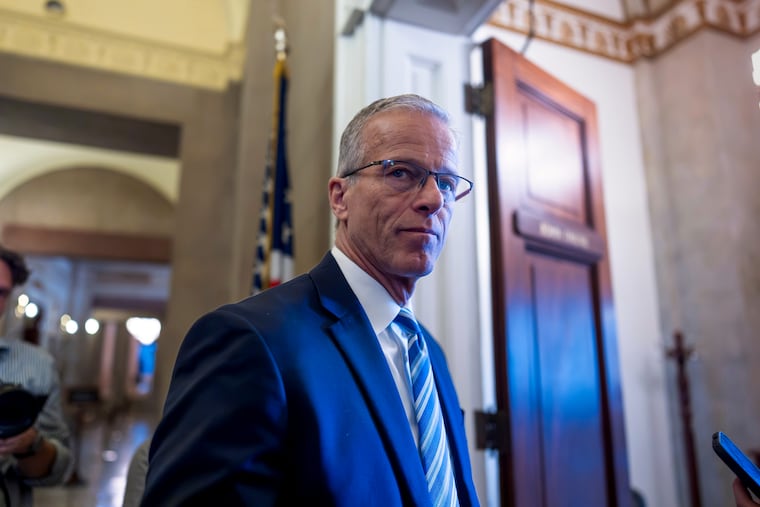
Senate Republicans are racing to complete a lengthy to-do list before leaving town Friday, including approving a stopgap spending bill aimed at averting a government shutdown before the Nov. 3 elections.
In addition to the stopgap budget bill, Senate Majority Leader John Thune (S.D.) is working to confirm 74 of President Donald Trump’s nominees and faces pressure to advance a $95 billion package that would provide fresh cash for the Iran war and inflation-battered farmers.
Whatever senators don’t accomplish this week is likely to be pushed to September, when Congress is scheduled to be in Washington only briefly before hitting the campaign trail.
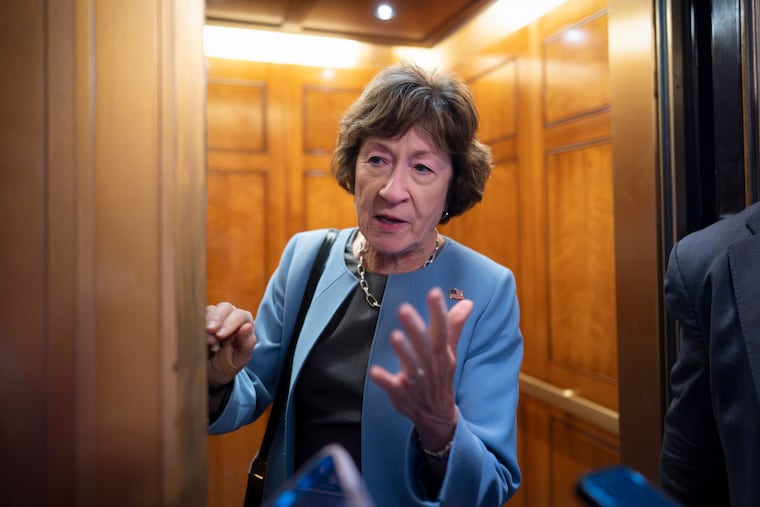
The stopgap budget bill is up first, with a procedural vote that was expected late Monday. Appropriations Committee Chair Susan Collins (R., Maine) and Sen. Patty Murray (Wash.), the lead Democratic appropriator, worked jointly on the bill, which would extend government funding through Dec. 11.
The measure differs in important ways from a version of the bill passed by the House: It incorporates White House requests to maintain funding for housing and nutrition programs through the fall, and it would extend an expiring authorization for veterans’ healthcare.
Additionally, it would temporarily block the White House Office of Management and Budget from adopting a rule that would give political appointees sweeping powers to cancel hundreds of billions of dollars in federal grants.
Rep. Rosa DeLauro (Conn.), the lead Democrat on the House Appropriations Committee, said in a statement Sunday that the Senate bill marks “a clear improvement” over the House bill, which she and most House Democrats opposed.
If the Senate approves it, the House could take the measure up when lawmakers return at the end of August. Unless Congress acts, the government is set to run out of funds on Oct. 1.
Senate Republicans are also facing a long list of presidential nominees at an array of agencies, including the Departments of State, Energy, Treasury, and Justice. The Senate could also confirm Todd Blanche as attorney general if the two Republican senators who have blocked his confirmation vote to advance it Tuesday.
Late Sunday, Blanche issued a written order formally rescinding the Trump administration’s proposal for a $1.8 billion fund for people who claim they were victims of political prosecutions — a step toward breaking the impasse.
Blanche said the revision came as part of an agreement with Senate Judiciary members including Sens. John Cornyn (Texas) and Thom Tillis (N.C.), who had threatened to vote against his nomination over concerns about the fund. The order came one day after Trump threatened in a Truth Social post to revive his push for the payout fund if Blanche is not confirmed.
The Judiciary Committee has scheduled a critical vote Tuesday on Blanche’s nomination.
Elsewhere, the Senate is expected to easily approve legislation to impose new sanctions on Russia, which would allow the Trump administration to levy up to 100% tariffs on the top five purchasers of Russian oil and natural gas. The measure, which was championed by Sen. Lindsey Graham (R., S.C.) before his sudden death last month, advanced last week on a strong bipartisan vote.
And Thune has said the chamber would vote on an industry-backed cryptocurrency bill that would establish federal authority over digital assets. But the measure faces opposition on a variety of fronts, including from Democrats, who are demanding tougher ethics provisions to limit Trump’s ability to profit from his family’s crypto businesses.
Possibly the tallest order for Republicans this week is finalizing a framework for a budget package to speed cash to farmers and the Pentagon. Using a complex process known as reconciliation, GOP lawmakers could sidestep a Democratic filibuster and pass the package with Republican votes.
For the strategy to work, Senate Republicans would need near-unanimous support in their caucus. But several GOP senators have expressed opposition.
“We’re taking a hard look at it,” Thune told reporters last week. “And at the moment, as I’ve said before, we’re probably not there.”
Last month, the House passed a $95 billion budget framework that includes $73 billion for defense, $12 billion in aid for farmers and $10 billion for election-related measures, which House Republicans hope to use to impose elements of the Save America Act — a top Trump priority. That bill would require voters to prove their citizenship when registering to vote and to show a photo ID at the polls.
Trump has demanded that the Senate stay in session until the election provisions pass, but Thune has said repeatedly that the bill cannot pass the Senate, even under reconciliation. Tillis, for one, has said he would not support it.
Meanwhile, multiple GOP senators have expressed other concerns with the House framework for reconciliation, including Sens. Lisa Murkowski (Alaska), Bill Cassidy (La.), and Collins.
Senate Armed Services Committee Chairperson Roger Wicker (R., Miss.), who has argued for closer to $300 billion for defense, told the Washington Post on Thursday that he is pushing for the higher amount. But a bigger package risks the support of fiscally conservative Republicans, who are already balking at adding $95 billion to the nation’s $39.8 trillion debt.
Senate Budget Committee Chair Ron Johnson (R., Wis.) said the White House would need to directly request the additional funds for defense. Still, Johnson said he was “pretty optimistic” that the Senate would advance a budget framework before leaving town.