SEPTA drivers fear screaming riders and chaotic commutes as bus overhaul takes effect
Thirty bus routes have been realigned as part of the first phase of the New Bus Network.
The lines are drawn, the maps are set, and on Sunday SEPTA began reconfiguring bus routes across the Philadelphia region.
Bus operators say they worry passengers frustrated over changed routes that take them by surprise and unexpected delays will yell at, curse, or assault them. It has been a persistent problem in recent years.
In some cases, riders accustomed to staying on one bus route will need to transfer to other buses or the subway and elevated trains. That increases the chances of missed connections and delays. And angry people.
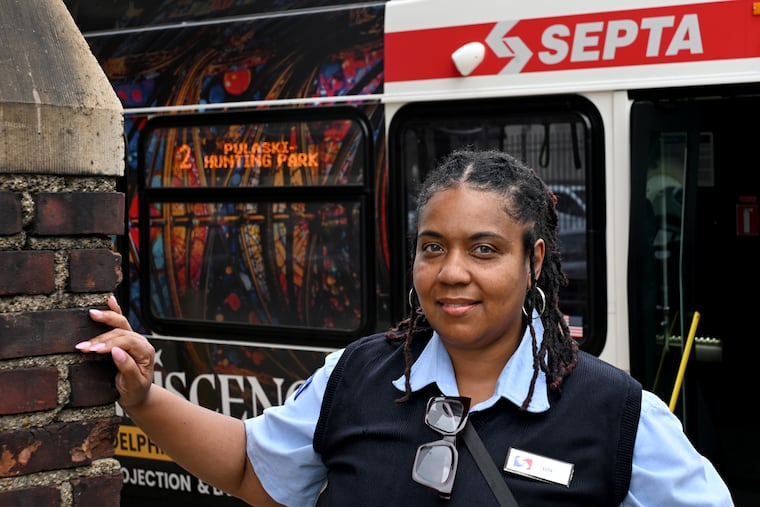
“You’re upset because you had counted on the bus,” said Keya Sampson, 52, a bus driver for 12 years. “You have to be at this appointment or you’ve got to punch in on time.”
She is sympathetic, even though delays are outside her control.
“We’re going to end up in a tricky situation because we’re the face of SEPTA,” Sampson said. “They don’t have anybody else to scream at, unfortunately.”
Vulnerable riders
Carlos Guillen, who has worked for SEPTA for 19 years as an operator on buses and the Broad Street Line, noted that SEPTA advises Route 4 riders to take the B, SEPTA’s new name for the subway line, to avoid longer wait times.
“I can see how it can impact elderly and those with disabilities, especially moving down the sidewalk — they’re not the smoothest thoroughfares,” said Guillen, a safety officer for Transport Workers Union Local 234.
He noted a lack of ADA-accessible stations on the B north of City Hall.
Longer term, some bus operators are concerned about the possibility they could be replaced in the future by autonomous driving technology.
“Autonomously driven vehicles have no place in mass transit,” said Joe Coccio, secretary-treasurer of Local 234, which represents more than 5,000 SEPTA employees, including operators on buses, subways, and trolleys. “They’re flawed. They’re unpredictable.” He said they also can be hacked.
SEPTA says it has no plans to use robot bus operators and is hiring human ones as fast as it can. But a spokesperson also said the authority wants to keep its options open.
Most operators are anticipating some confused passengers at first, even though SEPTA has sent out teams to educate people about Phase 1 of the New Bus Network. Maps and cards illustrate the changes, translated into multiple languages.
Some people won’t get the message.
“People right now don’t even read our destination signs to see if it’s the right bus,” said Ryan Stewart, who operates a Route 35 bus from the Midvale depot in Nicetown.
What’s changing
SEPTA has pushed for much of the last decade to streamline its bus network amid declining ridership that predated the pandemic. Planners found that slower travel times due in part to traffic delays and long, twisty routes made service less reliable and discouraged people from relying on buses.
In the first wave of changes, 30 bus routes will be affected.
Some routes with low ridership or that duplicate nearby service have been eliminated. Others have been extended. Some will run more frequently, others less frequently, based on analysis of demand. Two new routes have been added.
» READ MORE: What you need to know about phase 1 of the New Bus Network
The people who pilot the buses on Philadelphia’s narrow streets know that some small and overlooked issues could undercut the New Bus Network program’s goal of quicker, more efficient service.
Sampson, for instance, has been driving the 63 for the summer. She will be back behind the wheel on Route 4, her regular run for the last four years, this week — as the changes begin.
Route 4 will have fewer buses running. So SEPTA is deploying 60-foot articulated buses, which carry more passengers.
SEPTA had been using 40-foot buses on the route, which has narrow streets and hairpin turns, especially in its northern reaches, where there is a longstanding detour that will not end until summer 2027. Operators think the longer buses will have trouble navigating the route.
Operators have asked SEPTA to look at the issue. “If there’s nothing they can do, it’s going to be a nightmare,” Sampson said. “We’re going to get stuck.”
She knows well the hard turn from Erie onto Rising Sun, an angled intersection with a pub that often has a beer truck parked on the curb. Only one articulated bus at a time can fit down that little stretch of Old York Road. And the church at 10th and Rockland Streets that has packed funerals, with cars parked to the corners.
“How do you ask someone who’s grieving, ‘Hey, move your car’? … At the same time, we do need to make the turn, and it does need to be safe.”
Time will tell
Paul Pollard, a veteran bus operator on Route 61, said he spends precious minutes stuck in traffic on Main Street in Manayunk on his way north to Roxborough during morning peak hours, as parents drop students off at school.
But the schedule assumes his bus can sail through.
“I’ve had people get off my bus, walk two or three blocks down, and go into their job,” Pollard, 49, said. “I’m still sitting in traffic.”
It is “virtually impossible” to meet the schedule safely, he said. The result: late buses and steamed customers.
Time will tell if worries become reality, but operators know that they will bear the brunt of any outrage.
“There’s nobody at SEPTA headquarters getting somebody throwing coffee on them, or spitting on them,” Pollard said.