Parts of Fairmount Park were not only the site of America’s first paper mill, but also the country’s first company town
RittenhouseTown, which thrived for more than a century, was the site of the paper mill that was the only source of paper in America for more than 40 years.
We take paper for granted now. But in the late 1600s, when Pennsylvania’s founder William Penn recruited German papermaker and preacher William Rittenhouse to manufacture the writing parchment in the New World, paper was a luxury.
England’s King William III made it difficult for his subjects — at home and in the Americas — to have it. Like many monarchs of his day, he believed it was the Crown’s duty to record history.
The English imported paper from other European countries. So, to make matters worse, colonists who managed to appeal to the king for paper were double and triple taxed. They got fed up and went about securing their own paper to document the goings on in the government, inform citizens, record history, and ultimately plan a revolution.
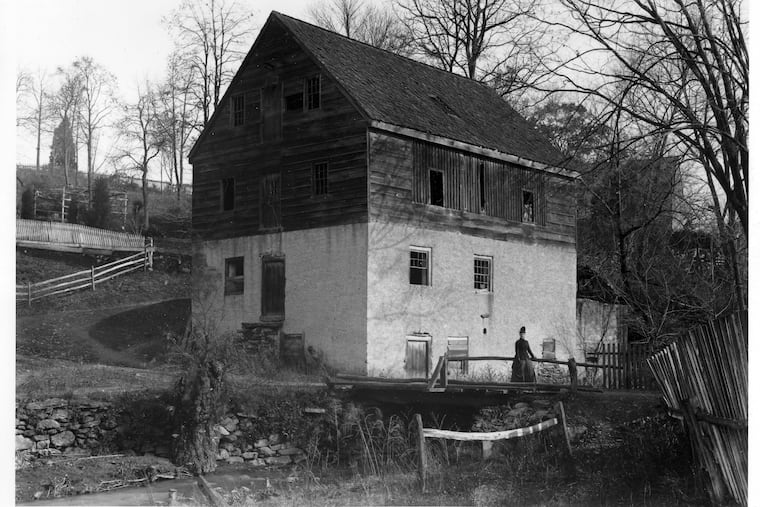
In 1690, Rittenhouse partnered with Philadelphia’s first printer, William Bradford, to build America’s first paper mill, situated in northwest Philadelphia and powered by the Monoshone Creek, a tributary of the Schuylkill.
The paper mill will be celebrated this Saturday at Historic RittenhouseTown, part of a series of weekly “Firstival” celebrations. Firstivals are the Philadelphia Historic District’s yearlong birthday nod to places and events with Philadelphia roots. The day parties are a hallmark of this year’s Semiquincentennial fetes.
At the Rittenhouse mill, paper was made from linen rags fashioned from flax grown in Germantown, that were broken down and shaped into sheets. The mill grew quickly as Rittenhouse, America’s first Mennonite bishop, provided paper for Bibles and Quaker and Mennonite texts in German.
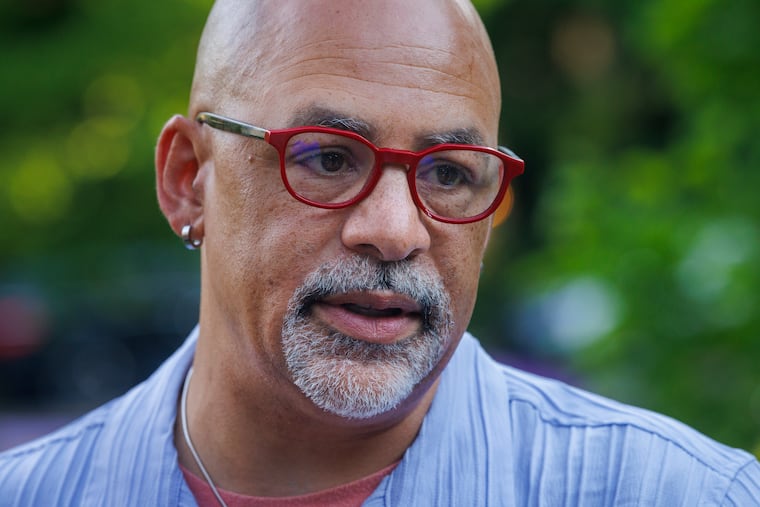
Rittenhouse’s first paper mill was destroyed by a flood, said Alexander Jones, preservation and education manager at Historic RittenhouseTown.
Then “Rittenhouse rebuilds and he buys out his partner,” Jones said. “The paper mill becomes his sole enterprise. Instead of hiring workers, he recruits his family and it becomes a giant company town. There is a church, a blacksmith, stone houses, a bake house, and more than 40 buildings with five or six of them under what is now Lincoln Drive.”
RittenhouseTown’s paper mill was the only source of paper in America for more than 40 years, Jones said. It would grow to more than 200 acres.
David Rittenhouse — Rittenhouse’s great-grandson and the astrologer, clockmaker, and first director of the U.S. Mint after whom Rittenhouse Square is named — was born in his family’s RittenhouseTown homestead in 1732.
The town thrived for more than a century.
By the mid-1800s, the paper mill began to slow down as dyes from textile and carpet manufacturers and chemicals from blacksmithing started to pollute the Schuylkill. The filthy water made it nearly impossible to produce good quality paper at the mill.
The Fairmount Park Commission began acquiring parts of RittenhouseTown through a series of purchases and donations from 1890 to 1917. The city demolished many of the town’s buildings, including a barn that, Jones said, was razed and rebuilt within a year.
By that time, however, the Rittenhouse family had spread throughout the Philadelphia region from Center City to Blue Bell, Jones said.
Today, RittenhouseTown spans 20 acres nestled in Fairmount Park right behind Lincoln Drive. Six of the original buildings remain, serving as a reminder that RittenhouseTown was the first building block of American industry.
“The paper mill really got the ball rolling for Philadelphia,” Jones said. “And from that first came so many other American firsts in Philadelphia: the first Mennonite bishop, the first company town, and America’s first director of the U.S. Mint.”
This week’s Firstival is Saturday, June 27, 11 a.m.-1 p.m., at Historic RittenhouseTown, 208 Lincoln Drive.
The Inquirer is highlighting a “first” from the Philadelphia Historic District’s 52 Weeks of Firsts program each week. A “52 Weeks of Firsts” podcast, produced by All That’s Good Productions, drops every Tuesday.