Delaware Container Port plan is full speed ahead, despite lacking research showing it’s needed
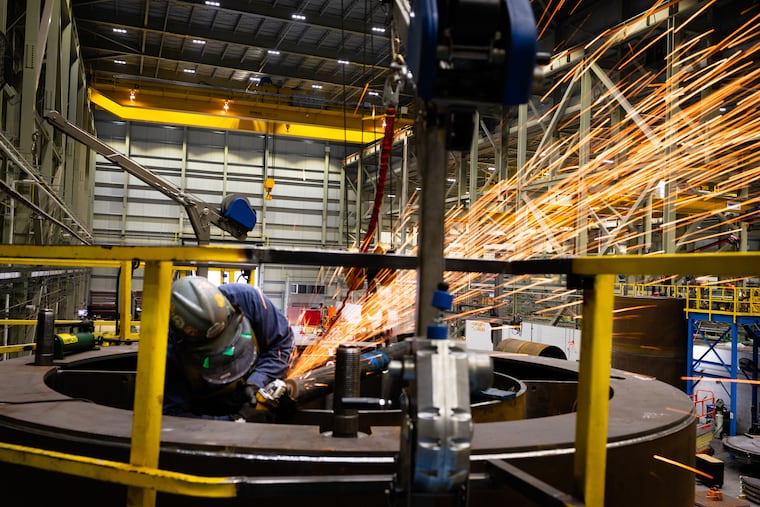
The Delaware Container Port is designed to replace high-wage union industrial jobs lost when northern Delaware’s auto, steel and chemical works shut over the past 20 years.
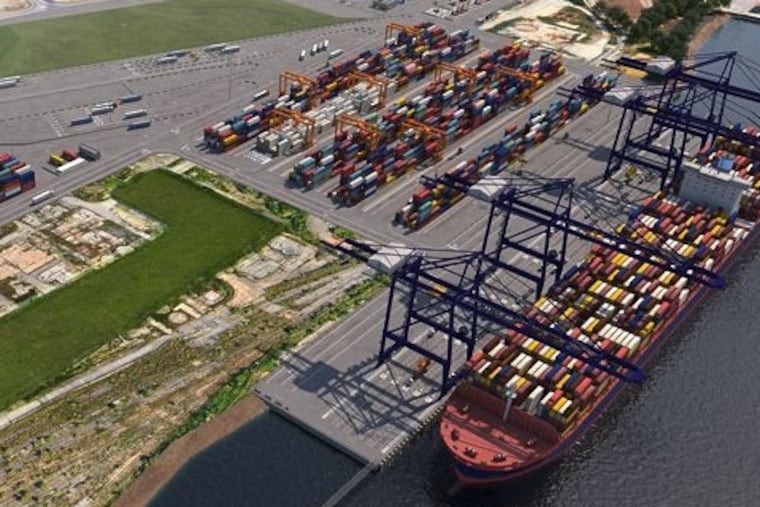
Contractors for Delaware and its port manager, Enstructure LLC, have started work on a $669 million container port that leaders hope will attract thousands of jobs to the state’s industrial northeast near the Pennsylvania state line.
Delaware has agreed to pay $325 million of the container terminal cost, with Enstructure, which is financed by the Blackstone private equity group and other investors, committing $225 million. Federal grants are expected to cover the rest.
U.S. Sen. Chris Coons (D., Del.) told the crowd of construction and port workers and public officials at a groundbreaking Monday that the Delaware Container Port is designed to replace high-wage union industrial jobs lost when northern Delaware’s auto, steel and chemical works shut over the past 20 years.
When the port is finished by late next year, “bigger ships will come to Delaware first,” Gov. Matt Meyer said, as container ships traveling the Delaware River to Pennsylvania and South Jersey terminals passed by.
Meyer said the new Delaware terminal would feature electric cranes and other equipment, instead of diesel power at “one of the cleanest, greenest ports in the world.”
Shippers have been “containerizing” cargo into trailers suitable for shipping by sea, rail and truck since the 1950s, though union leaders complain that automated cargo handling reduces the need for labor. Port managers clear land, buy cranes and pour concrete based on uncertain estimates. South Carolina earlier this year shut a four year old, $1 billion container port because it attracted few cargoes.
The site of Delaware’s new port is a former DuPont Co. titanium dioxide plant at Edgemoor, north of Wilmington. During Monday’s event, earth movers smoothed property east of a mound that sealed in contaminants left over from DuPont days.
Coons said the site had been “the biggest dioxin pile in North America” before it was sealed and praised advocacy by the International Longshoremen’s Association for the site’s “new beginning.”
ILA activists said they faced long opposition from political leaders concerned by the cost of a new port and from competing ports who sued to derail the project.
Litigation is ongoing, but the work is going ahead, said Delaware Secretary of State Charuni Patibanda-Sanchez, whose father was an engineer at the DuPont plant before its 2015 shutdown. “The very complex legal situations still continues, but we will work through it,” she said in an interview.
The new port is designed to handle 1.2 million Twenty-foot Equivalent Units (TEUs) — about 600,000 40-foot trailers. Meyer said that’s triple the capacity of the Port of Wilmington, three miles south.
And it’s more trailers than the port of Philadelphia handled in 2025, a record year. In Philadelphia, the state port authority says it has raised $266 million from the U.S. Department of Transportation to boost container capacity at the Mustin property it acquired last year and is also growing space at Packer Avenue terminal. “Competition among neighbors working together is good for all,” said PhilaPort CEO Rich Lazer. he added that new terminal space anywhere on the river can boost the region’s market share.
State officials did not present research supporting the need for the new terminal. Patibanda-Sanchez, who chairs the state-controlled Diamond State Port Corp. board that oversees the ports, said a study by University of Delaware researchers is not finished.
The port will support “2,500 to 3,000″ workers when fully open by 2028, according to Bill Ashe, international vice president of the International Longshoremen’s Association and president of ILA Local 1694, which he said represents 1,500 workers at the current Port of Wilmington.
He said the port’s rail service would be able to send stacked railroad cars to industrial sites in the region, such as the 4 million-square-foot Amazon warehouse in nearby Stanton, Del.
Holt Logistics and its affiliates, which manage facilities in South Philadelphia, Camden, and Gloucester City, is spending more than $200 million adding cranes and expanding its container storage and service areas, Leo Holt, president of the family-owned business, said in an interview last week.
Separately, PhilaPort, the city’s port agency, and state officials are considering a new container facility in part of the Mustin property whose $90 million purchase was announced last year.
With all these possible container ports in the works, Holt said, Delaware is waging an expensive “race to the bottom” and should cooperate with Pennsylvania and New Jersey instead of competing.
As leaders arrived at the groundbreaking, protesters gathered at an entrance to the property holding signs urging officials to reverse the plan and backing candidates who are challenging incumbent Democrats in Tuesday’s primary.
Karen Hartley-Nagle, a former New Castle County Council chair, said neighbors were worried about increased ship and truck traffic.
Among the supporters who spoke after Gov. Meyer was Daniel Elkins, head of the Bellevue Community Center, which runs youth and other programs near the port. He said Enstructure had supplied food for neighborhood families after the Trump administration stopped a federal food program. He said port jobs would boost the neighborhood.
“Thank you for bringing back opportunity,” he said.
Enstructure, the port operator, is a 10-year-old firm that operates more than 20 port facilities, including the port at the former U.S. Steel Fairless Works in Lower Bucks County.
Cofounder Matthew Satnick told the crowd he and his partner had founded the firm in Winona, Minn., in 2016, and were used to being underestimated. He promised to complete the container port “on time and budget,” with “economic development to follow.”