Philadelphia has the will to reopen the Academy of Natural Sciences. Let’s find a way. | Editorial
A review led by the William Penn Foundation is an important step toward keeping the historic museum’s shuttering from becoming permanent.
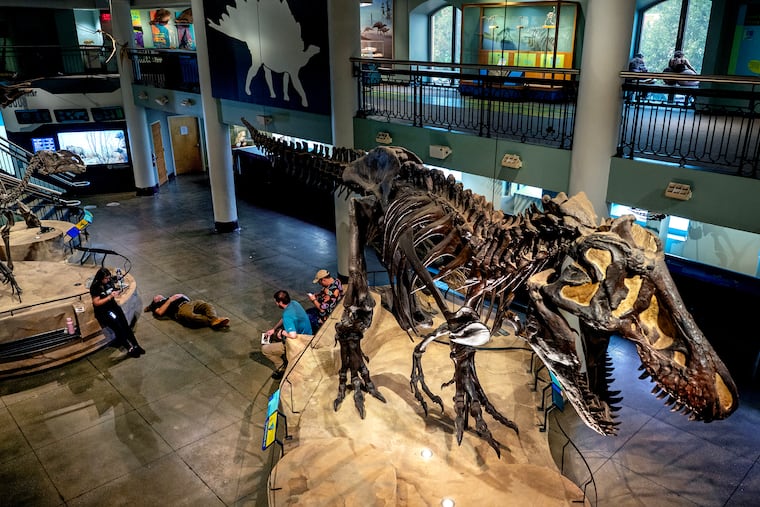

Fifteen years ago, a partnership between the Academy of Natural Sciences and Drexel University boosted the school’s reputation and academics while allowing the research institute and museum — with its iconic wildlife dioramas and dinosaur skeletons — to keep its historic doors open on the Benjamin Franklin Parkway.
In the wake of the museum’s abrupt closure in September, however, Philadelphians have discovered that the leaders of the two institutions are getting along about as well as a Tyrannosaurus and a Triceratops might have, with the inauspicious future to match.
In a city renowned for its history and science, on an avenue more accustomed to gaining rather than losing attractions in recent years, it was distressing to see the Academy’s museum go dark. But the crisis has shown that its brick-and-limestone building and collections of thousands of volumes and millions of specimens aren’t its only irreplaceable assets. It also enjoys a priceless store of public and political will to keep it going — and keep it in Philadelphia.
» READ MORE: FAA ground stop exposes a Trump cabinet unfit to lead in a crisis | Editorial
The public outpouring of love, support, and sorrow for the two-century-old Academy has been impressive. It’s no doubt partly in response to that popular outcry that public officials, from City Council to Gov. Josh Shapiro, have rightly become engaged in the matter, as have many of Philadelphia’s civic and philanthropic institutions. All of that can and should help find a way forward for the Academy in the city where it belongs.
It’s also clear, however, that the museum didn’t reach this point as suddenly as it seemed to from the outside. Like many aging museums, the Academy has struggled to bring in enough paying customers to support its expenses, which are compounded by the age and condition of its building.
According to Drexel officials, the Academy has been unable to consistently sustain itself, requiring millions of dollars a year in subsidies from a university that is no longer willing or able to provide. At the same time, financial documents and Academy leaders’ accounts raise questions about the extent and nature of the deficits.
This week’s City Council hearings, meanwhile, only affirmed the impression that the paired institutions have reached a point of mutual distrust and fundamental differences that has left them unable to productively cooperate or amicably separate. The closure has had a series of regrettable consequences, including layoffs and relocation of the museum’s live animals and other parts of its collection.
» READ MORE: Malayshia Allford’s life was treated recklessly. Her death must not be. | Editorial
Some Council members are clearly eager to get the museum open and willing to dedicate public money to the effort. Reopening the Academy is the right goal, but Council should pursue it deliberately. While the Academy is worthy of public support, it also deserves the sort of thought and attention that will make it sustainable over the long term. That requires addressing its troubled relationship with Drexel, its long-term financial and capital stresses, and its need to appeal to a sufficient share of potential visitors. Then public officials can gauge the need for and feasibility of taxpayer subsidies.
Fortunately, the William Penn Foundation and other charitable groups offered to conduct a comprehensive review of the Academy’s condition and make recommendations for its future. And unlike William Penn’s earlier offer to temporarily cover the museum’s operating costs, this one was accepted. Given the complicated challenges facing the institution and the rancor between Drexel and the Academy — which disagree on basic facts of the closure and more — independent information and expert analysis are sorely needed steps that should have the full cooperation of both institutions.
Preserving history and fostering science and culture are Philadelphia strengths. Given that, the Academy of Natural Sciences doesn’t have to go the way of the fossils within.
About our editorials
Editorials express an opinion about a matter of policy or public interest that has been researched and written by our Editorial Board, a group of journalists separate from the newsroom. Unlike news stories, which are fact-driven and written by reporters, editorials advocate, champion, argue, critique, and offer solutions. Editorials are not intended to dictate what readers should think, but to cut through the noise of polarized debate and provide a catalyst for elevated discourse.