Construction software giant based in Exton opens a new Philly office
Investors say the best tech entrepreneurs want to move to California, said Bentley System’s chief platform officer. “I said no, we can build a great tech company in Philadelphia.”
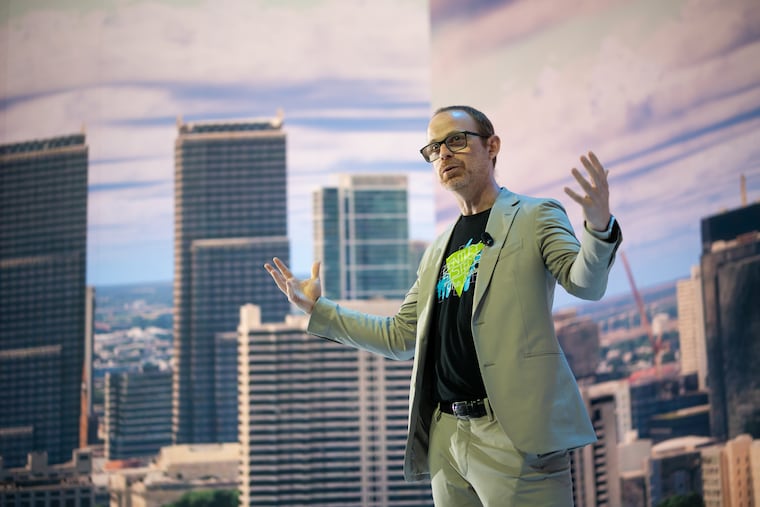
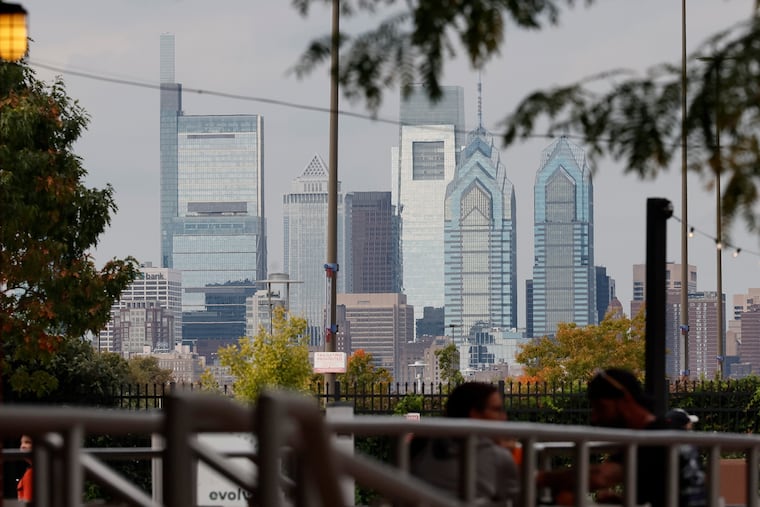
Exton-based Bentley Systems International, the software company with the highest market capitalization in the Philadelphia area, has opened a Center City office as its new base for 150 engineers and other tech and business staff, replacing two smaller outposts in the city.
The construction design and building software maker’s 22,000-square-foot hub in the Curtis Center building will replace Bentley’s 14-year-old office on Cherry Street and the 30-person 400 Market St. former headquarters of Cesium GS Inc., which Bentley acquired in 2024.
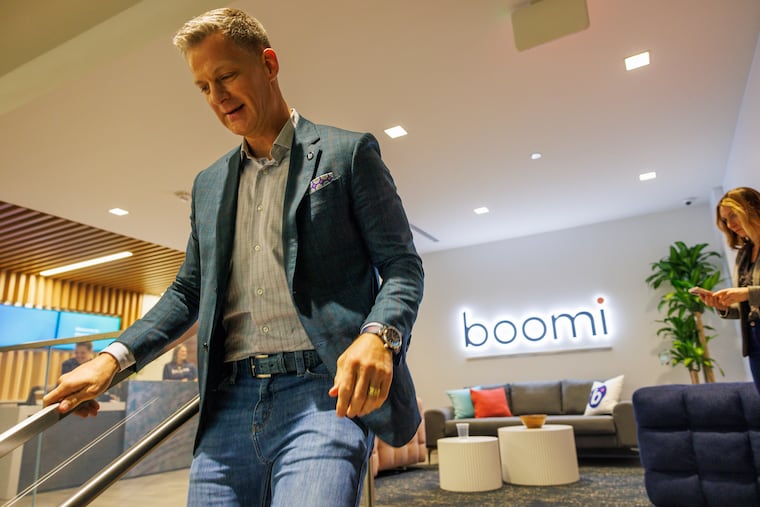
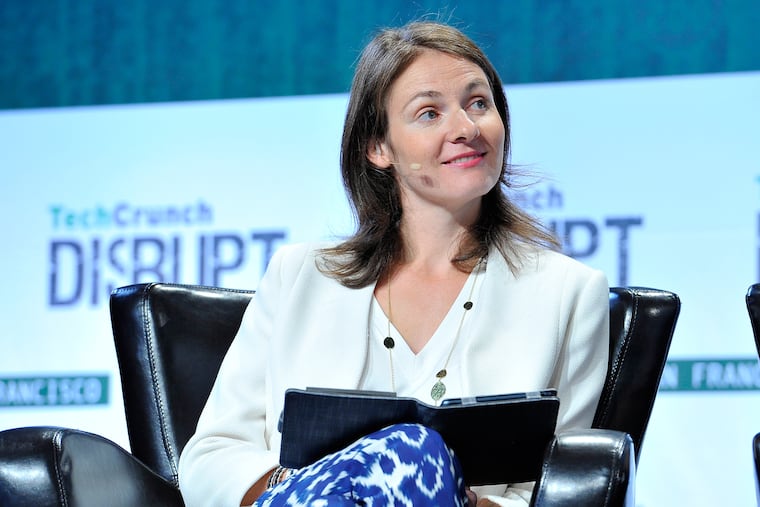
Cesium founder and past CEO Patrick Cozzi is now Bentley’s chief platform officer and will head the new office, near Independence Hall.
Bentley, founded by five brothers from Delaware in 1984, has sales totaling $1.5 billion last year.
Cozzi set up Cesium as a geospatial-mapping applications unit of serial tech developer Paul Graziani’s Exton-based Analytical Graphics Inc. (AGI) in 2011 and spun Cesium off as an independent company in 2019.
Bentley customers use what’s now its Cesium Ion mapping platform to show sites and buildings in complex detail on office computers and hand-held devices.
A Penn State grad, who also earned a master’s and taught programming and architecture at the University of Pennsylvania, Cozzi says he sees Philadelphia as a “magical place” for tech companies.
“When I was CEO raising capital on the West Coast, some of the investors told me the best tech entrepreneurs want to move to the [San Francisco] Bay area. I said no, we can build a great tech company in Philadelphia,” he said.
Philadelphia was an early computing industry center. ENIAC, the pioneering system built at Penn to help plan World War II artillery attacks, and other early Philly-built computing systems relied on the vacuum tubes mass-produced for radio manufacturers in Philadelphia and Camden.
But by the 1970s, the industry committed to far more efficient silicon-based microprocessors developed in California’s “Silicon Valley.” Investor-rich cities such as Boston, Seattle, and Austin also became important computer hardware and software centers. Few large tech companies are now based in the Philadelphia region.
Cozzi says Philadelphia’s affordability is now an asset.
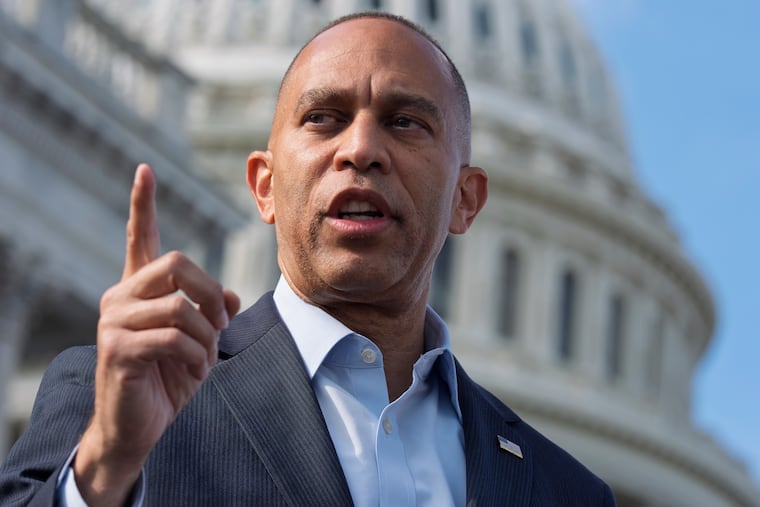
“We have reasonable cost of living and fantastic schools, graduates who want to stay here, great restaurants and quality of life, it’s an awesome place for the tech community,” he said, as he prepared to welcome Mayor Cherelle L. Parker, State Rep. Jordan Harris (D., Phila.), and 200 other guests to the new space for a grand opening celebration Thursday evening.
Cozzi said neither the city or state provided incentives for the new office.
Invited guests at Thursday’s event include Bentley clients from Center City-based Pennoni Engineering; Ansys, the Pittsburgh-based owner of AGI, and Earthbrain, a Japanese construction equipment and computing joint venture, which uses Philadelphia as a U.S. base.
Bentley went public in its 2020 IPO at $22 a share. The stock peaked in the low $60s the next year and ran almost as high last summer. It has lately traded around $35 a share.
It employs more than 5,000 at offices in 42 countries. The company is worth nearly $11 billion on the Nasdaq stock exchange. That compares to around $6 billion for Newtown, Bucks County-based software-outsourcing provider EPAM, $2 billion for King of Prussia tax-accounting software maker Vertex Inc., and $200 million for Blue Bell legacy hardware and software provider Unisys.
Bentley’s 10th-floor space in the Curtis Center includes a public-meeting area to host events.
The building was built in 1910 for Curtis Publishing and its mass market magazines, led by the Saturday Evening Post and Ladies’ Home Journal. Curtis moved its press operations to Delaware County in 1949 and shut both Philadelphia offices and Delco operations by the time of its 1969 bankruptcy.
The Curtis building’s owner, Keystone Development + Investment, has in recent years added apartments, biotech labs, and other specialized units to help fill the block-long complex.