Boeing weighs whether to close Delco plant as helicopter factories face military funding cuts
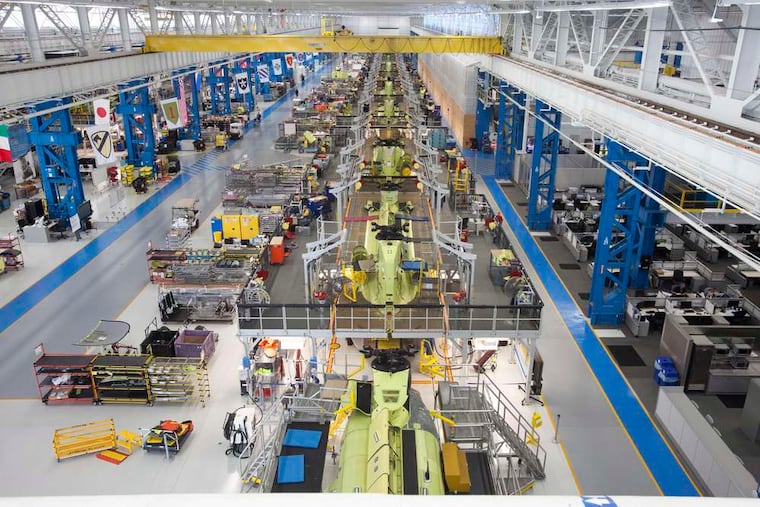
The helicopter factory in Ridley Township is the region’s largest industrial employer, with 3,000 workers.
The record $1.5 trillion U.S. military budget for next year has mostly left out the Philadelphia’s area’s helicopter industry.
Over the past decade, Boeing and Leonardo invested many millions and put thousands to work with the expectation they had Army or Air Force jobs for years to come. But their leaders may have to write off losses and cut production.
Meanwhile, the Trump administration is encouraging shipyard, robot, and aerospace developers to invest billions and hire tens of thousands of workers for yearslong projects.
Both Boeing’s 3,000-worker Delaware County plant, the region’s single largest industrial employer, and Leonardo’s nearly 1,000-worker Northeast Philadelphia plant have been frustrated by a lack of funding in the federal budget.
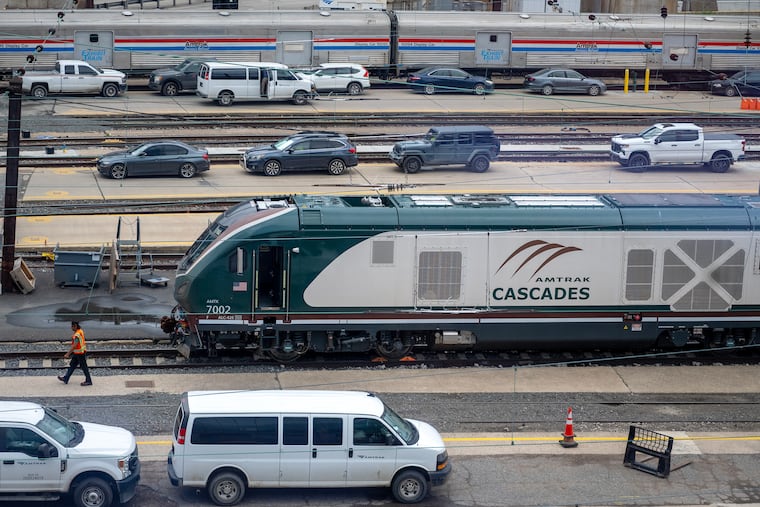
Boeing builds and updates Chinook heavy-lift helicopters at the Ridley Township facility and has for 60 years. Leonardo’s products include the Grey Wolf medium-lift helicopter.
Boeing says it invested $400 million, starting in 2016, on upgrades in its factory buildings between the Delaware River and I-95. That was partly based on the Army’s promise it would rely on Chinooks, developed during the Vietnam War, through at least the mid-21st century.
Boeing and government officials say that company is weighing whether it will close the Ridley plant in the next few years.
Starting in 2018, Leonardo invested $125 million in expanding its Northeast Philadelphia assembly plant and training facility for a military version of its best-selling two-engine helicopter to defend nuclear missile bases in the Dakotas and ferry VIPs around Washington. But the Air Force budget has only funded half the contracted aircraft.
Leonardo builds other products but had counted on the Air Force orders to fund its continued growth.
Boeing’s tough choices
The Army has repeatedly failed to lock in billions in federal funding for Boeing’s Ridley-built Chinook CH-47 upgrade or maintenance. That leaves three expensive options, U.S. Sen. David McCormick (R., Pa.), a former Army paratrooper, wrote in a recent letter to Army Secretary Daniel P. Driscoll.
The first is “to let the Boeing Philadelphia site close due to lack [of] contracts,” idling the last 840 union workers on the production line, plus more than 2,000 engineers and managers, and supply plants in Pennsylvania and at least five other states.
The Army could use its own personnel for repairs and finding new parts sources, a far more expensive approach, according to the Army’s own estimates.
Or Congress could, with Army support, add enough to the budget to boost Ridley’s Chinook production to 18 a year, which is “the minimal sustaining rate.”
Congressional aides noted the 2027 budget funds five Chinook upgrades for the next fiscal year. Congress could authorize another seven if it votes during the lame-duck session between Election Day and the end of the year.
That’s still short of 18. Boeing wants to be able to guarantee that level for at least four years so it can keep materials and supplies flowing.
Orders from Germany and other allies could fill in that shortfall, but as of now, there are no additional Chinook orders beyond 2031. Boeing plans to review next year’s budget and decide whether to close the plant.
The Ridley workers are “well-trained, hungry, and [have] the capacity to do the job best,” U.S. Rep. Donald Norcross of South Jersey, a senior Democrat on the House Armed Services Committee that oversees military spending, said in a statement.
He said he’s pressing Boeing leaders to keep the plant working and its suppliers in place. Manufacturers in Pennsylvania, New Jersey, and other states depend on Boeing orders.
U.S. Rep. Mary Gay Scanlon, a Democrat whose district includes the plant, said closing it could threaten both national security and the Philadelphia-area economy. The uncertainty of the “meager” budget requests is “not a sustainable path,” she said in a statement.
Why not fighter planes?
The headcount of UAW Local 1069 members, who build the helicopters in Boeing’s vast, air-conditioned assembly halls, was about 1,300 in 2022 and has dropped to around 840, said Jim Rugh, the local’s president.
Boeing lost a 2022 competition to replace Black Hawk helicopters that might have given the Ridley plant new life.
The plant made another product, the tilt-rotor Osprey, which takes off like a helicopter and flies like a plane. But the last new Osprey rolled off the assembly line last year, and the line is scheduled to close next year.
During the first Trump administration, when Chinook funding was threatened, Boeing managers said Ridley might remain open as an engineering center.
But union leader Rugh said that’s now less likely. Boeing has been reassigning engineers to the plants where their work gets done. “I’m not sure they would keep open” if the assembly lines shut.
Rugh said his local has been urging Boeing to give the members other work, like helping fulfill a recently awarded Navy fighter contract.
“We have autoclaves, we can [heat-cure metal or plastic] parts, drill holes, do any kind of electrical-technician work, paint-shop work, inspections,” he said.
Boeing is building a multibillion-dollar facility to make the fighter jets in St. Louis. The company’s airplane makers are mostly represented by locals of a different union, the International Association of Machinists and Aerospace Workers.
Leonardo’s disappointment
Leonardo, which is based in Italy, expanded its Northeast Philadelphia factory to nearly 1,000 workers after the Air Force in 2019 ordered 85 Grey Wolf helicopters. Grey Wolf also meant more work for Boeing, which would arm the helicopters.
After Leonardo geared up, the Air Force cut its order to 45 aircraft — such changes are almost unheard of with military orders approved by Congress, Leonardo lobbyists protested — and decided to upgrade older helicopters instead. Leonardo said the government’s own review showed this would be more expensive. The Air Force hasn’t justified the switch with cost estimates, according to Leonardo advocates.
People familiar with Leonardo’s lobbying efforts say the company still hopes for a late budget reprieve.