Comcast and Jeff Yass each gave millions to Trump’s ballroom, report says
Comcast, Yass, and Conshohocken-based Extremity Care were on a list of 57 donors who gave $100,000 or more, according to the Washington Post.

Comcast committed to giving $7.5 million to President Donald Trump’s White House ballroom project, according to a Washington Post report Thursday.
The Philadelphia-based telecommunications and entertainment giant was included on a list the Post said it obtained of all major donors to the project. Billionaire investor Jeffrey Yass, whose Bala Cynwyd-based trading firm is a major shareholder in a part-owner of TikTok, committed to giving $5 million, according to the Post. Another executive at Yass’ firm committed $100,000.
And Conshohocken-based Extremity Care, a medical products company, reportedly committed $5 million.
Fifty-seven donors were listed as committed to giving at least $100,000, the Post reported. Tech companies Nvidia and Apple each committed $25 million, the highest contribution amount. The Post reported that some of the donors made large contributions and others are paying in installments.
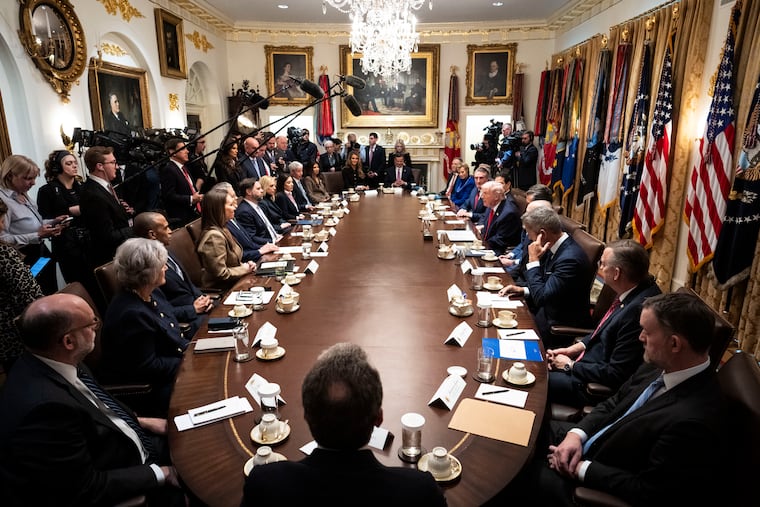
In total, the list obtained by the Post shows the Trump administration has raised $333 million in private donations for the 90,000-square-foot ballroom being built at the site of the former East Wing without congressional approval.
The White House last October released a list of 37 corporations, individuals, and foundations — including Comcast — that it said had contributed to the ballroom. That disclosure did not include the size of the donations.
The ballroom has prompted concerns from ethics experts and Congressional Democrats who see the project as a vessel through which donors with business interests before the government can buy influence with the Trump administration.
“The Constitution’s system of checks and balances ensures that no individual or branch of government holds absolute power,” Trevor Potter, president of the nonpartisan Campaign Legal Center, said in August. ”The president is ignoring this design by unilaterally demolishing the East Wing of the White House and trying to construct a massive ballroom with private funds, raising the risk of corruption that constitutional checks are supposed to prevent.”
Preservationists sued to block construction of the ballroom, but the U.S. Supreme Court in August allowed the project to continue. The justices said the preservationists lacked the legal standing to sue.
White House spokesperson Davis Ingle told the Post that ballroom donors were “contributing to make the People’s House better for generations to come.”
“The same critics who are alleging fake conflicts of interests would also complain if American taxpayers were footing the bill for these long-overdue renovations,” he said.
Ballroom donations are made to the Trust for the National Mall, a nonprofit dedicated to restoring and preserving the mall and the White House grounds. It is not required to disclose its donors.
$7.5 million Comcast donation
In a December letter to Comcast, U.S. Sen. Elizabeth Warren (D., Mass.) cited news reports that Comcast was considering a bid for rival media giant Warner Bros. Discovery — a deal that would require the federal government’s approval.
“This interest in favorable action from the Trump administration creates the potential for a quid-pro-quo exchange of a contribution to the ballroom for regulatory or other favors from the federal government,” Warren wrote.
Comcast’s lawyers responded in a letter that the company made a donation to the trust as “part of its continuing commitment to philanthropy in the Washington, D.C., region.”
Comcast did not impose any “conditions on how the proceeds were to be used or spent,” the letter said.
“Comcast made the donation with no expectations of receiving anything in return and the implication that the donation has anything to do with a potential transaction involving Warner Bros. Discovery is categorically false,” wrote attorney Michael D. Bopp of the firm Gibson Dunn.
Warner Bros. was ultimately acquired by Paramount Skydance.
Recipients of Comcast’s philanthropy include the National Archives and the inaugural committees for Presidents Biden and Trump, the letter said. Comcast has also donated to the Obama Foundation.
A Comcast spokesperson declined to comment Thursday.
$5 million from Jeff Yass
Also backing the ballroom was Yass, the GOP megadonor and cofounder of the Susquehanna International Group trading firm. He attended a White House dinner in October 2025 for donors who gave at least $2.5 million for the ballroom, the New York Times reported.
Yass last year also gave $16 million to MAGA Inc., a pro-Trump super PAC.
Susquehanna owns a big stake in China-based ByteDance, which developed video platform TikTok. After Trump began his second term in 2025, he suspended enforcement of a law, passed on national security grounds, requiring TikTok to divest from ByteDance or face a U.S. ban.
Trump in January 2026 supported a deal in which TikTok created a new U.S. entity through a joint venture with investors including Oracle, Silver Lake, and MGX. ByteDance retained a 20% stake in the joint venture, according to the Associated Press.
Yass has also found common cause with Trump on school-choice causes. A provision of Trump’s 2025 big domestic policy bill created a tax credit to fund K-12 scholarships.
A spokesperson for Yass declined to comment.
$5 million from Extremity Care
Extremity Care, a Conshohocken company that makes bandages known as skin substitutes, committed $5 million to the ballroom, according to the Post.
In February 2025, Extremity Care contributed $5 million to the MAGA Inc. super PAC, according to multiple reports. Weeks later, the New York Times reported, the Trump administration announced it would delay implementation of a Biden administration policy to restrict Medicare coverage of skin substitutes.
Extremity Care told the Times that it supports “policies that result in increased healthcare access for patients to lifesaving treatments.”
The company said it was “grateful that the current administration has taken the time to understand the true and meaningful benefits lowered costs and national coverage will have for patients for the industry as a whole and for Medicare and has taken action to support this critical mission.”
Extremity Care didn’t return phone calls and emails seeking comment Thursday.