AI companies buoyed the U.S. economy. What happens if they slow down?
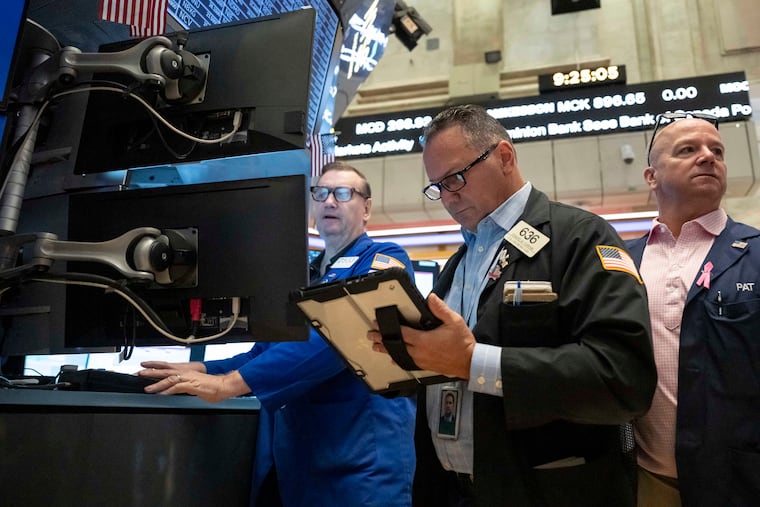
Technology stocks wilted Monday as investors focused on the ripple effects of any new AI controls.
U.S. investors face a novel question as warnings grow about the potential dangers of artificial intelligence: Is it bad for business and Americans’ stock wealth if AI leaders slow down the technology to avoid catastrophe?
Prominent technology moguls including the CEOs of ChatGPT-maker OpenAI and its rival Anthropic have said such a slowdown is necessary to tame the risks of expensive or deadly threats such as cyberattacks from out of control AI.
Technology stocks wilted Monday as investors focused on the ripple effects of any new AI controls. A self-imposed or government-ordered slowdown of AI development could douse enthusiasm for the expected initial public offerings of OpenAI and Anthropic and dent the AI boom that is boosting U.S. economic growth, corporate profits and the stock portfolios of millions of Americans.
Ed Mills, a Washington policy analyst with the financial firm Raymond James, said AI-related companies have soared in stock market value as though there’s little risk of regulatory speed bumps to the technology. He said he’s spent the past week encouraging investors to take seriously a potential surge of AI regulation.
“The data center policy debate is going to seem quaint” compared to the coming showdown over AI regulation, Mills predicted. “Part of that process is going to cause investors to potentially re-evaluate the worth of these [AI] models and these companies.”
It’s plausible that little changes with how AI companies operate, some policy and technology analysts say. But the worries reflected on Wall Street underscore how much the nearly four-year-old AI boom is built on faith over facts.
The bull case for AI is that the trillions of dollars being spent to develop AI technologies and distribute them through data centers will reorder American life and unleash untold profits and economic growth. If AI development or corporate usage of AI slows, it could push the potential payday from the titanic AI bet even further into the future.
President Donald Trump noted the potential economic costs of an AI slowdown in one of several Truth Social posts Monday in which he attacked AI leaders backing the concept.
“When, in the History of Business, did anyone see the Leaders of an Industry call for Regulation that, if strongly implemented, will drive them into oblivion and bankruptcy?,” he wrote. “AI, and Data Centers, will be the Greatest Economic Development Engine in History - Bigger than Oil, Gold, Diamonds, or even the Internet.”
The Nasdaq stock index, considered a proxy for the investor enthusiasm for technology companies, fell Monday after a weekend of AI doomsday discussions. Multiple factors roiled markets, but analysts noted that prices of some companies heavily dependent on the AI boom, including computer chip maker Nvidia and Elon Musk’s rocket-and-AI company SpaceX, dropped significantly.
Asian shares fell slightly Tuesday, with South Korea’s Kospi index down nearly 1 percent as Samsung and SK Hynix extended declines.
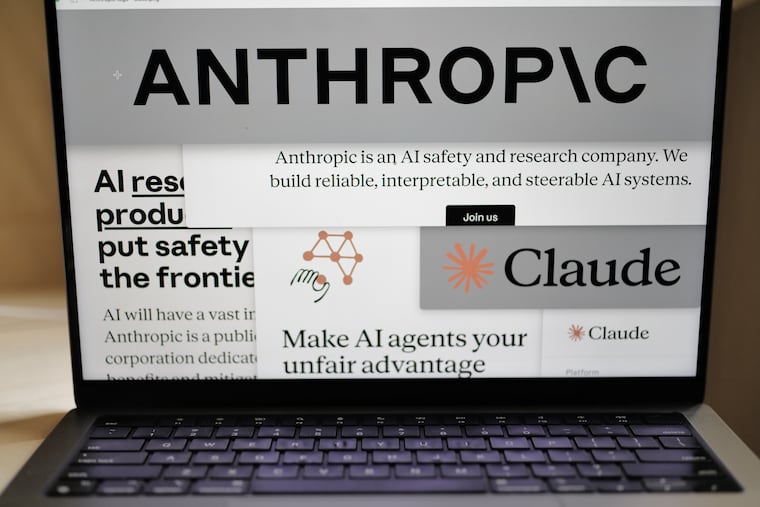
One of the biggest questions is what happens to planned initial public offerings by the two leading AI start-ups, Anthropic, which makes the Claude chatbot, and OpenAI. The companies have been collectively valued at close to $2 trillion by investors and are widely expected to jump significantly in worth when they list shares on public markets. (The Washington Post has a content partnership with OpenAI.)
Dario Amodei, the Anthropic CEO who has long warned about AI’s potentially catastrophic downsides, now faces a contradiction partly of his own making.
He is simultaneously warning publicly that technology from Anthropic and its peers could be dangerous to human life and economic prosperity — while also hoping to sell investors on an optimistic vision of a profitable, glorious AI future.
It is “unprecedented” for a company preparing an IPO to offer a dueling narrative like that, said Nick Smith, a senior analyst at the research firm and IPO stock index Renaissance Capital.
He and other financial experts said it’s not unusual for companies to be candid about navigating concerns and regulatory scrutiny of contentious products, including from pharmaceutical and gene-editing companies.
But Smith said that it raises red flags for people buying a company’s stock when its top executive “notes issues that could cause real problems for the company, and more importantly calls for a slowdown in its technology’s development.”
Anthropic’s IPO could come as early as this fall, according to reporting by Reuters. The company has said that the listing will “depend on market conditions and other factors.”
Eddie Best, a partner at the law firm Willkie Farr & Gallagher who advises companies on IPOs, said he doubts that a potential industry slowdown or speculative fears of AI-caused extinction would derail Anthropic’s IPO.
He did say, though, that he and other corporate lawyers have been playing a “nerdy game” about whether AI end times could appear in the “risk factors” section of Anthropic’s IPO pitch document for investors. These are usually boilerplate legalese about the large and small potential roadblocks to a company selling its stock to the public.
Some technology companies already warn investors that AI could get them into hot water, though none appear to stray into the human extinction territory of Amodei’s weekend essay.
Google’s annual financial report says that “some uses of AI will present ethical issues and may have broad effects on society.” Risk factors from Microsoft outline the possibility that people could get hooked on using AI as companions.
Best said he couldn’t imagine lawyers crafting a doomsday scenario in Anthropic IPO pitch document.
“I don’t really see a risk factor that says our product could blow up the world,” Best said.