Treasury ends ownership reporting rules for U.S. companies
The rules, intended to combat money laundering and other financial crimes, imposed an undue burden on American businesses, Treasury Secretary Scott Bessent said.
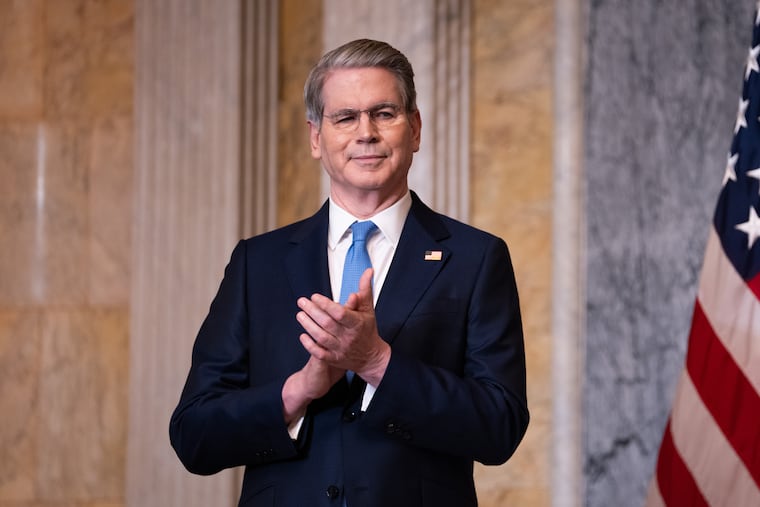
The U.S. Treasury Department permanently repealed a rule Tuesday that required businesses formed in the United States to report who owns them to federal financial-crimes investigators.
Foreign companies and pooled investment vehicles (such as mutual funds or hedge funds) must still report information about foreign owners. But they will no longer have to identify Americans who help them register to do business in the United States, according to a Treasury Department advisory. And Treasury will delete any information it has already collected about U.S. business owners, the advisory said.
In a statement, Treasury Secretary Scott Bessent said the new rule eliminates “a burdensome reporting requirement for millions of law-abiding business owners without compromising our national security.”
Senate Banking Committee Republicans quickly thanked Treasury for “standing up for job creators.” But Democrats and some national security experts criticized the move, which they said would make it easier for drug cartels, human traffickers and money launderers to use anonymous shell companies to avoid detection.
Richard Nephew, who led anti-corruption efforts at the State Department during the Biden administration, called the move “a terrible decision that opens up the U.S. to financial crime, money laundering and corruption.”
The reporting requirements were implemented in January 2024 during the Biden administration as part of an effort to curb illicit finance. It stemmed from the Corporate Transparency Act, which was included in the National Defense Authorization Act and enacted into law in 2021 after Congress overrode President Donald Trump’s veto. It required U.S. and foreign companies doing business in the country to report information about “beneficial owners” — people who have “substantial control” over the company or own at least 25% of it — to Treasury’s Financial Crimes Enforcement Network (FinCEN).
The CTA was supported by law enforcement officials, the American Bankers Association, and human rights advocates, who said it would combat the corrupt use of anonymous companies, known as shell companies. But it immediately drew fire from the National Small Business Association, which pushed Congress to repeal the act and sued the Treasury Department, arguing that the reporting requirements disproportionately affected small-business owners.
In March 2025, the Trump administration announced that it would temporarily suspend reporting requirements for U.S. businesses and American owners of foreign companies. On Tuesday, Treasury made that decision permanent. In a FAQ on the new rule, Treasury said FinCEN and federal law enforcement agencies have multiple alternative sources of information to prevent domestic companies from engaging in money laundering or financing terrorism that it does not have for foreign companies.
Small Business Administration Administrator Kelly Loeffler praised the decision, writing on social media that it will save American businesses $6.7 billion in compliance costs over the next decade.
Sen. Elizabeth Warren (Massachusetts), the top Democrat on the Senate Banking Committee, called the decision “a gift to cartels, criminals, and U.S. adversaries that exploit shell companies to move millions through our financial system.”
Editor’s note: This article has been updated to correct the background of the implementation of the Corporate Transparency Act.