Jujubes, chestnuts, and other unusual crops are on offer during fall festival season after apple wipeout
With apple crops decimated throughout the region, local farms are pivoting to sunflowers and sweet potatoes.
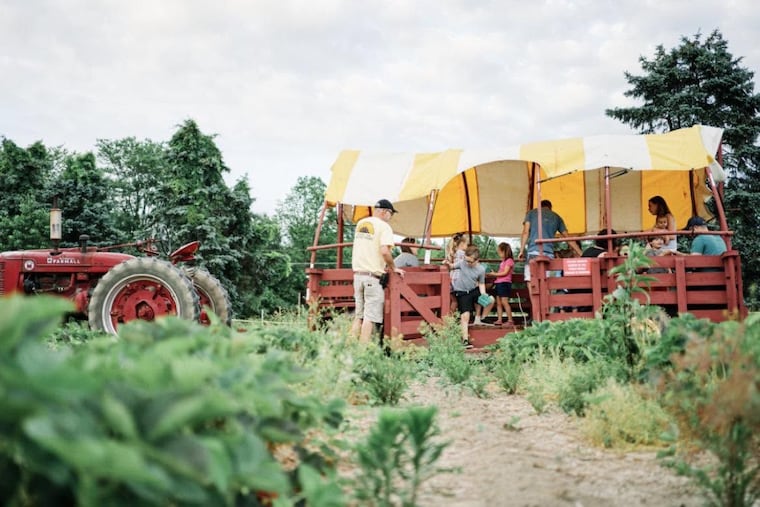
Philadelphia-area residents heading to fall harvest events may find new things to pick this year as farms diversify their crops.
Farmers are finding creative ways to cope with the spring frosts that decimated many mid-Atlantic fruit tree harvests — including apples, a fall-picking classic.
“Growers across the state are pivoting their fall on-farm and at-market activities to include more pumpkins and sunflowers this year,” Carla Snyder, a Penn State Extension program manager in agriculture, wrote via email.
Johnson’s Corner Farm in Medford, Burlington County, didn’t have enough apples for picking this year alongside their other fall activities, including the corn maze, hayride, and pumpkin picking, owner Gil Johnson said. So they planted sunflowers, sweet potatoes, and popcorn for visitors to harvest throughout September and October.
The other crops are a hit, Johnson said, especially sweet potatoes: “What kid doesn’t like digging through the dirt?”
The cold snap affected even non-picking activities, said Kelsey Givler, manager at Merrymead Farm in Lansdale. There’s typically plenty of fallen apples, unsuitable for eating, that the dairy farm buys for visitors to shoot out of cannons. Merrymead still managed to find some, Givler said, but they weren’t as abundant as in a typical year.
Other farmers are looking to harness Pennsylvania’s warming climate, which has shifted in recent decades to resemble South Atlantic states like Virginia and North Carolina. In Elkins Park, FarmerJawn is planting produce from other continents that thrive in hotter summers.
» READ MORE: Extreme weather is hurting independent farms and restaurants, owners say
As its name suggests, Hundred Fruit Farm has built crop variety into its business model. The Buckingham operation doesn’t grow apples, but chestnuts and jujubes native to Asia have both thrived, owner Adam Dusen said. The farm hopes to offer them for fall picking for the first time next year.
The jujubes were unaffected by the April frost because they happen to flower later — a benefit of diversification, Dusen said. With extreme weather expected to become more common in the region, growing just one or two crops is “a much riskier thing to do.”
Johnson in Medford said he’s not sure yet what his farm will do for next fall. “We’re taking a lot of notes,” he said.
But he’s glad this autumn’s festivities worked out, despite the apple losses.
“We knew people still wanted to come out and have a good time in the fall,” Johnson said. “We’re in the business of making people happy.”
This suburban content is produced with support from the Leslie Miller and Richard Worley Foundation and The Lenfest Institute for Journalism. Editorial content is created independently of the project donors. Gifts to support The Inquirer’s high-impact journalism can be made at inquirer.com/donate. A list of Lenfest Institute donors can be found at lenfestinstitute.org/supporters.