Council President Kenyatta Johnson is holding up a bill aimed at providing tax relief for Philly’s small businesses
Councilmember Mike Driscoll’s bill aims to help many of the small businesses most affected by the elimination of a popular tax break after its constitutionality was challenged.
It has been almost a year since a bill aimed at providing relief to Philadelphia small businesses affected by the recent elimination of a popular tax break first came before City Council.
A majority of Council supports the proposal, which was introduced by Councilmember Mike Driscoll.
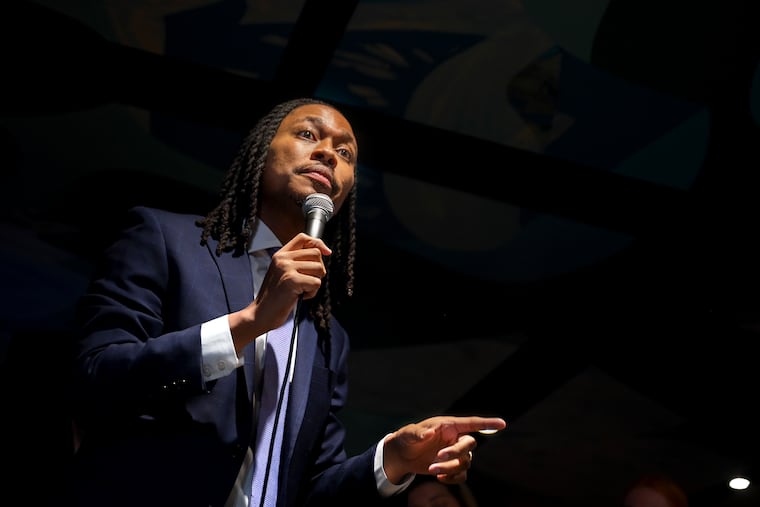
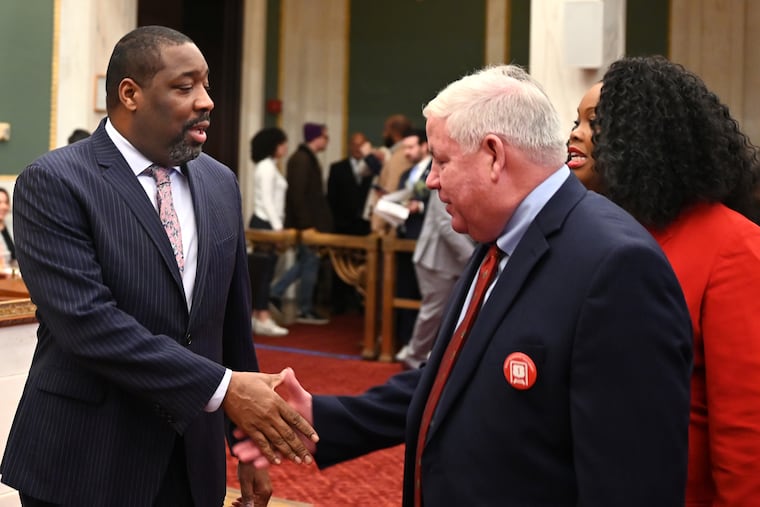
And yet, for months, the bill has languished in Council’s Finance Committee. The holdup, according to Driscoll, is Council President Kenyatta Johnson.
“The Council president wasn’t interested in moving any bills that could risk revenue generation, and he’s concentrating on working with the revenue department on ways to increase revenue,” Driscoll said in an interview Wednesday, when he was hoping the measure would be called up in committee.
Driscoll’s bill would exempt sole proprietors and single-member limited liability corporations from paying the city’s business income and receipts tax, or BIRT.
He introduced the measure in November 2025 in response to Mayor Cherelle L. Parker earlier that year persuading Council to get rid of a tax break that excluded firms’ first $100,000 in revenue from taxation under the BIRT, effectively eliminating the tax for firms that make less than that, including many gig economy workers and mom-and-pop businesses.
» READ MORE: What small business owners need to know about the major changes to Philly’s tax code
Parker said she supported the intention of the tax break, but moved to end it after Zoll Medical Corp., a Massachusetts-based company that did business in Philly, sued the city, claiming the policy was illegal under the Pennsylvania Constitution. Parker said she was acting on advice from the law department, which determined the city would likely lose a court battle over the issue, and Council members grudgingly eliminated it in June 2025.
Driscoll’s bill aims to provide a legal workaround that would help many of the firms affected by the elimination of the tax break while passing constitutional muster.
In a statement, Johnson declined to explain why the bill was not brought up in committee and said he supports small businesses.
“All of us on City Council understand the challenges they are facing,” Johnson said. “Council is reviewing all tax relief proposals as part of a larger conversation regarding the Fiscal Year 2028 operating budget, revenues, and fiscal priorities.”
The mayor’s office did not respond to a request for comment.
When she moved to eliminate the $100,000 BIRT exclusion, Parker also proposed a bill that would gradually reduce BIRT rates over 13 years, and Council approved the tax cuts in June 2025. While the tax cut measure will eventually lead to a dramatic reduction in BIRT bills for all firms in the city, small businesses are being hit hard by the end of the tax break in the meantime.
“Sending a message to small business that we’re not here to help right now, I think, is the wrong message,” said Driscoll, who represents parts of Northeast Philadelphia.
» READ MORE: Vendors, gig workers, and therapists push back on Philadelphia’s ‘very unfriendly’ business tax
The bill is currently pending in the Committee on Finance, which is chaired by Majority Leader Katherine Gilmore Richardson.
Gilmore Richardson, who has previously said she supports the proposal, declined to comment.
The BIRT, which is Philly’s third-largest local tax and brought in about $779 million last fiscal year, consists of two tax rates. Firms must pay 5.71% of their net income, or profits, made in Philadelphia, as well as 0.141% of their gross receipts, or total income, according to the city’s website.
The elimination of the $100,000 exemption has subjected tens of thousands of small businesses to the BIRT for the first time in years. It was projected to generate about $30 million in increased revenue for the city per year, and Parker and Council in 2025 allocated $38.5 million for programs aimed at helping small firms navigate the burden of getting in compliance with the tax.
» READ MORE: Mayor Cherelle L. Parker’s administration defends move to eliminate tax break that helps small businesses
The city’s law department concluded Pennsylvania courts would likely rule that the old tax break violated the state constitution’s uniformity clause because it exempted from taxation $100,000 in income from all companies, producing different effective tax rates for firms depending on how much they made.
Driscoll’s bill, which the administration has said would cost the city about $29.5 million per year, is aimed at finding a legal way to exempt many of the small businesses most affected by the elimination of the tax break. His measure aims to sidestep uniformity concerns by shielding entire classes of firms that include many of the small businesses that previously benefited from the $100,000 exemption from having to pay the tax at all.
» READ MORE: People who are self-employed could become exempt from paying a Philly business tax
But the legislation also risks incentivizing more well-off business taxpayers, such as real estate investors, to dodge the tax by restructuring into the types of companies it would exempt from the BIRT. The bill, for instance, could allow investors to organize their companies as single-member LLCs while still requiring small stores with multiple owners to pay the tax.
“The Department of Revenue anticipates businesses may change their business structure specifically to take advantage of the exemption, which will increase potential revenue losses,” the administration wrote in a fiscal analysis of the bill.
Johnson has previously supported efforts to lower the business tax, and his opposition to Driscoll’s bill came as a surprise — not least to Jigar Mehta, a Bucks County-based management consultant who championed the idea for Driscoll’s legislation.
Mehta said Wednesday that Johnson’s staff had helped draft the legislation.
“They literally helped us put this bill together, his office,” said Mehta, who added that he was told at the time that Johnson supported it. “If you’re for exempting this group, why now all of a sudden are you saying why now we need this revenue? That’s what’s shocking.”