DA Krasner to investigate Malayshia Allford’s death and foster care system, as City Council pushes for change
His office will conduct a full review into the death of the 10-year-old and use the office's authority to suggest changes to child welfare policy.
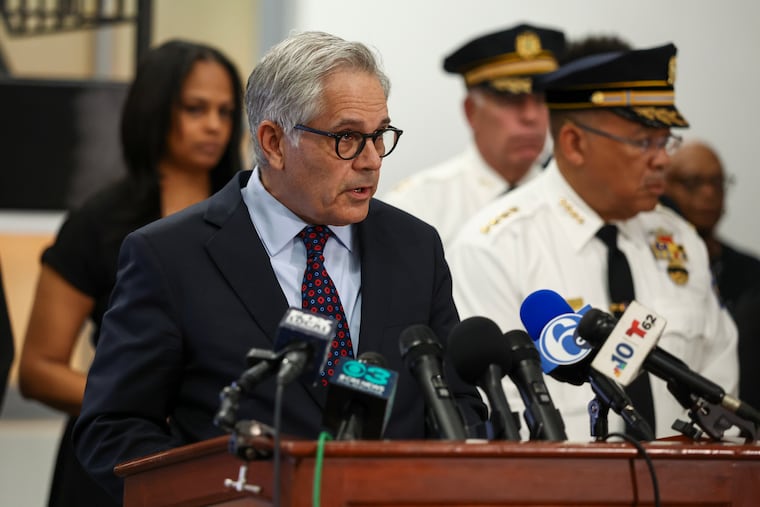
The Philadelphia District Attorney’s Office will conduct an independent investigation into the death of 10-year-old Malayshia Allford as well as the city’s foster care system, officials said Thursday.
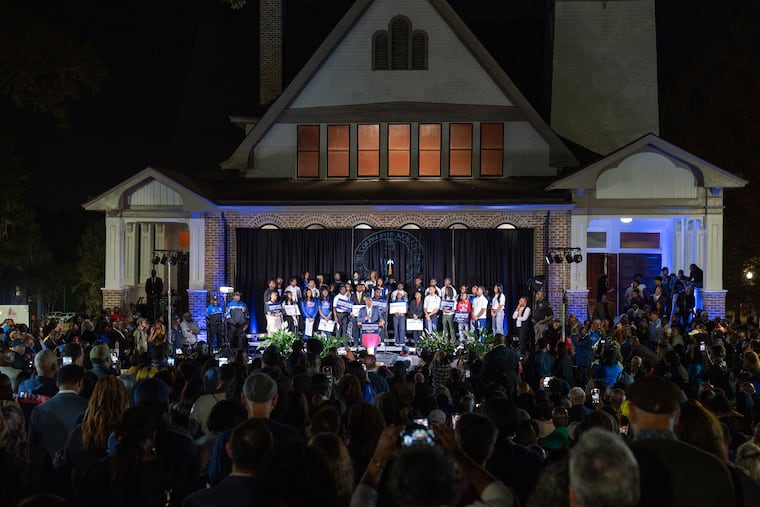
District Attorney Larry Krasner announced the sweeping investigation at a news conference, saying Malayshia’s death in the care of her foster mother, 36-year-old Carprice Williams, was a tragedy.
“The law sadly did not completely protect Malayshia Allford,” Krasner said. “This is for that family, this is for that community, it is for the outsiders in the city of Philadelphia that care so much.”
The district attorney joins a growing list of city officials who have called for changes to the city’s child welfare system this week following the girl’s death.
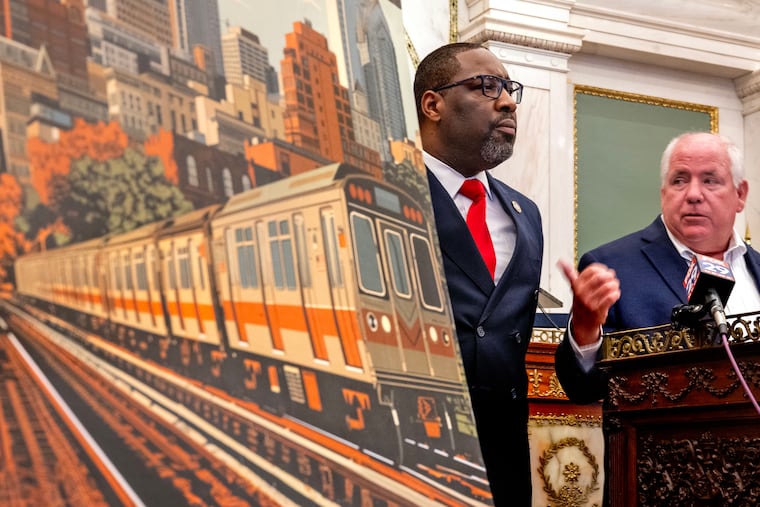
On Tuesday, Mayor Cherelle L. Parker issued an executive order convening a committee of child welfare experts who will review how the city can improve oversight of a foster-care system of more than 2,000 children. And on Thursday, City Council members introduced three resolutions calling for public hearings on the city’s child-welfare system, including the oversight of children in foster care.
The investigation by Krasner’s office will utilize the “special powers” of his position, the district attorney said, though the exact outcome of such an inquiry remains unclear.
Asked whether anyone other than Williams would be prosecuted over the circumstances that led to Malayshia’s death, Krasner said the investigation would be broad but that, apart from Williams’ criminal prosecution, it would focus on bureaucratic solutions to systemic problems.
For example, the district attorney said his office would explore how to improve funding for court-appointed special advocates, the people who represent abused and neglected children in court, and who Krasner said had high turnover and low pay.
His office will consider whether to implement regular reviews of child-abuse cases alongside Philadelphia police and advocates, a process Krasner said is currently conducted for sexual-assault cases.
The review will also question the kinship laws that determine which caregivers are eligible for foster-care placement. That includes exploring how to expedite the licensing process for a child’s extended family members and relatives to become caregivers, Krasner said.
“Is it all about blood?” he asked, “or does it have to do with someone in a child’s life who can provide a safe and loving place to live?”
In what Krasner said was perhaps the most important part of the investigation — and one that touches on a core element of Malayshia’s case — his staff will scrutinize the expungement process that foster parents have used to remove abuse allegations from their records.
Police discovered Malayshia’s body, beaten and bruised, in the trunk of a Lincoln sedan in Camden County on Nov. 4, ending a more than weeklong search for the girl, who had been living with Williams in her West Philadelphia rowhouse for about two years.
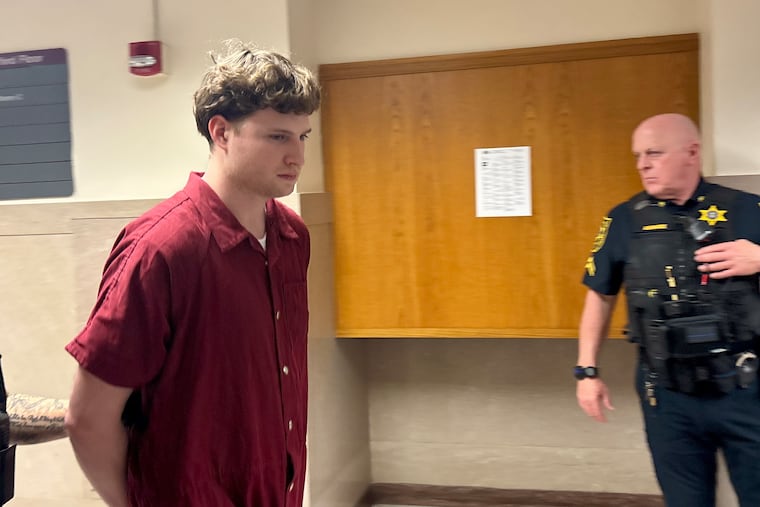
Williams, a teacher with the Philadelphia School District, was charged with murder and related crimes the following day.
And The Inquirer learned that Williams had been accused of abusing another foster child in her care in 2021, although she was able to have that allegation expunged from her record and continue caregiving through Catholic Community Services, a designated Community Umbrella Agency (CUA) contracted by the city’s Department of Human Services (DHS).
City Council President Kenyatta Johnson said after Thursday’s meeting that “everything is on the table” to prevent what happened to Malayshia from happening to other children.
The resolutions introduced Thursday direct committees to examine how DHS monitors children placed outside their homes, how its network of CUA manages child-welfare cases, and whether agencies are doing enough to prevent abuse, neglect, and child fatalities. One resolution also calls for scrutiny of the School District of Philadelphia’s hiring and screening practices.
The measures were introduced by Councilmembers Anthony Phillips, Kendra Brooks, and Cindy Bass. Phillips said some members of Council had been “sounding the alarm about DHS for a long time.” He described the weeks following Malayshia’s death as a “challenging [time] for many of us who love children and have families,” and vowed that her “legacy is going to be a great change in the city of Philadelphia.”
Johnson also said the state’s role in placing children in foster care should be examined. “However, I’m not getting into pointing fingers,” he said. “We all have to work together and figure out” the state- and city-level policies, then decide, “How can we all come together and make sure something like this does not happen in the future?” he said.
Also appearing before the Council was a young woman who said that she lived with Williams as a foster child for several months until she ran away in May 2020.
Maria Campbell, 21, stood beside local activist Ameer Barber as he pressed for Council members to take swift action to fix the foster-care system, and did not speak. But afterward, she told The Inquirer she ran away from Williams’ Simpson Street house to escape what she described as months of abuse.
Witnesses familiar with Malayshia’s time in Williams’ care described her treatment of the girl as horrific, court records show.
She was repeatedly denied food, beaten with a phone cord, and thrown down the stairs, among other abuses, according to the report obtained by The Inquirer. Williams has since been accused of intentionally misleading investigators who had been searching for Malayshia, going as far as faking affectionate text messages from the girl to make it appear as if she was still alive.
A medical examiner determined that Malayshia died of blunt force trauma, suffering a fractured rib, bruises on her head, torso, and buttocks, and whiplike marks across her legs, according to a police report.
Surveillance video from late October shows a relative of Williams carrying a large bag from her home and loading it into a vehicle, according to a police report.
It was not clear whether prosecutors will charge that man with a crime. Krasner said his office would have an update on that investigation in the near future.
Staff writer Jake Blumgart contributed to this article.