$ell city health center?
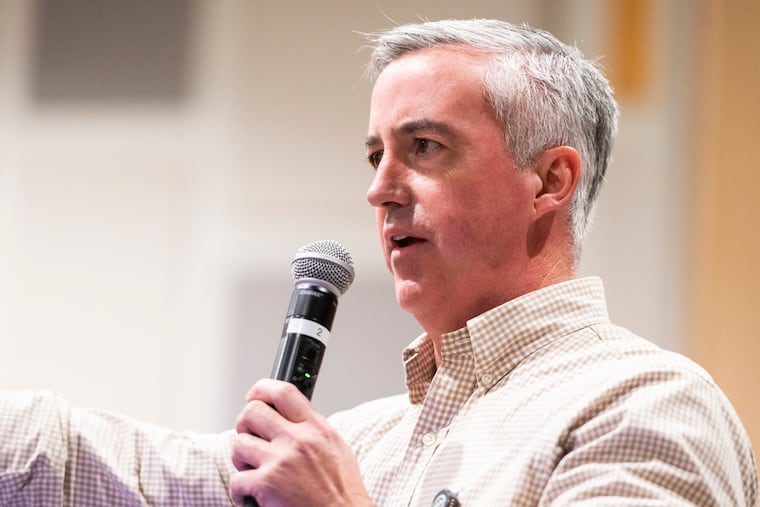
City Controller Alan Butkovitz says he has found a way for the city to earn about $6 million, which would start chipping away at an $841 million gap in the city's five-year financial plan.
City Controller Alan Butkovitz says he has found a way for the city to earn about $6 million, which would start chipping away at an $841 million gap in the city's five-year financial plan.
Butkovitz says Mayor Nutter should sell Health Center No. 1, which sits on about an acre at Broad and Lombard streets. The health center, surrounded by high-end "Avenue of the Arts" real estate, treats patients with sexually transmitted diseases.
Nutter didn't seem impressed yesterday with Butkovitz's pitch.
"It's already something that we looked at some time ago," Nutter said. "It's not a new idea."
When told of Nutter's comment, Butkovitz insisted that he was pushing "good practices" for the city.
"I certainly don't think there is cause to dismiss any idea that involves several million dollars in savings," said Butkovitz, who estimates that the property could sell for up to $9.5 million based on real-estate deals in the area.
The building has maintenance problems that require about $2 million in repairs, he added. The city could save that money and put it toward buying or building a new health center at another location. Using some of the profits from the sale, the city would still earn about $6 million.
"You can buy an entire building for what it would cost to get this building in working order," Butkovitz said.
Nutter said the city is considering selling assets like the health center, but cautioned that this sale would be complicated.
"It's not something you do in sort of a willy-nilly fashion," Nutter said. "You have to put those folks and those services elsewhere. It's not just about selling the site."
The city built the health center in 1959. It owned half the land and leased the other half for 50 years from the estate of John Graver Johnson, a prominent lawyer and art collector who had a house there. Johnson died in 1917.
That lease ran out in July, but the city moved last year through the Philadelphia Authority for Industrial Development to buy that half of the property. *