New doula directory will help Delaware County families find support
The collaborative supported doula training for 30 Delaware County residents as part of a federal grant.
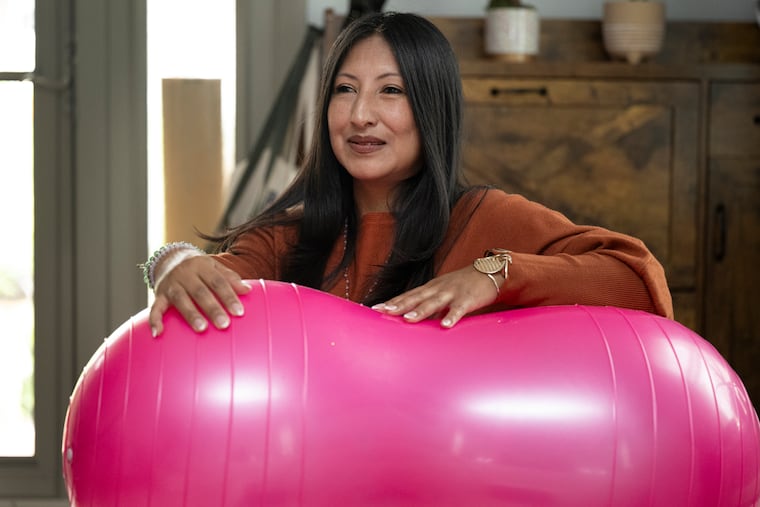
Family and friends cooked, cleaned, and took care of Alejandra McBride after she gave birth to her first child in Ecuador, so that the young mother could focus all her energy on her newborn.
She felt much more alone when she gave birth to her second child 14 years later, in Delaware County.
“I have friends who would come for a few minutes to see the baby – and then go,” said McBride, who lives in Springfield. “It was hard to recover.”
Now she is training to be a doula through a new initiative in Delaware County to provide other women with support during and after pregnancy.
McBride is among 30 doulas trained through the Delco Doula Collaborative, designed to build the maternity care workforce and expand patient resources in Philadelphia suburbs where prenatal care options have dwindled since last year’s closure of Crozer Health, which operated the county’s largest birth center.
Earlier this month, an online directory launched where families can access doula services — which are covered by Medicaid and some private health insurance plans. Delaware County spearheaded the initiative with Family Village, an initiative of the Foundation for Delaware County that brings together support services for families and parents-to-be.
“Every family deserves to feel supported, informed, and empowered throughout pregnancy, childbirth, and the postpartum period,” Lora Werner, director of the Delaware County Health Department, said in a statement. “By expanding access to this trusted support, we are advancing health equity and helping to build a healthier future for parents, babies and families across Delaware County.”
Doulas are not medical professionals, but rather provide emotional support around pregnancy, and can serve as an advocate for patients.
Research has found that parents who work with a doula experience lower rates of cesarean section births, reduced anxiety, and higher rates of breastfeeding, in part because they are more empowered to advocate for their wishes and feel heard by their medical providers.
Doula training in Delaware County
With part of a $600,000 grant from the U.S. Department of Labor’s Employment and Training Administration, the Delco Doula Collaborative provided free training and licensing assistance to 30 county residents.
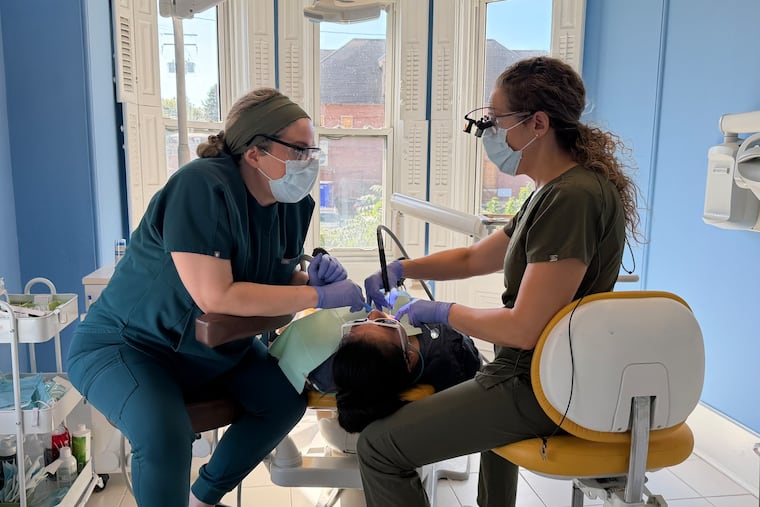
Participants work alongside certified doulas to learn about patient advocacy, childbirth education, and how to interact with patients.
Family Village also helped participants apply for certification through CAPPA, a leading international doula certification organization, and a Pennsylvania license.
Participants worked with a Medicaid billing consultant to help them establish their own Medicaid contract or join the organization’s contract. In Pennsylvania, doula services are covered by Medicaid. The government-funded health program covers about one-third of births statewide. Some private health plans also pay for doulas.
The organization hopes to provide scholarships to support more certification training in the future.
In the meantime, doulas who are already certified can join the collaborative for networking and additional training opportunities, and to be part of the online directory.
Individuals interested in self-funding their initial doula training should visit the national CAPPA Website, or other doula organizations in Philadelphia or surrounding areas.
For expectant parents, a doula can be a valuable resource, said Erica Loizos, the doula program coordinator for Family Village. They can talk to first-time parents about the stages of labor, postpartum care, and breastfeeding.
Doulas play the critical role of advocating for the person who is giving birth at a time when medical attention often shifts to the baby.
During labor and maternal medical appointments, some patients may struggle to speak up for what they want, or may not know what questions to ask. Doulas can coach them on how to advocate for themselves, or be the advocate, voicing their client’s wishes when they are unable to. Doulas often attend the birth to help advocate for the birthing person.
“The most important thing is getting to know their family,” Loizos said of the service doulas provide.
Zainab Waites, who works as a daycare teacher in Chester, embraced that mission. She has worked with eight families since beginning her training last year, many of whom were “really alone,” she said.
“I always see myself as coming in to be a family member,” Waites said. “Whatever it is, even if you just want to complain about something, I’m here.”
Learning from personal experience
McBride said she was surprised how different pregnancy is treated in the United States, compared to where she grew up in Ecuador. Parents are faced with many more decisions and choices, which can be especially hard to navigate if they come from a different culture or do not speak English as their first language.
“With my third birth, I was pretty much saying yes to whatever the doctor said,” McBride recalled. She didn’t know doulas existed, or that it was possible to push back against a doctor’s initial recommendation.
McBride had a C-section because she didn’t know she could ask to wait a little longer to see if she would go into labor naturally.
“Every woman is different,” she said. “My job is to advocate for these families and make sure they are delivering in a safe and warm place.”