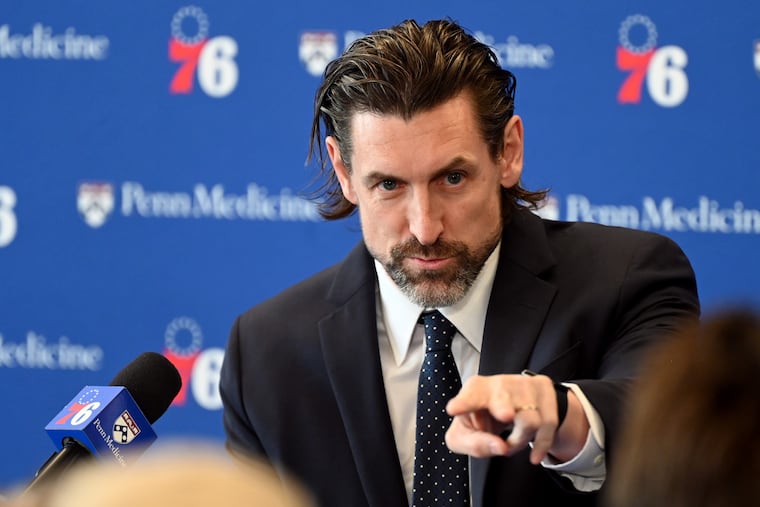
Could GLP-1s help with alcohol use disorder? A Philly VA doctor is leading a national trial to find out.
Alcohol use disorder affects roughly 28 million people nationwide. While there are many options to treat it, uptake is low.

A Philadelphia Veterans Affairs doctor is leading a national trial testing whether GLP-1 drugs could help patients with alcohol use disorder.
The treatments, which work by mimicking a natural hormone in the body, have skyrocketed in popularity in recent years for diabetes and weight loss. People have also reported unexpected benefits for other conditions, from heart issues to kidney disease. GLP-1s may even help reduce cravings for addictive substances, including alcohol, opioids, and nicotine, early studies suggest.
While some of the additional health effects have been well-studied, others, like alcohol use disorder, still need a robust trial to assess safety and efficacy.
The upcoming trial will take place at 18 VA sites around the country, including Philadelphia, with the goal of recruiting 622 participants.
“The driving force has been really the groundswell of anecdotal and observational data from folks,” said David Oslin, the psychiatrist leading the national trial.
Recruitment for the trial starts this week and will likely take two years. Half of participants will be randomly selected to receive the treatment for six months, while the other half will receive a placebo with no active drug.
Participants will not know whether they received the intervention — a study design that’s considered the gold standard for medical research.
Alcohol use disorder affects roughly 28 million people nationwide. While there are many options to treat it — including psychosocial treatment, peer support groups, and medications — uptake is low.
Fewer than 10% of people with alcohol use disorder receive any treatment in a given year. Oslin hopes GLP-1s, should they prove safe and effective, could improve that statistic.
“The impact is potentially very big in the sense that this is a drug that people seem comfortable prescribing and using,” he said.
He anticipates publishing the results in about three years.
The Inquirer spoke with Oslin, who also serves as the chief of behavioral health at the Philadelphia VA, about the trial in an interview lightly edited for length and clarity.
What inspired the trial?
Anecdotally, folks that have been receiving the GLP-1s for something else — diabetes or weight loss — had noticed a decline in use of alcohol.
There have subsequently been three small clinical trials in the U.S. that have been published. They wouldn’t be sufficient to define efficacy from an FDA perspective, but they’re certainly encouraging.
Each of them have their own little pitfalls. One of them is small — 40 subjects — so we wouldn’t want to change clinical practice based on that. But they certainly point us in the direction that we need a large trial, and this trial was designed specifically with FDA requirements in mind.
How is this trial different?
Semaglutide is already FDA-approved. What you would want to be able to do is change the existing label to add the indication of alcohol use disorder.
The FDA has a number of requirements for trials in this domain for alcohol use disorder. One is that the duration be a minimum of six months, and we are doing that. The other is that it be a sufficient sample size to test a hypothesis. For our trial, we are hoping to enroll 622 veterans over the course of the next couple of years. That would be sufficient to answer the question of, ‘Is there efficacy and is there safety?’
What is the theory behind how GLP-1s could treat alcohol use disorder?
We know that GLP-1s have three main effects on the body.
One effect is to induce the pancreas to release more insulin. The second effect is that it slows down the stomach’s emptying when you eat. The third effect is on GLP-1 receptors in our brain. Those receptors actually respond to reward, and the natural effect of GLP-1s is to indicate that you’re full or that you don’t need any more to eat or drink.
These medicines will have the effect of reducing your desire to want to drink more. They don’t take away your pleasure or your ability to enjoy life, but they will reduce excessive eating and excessive drinking — that’s the hypothesis that is driving the study.
Who can participate in the study?
They have to be a veteran getting their healthcare through the VA. They have to be between 18 and 80. They have to be drinking sufficiently enough to meet criteria for moderate to severe alcohol use disorder. You also can’t be on insulin and can’t be taking another medication for diabetes.
The 18 sites would take any veteran and screen them, and if they’re not appropriate for the trial, we would get them into the right care for their needs.
How could having a GLP-1 as an option improve uptake?
A lot of folks that have alcohol use disorder will not seek treatment in a specialty care setting. They don’t think of their symptoms as being that severe. So they’ll talk to their primary care doctor.
We need treatments that primary care providers are comfortable delivering. The current medicines are not medicines that they often prescribe, so they’re not used to using them. Meanwhile, they’re prescribing GLP-1s for diabetes and weight loss, so they clearly are comfortable prescribing them.
There’s a lot of potential here that this could become a front-line treatment for folks, and we could reach many more people to get them in treatment. We need to establish the safety and efficacy first.
How big of an impact could that have?
The early clinical trials show that the effect of the treatment is actually larger than our current treatments, which would be really great if that’s replicated. It really could shepherd in a new era of being able to treat more people than we’ve been able to treat in the past.
Is there anything else you would like to share?
We want to really make sure that these compounds are safe in this population. I know that you can get these compounds pretty much anywhere these days, and I would discourage people from doing that when we don’t know that they’re safe and efficacious.
Alcohol use disorder is a devastating illness, and people should feel comfortable reaching out for help. Even if they can’t get into the study, the VA is here to assist them in that journey and try to find them a path to sobriety and a better life.
Veterans who need support can contact the Veterans Crisis Line 24/7. You don’t need to be in immediate crisis or enrolled in VA care to reach out. Dial 988 and press 1, visit VeteransCrisisLine.net/Chat, or text 838255 to connect with trained responders who can help with next steps.
Those interested in participating in the clinical trial in Philadelphia can call: 215-823-5800 extension 203404.