California voters reject billionaire tax
The vote on the measure was not called until almost a week after the election as California counted mail ballots at a deliberate pace.
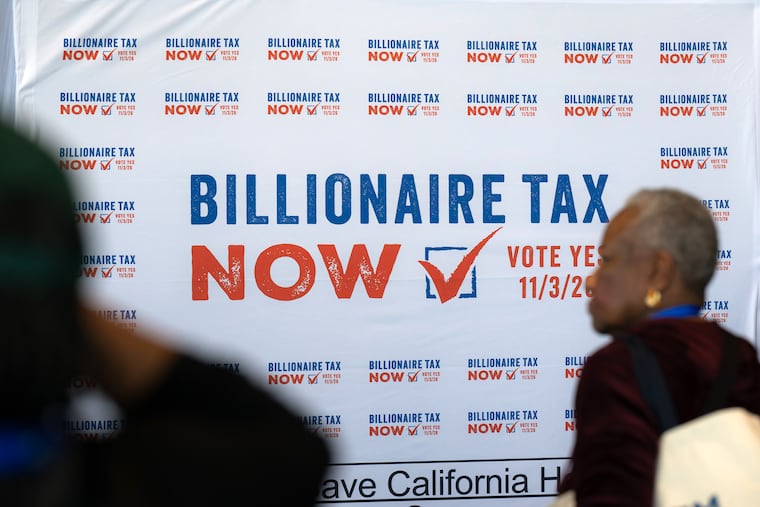
California voters rejected a billionaire tax, the Associated Press determined on Monday, rebuking a measure that would have created the nation’s first wealth tax by targeting the assets of residents with a net worth beyond $1 billion.
Under the tax measure, Proposition 40, the state would have imposed a one-time, 5% tax on the personal assets of billionaires and devoted most of the revenue to healthcare.
The Democratic voters who dominate the California electorate generally support the concept of making wealthy people pay higher taxes. But Democratic leaders were divided over the proposal — Gov. Gavin Newsom opposed it while the California Democratic Party endorsed the tax. And some of the California billionaires who stood to pay the tax contributed heavily toward a campaign that slammed the proposal with attack ads on TV throughout October.
Proposition 40 also suffered from having a weak coalition of supporters who could not compete with those ads and relied on cheaper methods, such as social media and influencer campaigns, to rally support.
The race was not called until almost a week after the election as California counted mail ballots at a deliberate pace. Though the vote gap shrank as more ballots were tallied, the measure ultimately failed to get enough support despite it being a hugely successful election for Democrats and left-leaning candidates.
The failure of the billionaire tax in California, a liberal state, is likely to be used as evidence for years to come that Americans will not stomach similar wealth taxes. The concept is expected to come up during the 2028 presidential campaign, and Newsom has already said he would be interested in a national wealth tax but not one only in his own state.
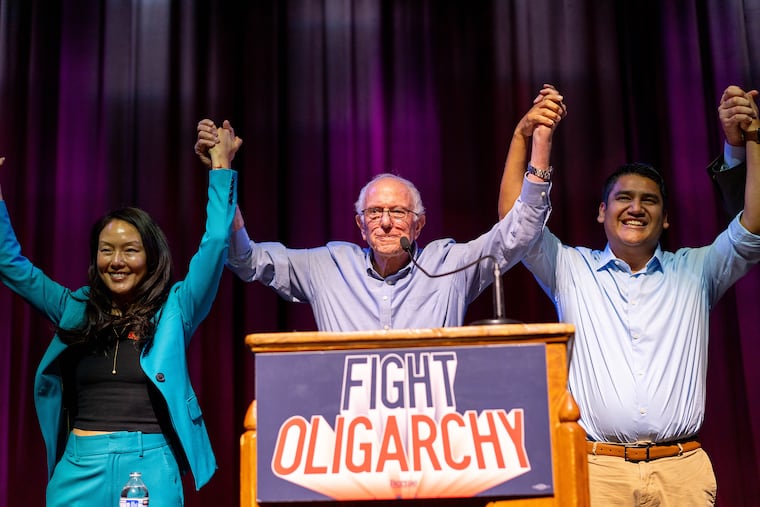
Supporters of the tax blamed the failure of Proposition 40 on their vast campaign spending disadvantage and considered the initiative’s failure a sign of oligarchic power.
During a news conference on election night, proponents pointed to the astronomical spending by the opposition, led by Sergey Brin, a Google co-founder who gave more than $100 million toward defeating the wealth tax. His group has raised more than $300 million this year, based on the most recent campaign finance records.
Dave Regan, the head of the healthcare workers union that put the tax on the ballot, said the billionaire-funded attacks produced “a lot of confusion and a lot of second-guessing among people who really in their hearts know what the right thing to do is.”
Regan vowed to pursue another billionaire tax in 2028.
His union had argued during the campaign that revenue from billionaires was necessary to offset cuts to healthcare programs that President Donald Trump signed into law last year. Without the tax, millions of Californians would lose health insurance and hospitals would close, said the union, the Service Employees International Union-United Healthcare Workers West.
It garnered support from prominent liberal economists and national progressive leaders, including Sen. Bernie Sanders (Ind., Vt.), who called Proposition 40 “the most important ballot item in the country.”
But the measure divided labor unions and Democratic politicians in California. Newsom and Xavier Becerra, the Democrat who will replace him, opposed the tax, arguing that it would drive away entrepreneurs, and said a one-time surge in tax revenue wasn’t worth the potential long-term harm to the state budget. Teachers, firefighters, and Planned Parenthood Affiliates of California joined them in arguing that the tax would ultimately reduce the money available for many government services.
“You don’t pass a landmark progressive tax increase that is a change to how America has historically done anything by dividing up the progressive coalition,” said Thad Kousser, a political science professor at the University of California, San Diego.
He noted that the union behind the tax moved ahead with it before securing sufficient support from key allies. “The policy substance was much harder to sell because of this key strategic choice at the beginning to go it alone,” he said.
The billionaires have said very little publicly about their ballot efforts and have relied on Democratic-leaning organizations and Newsom to be the face of the opposition.
On behalf of doctors, the California Planned Parenthood branch, school boards, and health clinics, opponents said voters made the right decision to protect the California’s fiscal health and called the ballot initiative “a reckless experiment conducted on our state’s economy.”
This article originally appeared in the New York Times.