Can a ‘blue wave’ make U.S. universities great again? | Will Bunch Newsletter
Plus, can Dems save themselves on a data center vote?

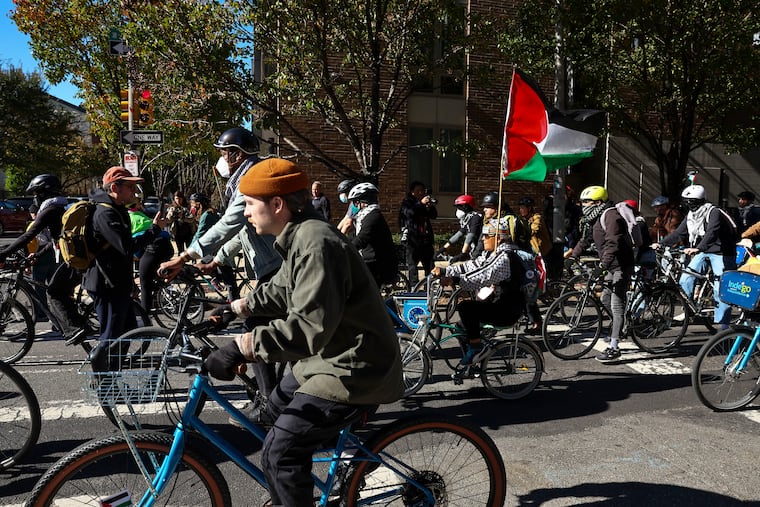
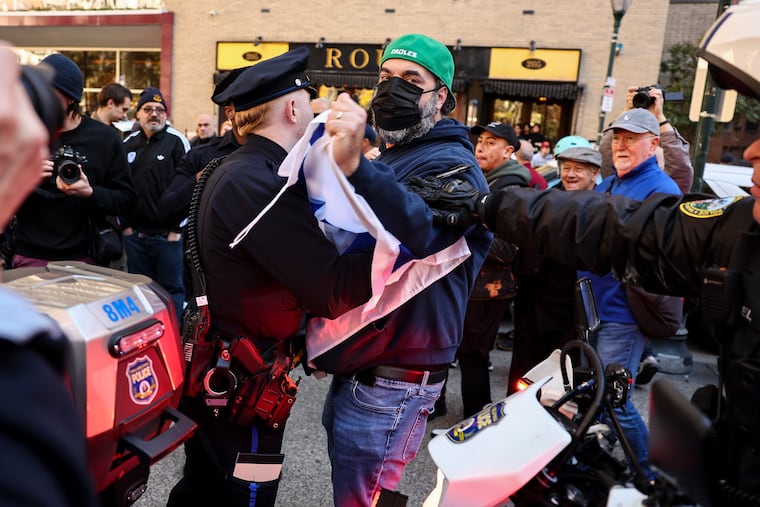
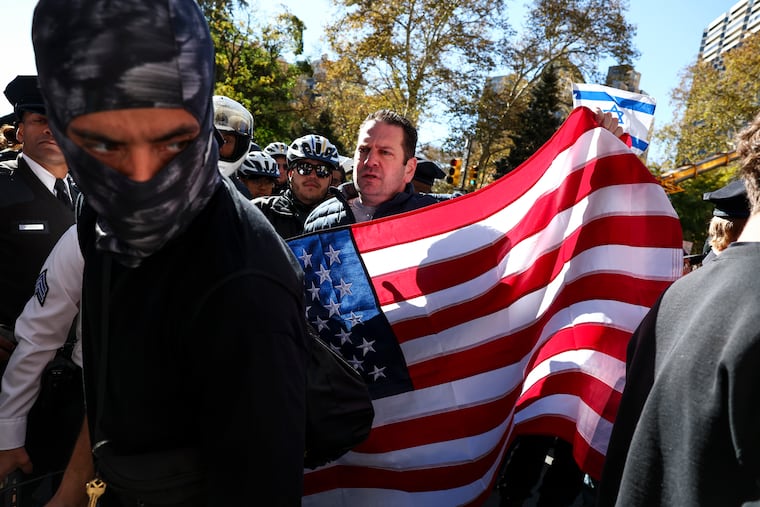
First things first. During the last week I heard from a few of you asking whether I would condemn a demonstration that occurred Sunday in Philadelphia in which bike riders aggrieved by Israel’s war conduct in Gaza protested a half-dozen Jewish-owned dining places. I do condemn it, strongly — and I say that as someone who’s been a fierce critic of war crimes committed under the extreme right-wing government of Benjamin Netanyahu. I applaud those who went to New York this summer to protest him, but harassing businesses explicitly because of their Judaism — and a handful of donations to humanitarian causes that support Israelis — was a jumble of dangerous naïveté and antisemitism. This time, the heroes were the many who showed up to support these businesses.
If someone forwarded you this email, sign up for free here.
Can the Dems’ blue wave start making U.S. college great again?
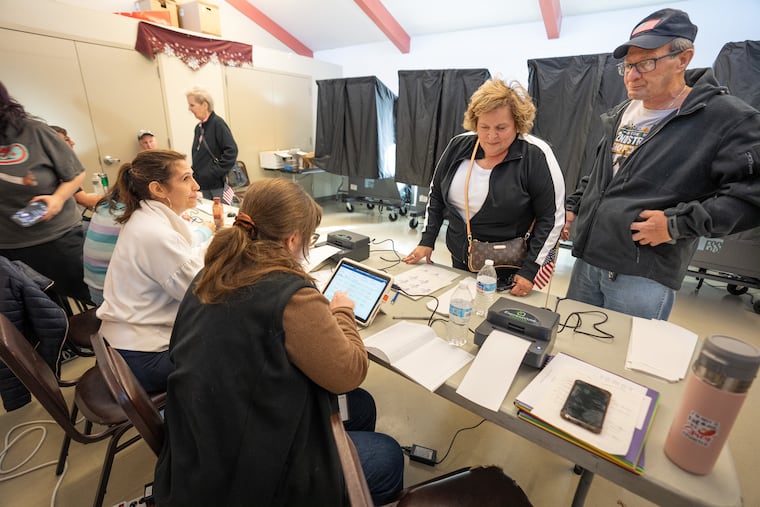
Last Tuesday morning, as Americans were waiting for the polls to open in a midterm election poised to change everything in U.S. politics, NPR touted on Bluesky its story about the culture wars at Texas Tech University. There, academic freedom has been undermined to the point where professors fear they will soon no longer be allowed to teach great books like Moby Dick or The Odyssey.
The head of the nation’s largest union of college academics, Todd Wolfson of the American Association of University Professors (AAUP), later reposted the story from that hopeful morning with a three-word comment:
“Not for long.”
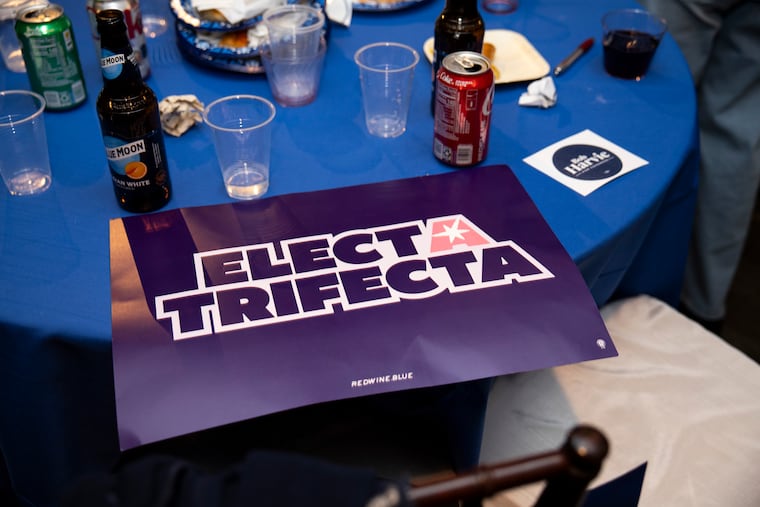
That might have sounded overly optimistic in the moment, but just hours later Texas — which will have a Democratic governor, lieutenant governor, and their party’s control of the Texas House for the first time in decades — emerged as the vanguard of the so-called “blue tsunami” that rebuked Donald Trump and GOP policies from coast to coast.
The first two years of Trump’s 47th presidency have been disastrous for the American university — with Black and brown enrollment shrinking at many campuses amid withering government attacks on diversity programs, steep cuts to federal research grants, student loan cuts, and waves of restrictions on free speech in the classroom or at protests.
Those issues simmered on the back burner in an election where attention was heavily focused on high prices and widespread corruption in the Trump regime. But advocates such as Wolfson are optimistic that huge Democratic gains in once blood-red states that had all but declared war in higher education — not just Texas but North Carolina, Wisconsin, and Ohio — can start to swing back the pendulum of change.
Wolfson told me Monday night that allies including groups like the AAUP, the closely connected American Federation of Teachers, and the National Education Association are talking about not just undoing some of the more egregious Republican state laws but to “start to drive proactive visions for higher education.”
The idea is to change the national debate about academia away from the conservative-driven culture wars and angst over high tuition and student debt and back toward the positive American dream of college that flourished in the decades after World War II.
After the new Democratic majorities take root on Capitol Hill this spring, Wolfson said higher-ed boosters are discussing how to push for a big agenda such as a crusade for free public university education, or perhaps an even broader “crib-to-college” initiative that would also urge more investment in early childhood education and K-12 schools.
“That is a response to creeping authoritarianism and the threats of AI,” he said. “You know, invest in your children and their future against the threats that we’re facing.” Wolfson acknowledged that it will take a few years, including a robust debate in the 2028 presidential primaries, to turn the battleship of government policy around. “But we’re going to launch it, and fight for it.”
Existential dread over the future of U.S. higher ed, which is playing out in fears over falling enrollment and closures of some liberal arts colleges, may not have been the marquee issue last Tuesday, but the issue likely played a role in higher youth turnout — especially among students — and a strong shift in the 18-to-29-year-old demographic toward the Democrats.
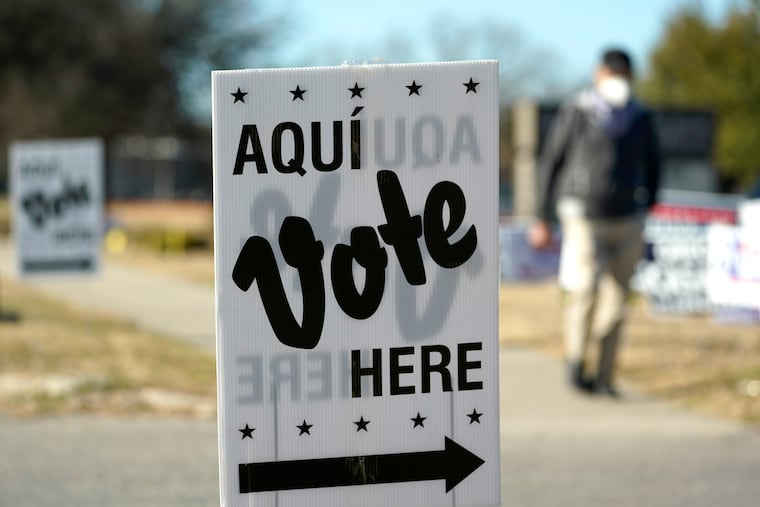
At the University of Texas-Arlington, for example, the decision by Republican officials to close a convenient on-campus polling place caused students to organize a march to their new off-campus site. Explained student organizer Emmanuel Hernandez: “Because I think it’s very important for us to just show a message and actually show that we never give up no matter the circumstance.”
That message could be applied more broadly to advocates for strong universities, who’ve seen Republicans in red states — and the Trump regime — depict campuses as hotbeds of liberal indoctrination that they need to rein in by ending diversity, equity and inclusion (DEI) programs, terminating departments centered on race or gender and curbing what can be taught, and by restrictions on tenure and faculty governance.
How much of that can be rolled back under the big Democratic election gains? It’s complicated.
Wolfson noted that it would be hard for Texas Gov.-elect Gina Hinojosa to repeal the state’s Senate Bill 37, which gave state-appointed university regents sweeping powers to eliminate classes or even degree programs. The measure has been blamed for the end of gender or ethnic and racial studies at some public campuses. The problem with a repeal is that Republicans have retained control of the Texas Senate.
But Wolfson also believes the Democratic victories in Texas will create a climate that might end the harsh interpretations of the law by college administrators, such as last year’s firing of a Texas A&M professor for classroom comments on gender.
“Some of the reforms that universities embraced over the last two years were not because of any legal mandate,” John D. Sailer, director of higher-education policy at the conservative Manhattan Institute, told the Chronicle of Higher Education. “They went beyond what the law actually mandated. They were, if you want to put it in a term, based on vibes.”
But the biggest change in the short term may be the ability of new Democratic governors like Hinojosa or Keisha Lance Bottoms in Georgia to appoint new university trustees or regents with a more liberal view of academic freedom and campus diversity. In 2027, Hinojosa will be appointing 20 new regents across seven public universities in Texas.
Another unheralded source of political power for academic freedom, Wolfson said, will be efforts to undo the curbs on professors or other academic workers from unionizing that exist in a number of Heartland states such as Wisconsin, which with its Act 10 banned faculty unions despite huge, vocal protests in 2011.
But the conditions for a radical reversal are not in place, not yet. In Washington, two more years of Trump and his close ally, Education Secretary Linda McMahon, will likely thwart efforts to reestablish DEI policies at the federal level. But a Democratic Congress and its power of the purse should be able to undo some of the cuts in scientific research funding that have devastated top campuses.
Still, Wolfson acknowledged that the desired vibe shift that would lead to long-term policies to make a college diploma more accessible — as opposed to the current push to limit what professors can teach or which students can be admitted — goes beyond just defeating Republicans at the ballot box. Leading Democrats have mostly avoided a positive, pro-college agenda to focus instead on reviving trade schools (which is also a good thing), or opening up more state jobs to non-college graduates.
The faculty-union president said true leaders can bring the conversation around the American way of college back to ideals like children doing better than their parents, or the need for scientific breakthroughs, or the role that education plays in a democratic civil society. “It’s really hard to get that narrative out there in a way that is lifted up when the Elon Musks of the world have such a big megaphone and have been beating us down so hard for so long,” Wolfson said.
It’s a heavy lift, for sure, but after last Tuesday the winds of change for American universities are finally blowing in the right direction.
Yo, do this!
I rarely venture out from my undisclosed location, but I’m going to do it this Friday night, Nov. 13, to moderate a very special book event with author Akbar Shahid Ahmed, who formerly covered international affairs for the Huffington Post and has written the definitive history of our former president’s badly botched policy in the Middle East: Crossing the Red Line: Biden, His Advisors, and Israel’s War in Gaza. Please read the book, and then meet us Friday at 7 p.m. at the Haraz Coffee House at 1822 Chestnut Street in Center City, Philadelphia, for what should be a lively conversation.
It’s still mind-blowing to boomers like me that most voters either weren’t around or were too young to care much about Watergate, the scandal that in 1974 ended the presidency of Richard Nixon, who was the worst POTUS anyone could imagine until, well, you know. The passage of time has allowed the far right to create a false narrative that Nixon was framed, which is why I’m urging everyone to rent or buy The Watergate Caper: Richard Nixon and the Death of the American Dream, which is narrated by the great (and occasional friend of this space) Harry Shearer. Reviews say you’ll feel like you’re experiencing Watergate in real time, which — as someone who did exactly that as a teenager — is a pretty wild ride.
Ask me anything
Question: What does it [the midterm election] mean for [Pennsylvania Sen. John] Fetterman? — John Robinson (@jrobin.bsky.social) via Bluesky
Answer: Great question from my retired ace journalist friend John, which seems to be on the mind of a lot of my neighbors here in the Keystone State. Fetterman, who has dismal Democratic approval numbers after his hard right turn toward Benjamin Netanyahu’s Israel and other moments of siding with Trump, looked shellshocked when a reporter tried to interview him this week. The early appearance of a primary opponent, Philly-based Palestinian-American writer Ahmed Moor, suggests others with bigger résumés are likely to follow. I don’t see any path for Fetterman as a Democrat, and I think a switch to the GOP would be a bumpy ride that would leave no one happy. That said, the poli-sci major in me does think Fetterman might have a chance as an independent, especially if the major parties both nominated candidates from their left and right flanks. Hard to believe, but some voters still view his erratic behavior as bucking the system. We’ll see.
What you’re saying about...
For the second time in three weeks, a question was a total dud. The timing of the newsletter that went out in the middle of Election Day, when people were hanging on the results, all but guaranteed a zero response rate, since folks tend to answer in the moment, or not at all.
📮 This week’s question: The debate about whether New York’s Chuck Schumer should continue to lead the Senate Democrats has been fascinating to watch. Online progressives seem to agree with me that it’s time for a change and that Maryland Sen. Chris Van Hollen would be a great alternative. The Morning Joe punditocracy sees this as crazy talk. What do you think? (Feel free to suggest other candidates.) Please email me your answer and put the exact phrase “Replacing Schumer” in the subject line.
Backstory on the ‘blue wave’ crashing into reality
For Democrats, winning the midterms will surely be looked back on as the easy part. There’s already been a ton of speculation about how congressional Democrats will try to govern through two more years (probably) of Donald Trump in the White House, and at least 44 Senate Republicans eager to filibuster any left-leaning legislation. But forget next year; the crisis of governing in this brave new world is already here, this week. And it is not going well.
The issue is a piece of major legislation which — while the mainstream media was obsessing on Sen.-elect James Talarico’s breakfast taco or whatever — sneaked its way through Capitol Hill with no one but congressional aides and a few keen lobbyists paying any attention, until now. It’s called the Bipartisan American Affordability and Jobs Act, or BAAJA, and what’s so complicated is that the sweeping measure deals with a problem that bothers both liberals and conservatives, but in very different ways. The bill aims up to speed the slow pace of environmental and other federal permits for energy-related projects.
There are energy projects that are largely loved by the right and loathed by the left — hyperscale data centers and the fossil-fuel plants that power them — but the bill would also streamline permitting for projects that liberals want, including clean-energy developments as well as mass transit and affordable housing. Several key Democrats, led by Sen. Sheldon Whitehouse of Rhode Island, negotiated the bill with Republicans and the Trump regime. It certainly is an old-fashioned compromise in the sense that both sides are conceding some ground to get something they want.
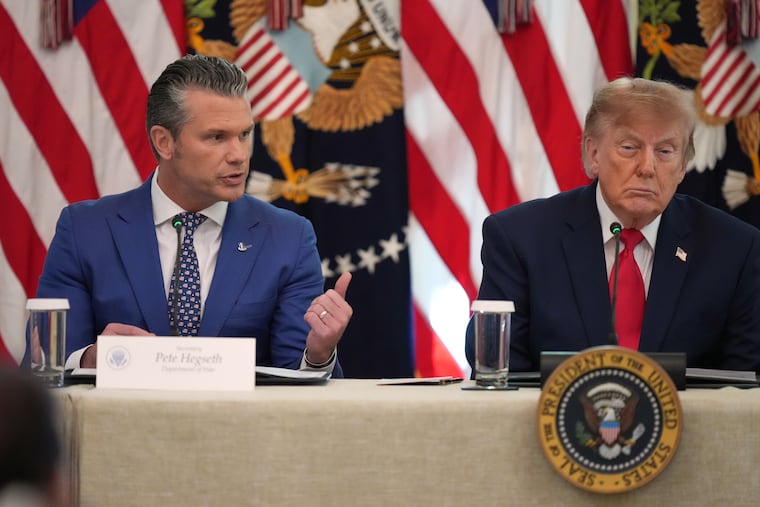
Still, it’s telling who wants passage of BAAJA, and who doesn’t. Trump, arguably Planet Earth’s biggest booster for data centers and climate-crushing fossil fuels, desperately wants the bill and calls it “a BIG WIN for U.S. ENERGY INDEPENDENCE and DOMINANCE.” (He also insists he won’t abide new wind-energy projects, which undermines the deal.) But former vice president Al Gore, who won a Nobel Peace Prize for his climate activism, is urging a “no” vote.
“Given how this Administration has run roughshod over the environmental laws and protections that are currently in place, now is not the time to give the Trump administration freer rein to double down on fossil fuels — which is what President Trump would surely do,” Gore posted on X. “And after last week’s historic election, we will have a new Congress in January that can strike a far better balance.”
I don’t know if Gore is actually right about the last part; a Democratic Congress would surely produce a better bill, but Trump would veto anything that doesn’t serve his obsession with data centers. It’s a tough call. On the whole, I’d argue that both the reality of greenlighting more fossil fuels and the symbolism of giving Trump a victory just days after he was repudiated by American voters outweigh any benefits.
Right now, 22 Democratic senators see it differently. They sided with the lame duck GOP majority to avoid a filibuster and set up a vote on final passage. As I said here recently in a different context, lost causes are the ones worth fighting for. Call your senator ASAP and tell him that helping data centers, and Trump, is NOT what you just voted for.
What I wrote on this date in 2024
What a difference two years make. On Nov. 10, 2024, I — like a lot of Americans, although sadly not a majority — was questioning how a seemingly failed one-term president who’d attempted a coup and had been convicted of 34 felony charges got a second crack at the job. A big part of the problem, I concluded, was the broken state of American news media, which helped produce an information-free citizenry. I wrote that “nothing mattered more than this: Donald Trump was returned to power by the most badly informed electorate in modern American history.” Read the rest: “2024’s other big loser? The mainstream media. Is there any path forward?”
Recommended Inquirer reading
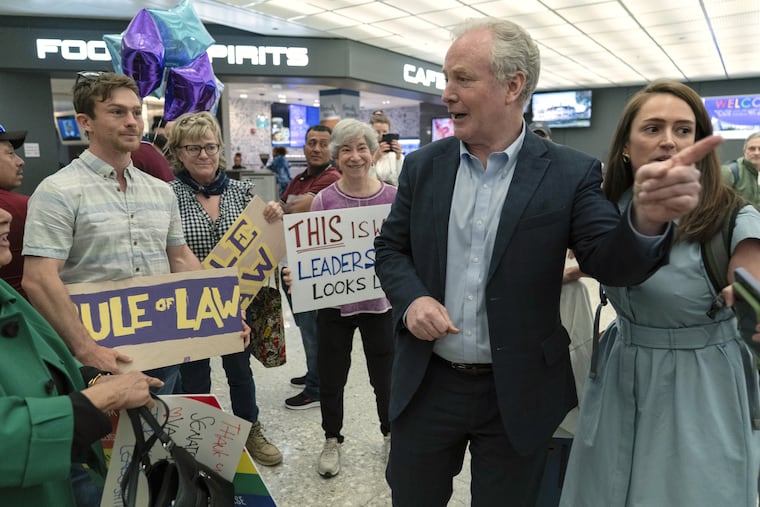
Yes, it was a busy and memorable week for me. I let others report on what happened, so I could look at lingering questions from the “blue tsunami” of 2026. First, I pondered what didn’t happen on Election Day — the lack of troops or masked goons at polling places, or FBI agents seizing ballot boxes, or any other markings of a Donald Trump coup. That was partly great prep work by democracy defenders, but I also argued that dictatorship just isn’t in Americans’ DNA. Over the weekend, I asked: What’s next? Specifically, can the Democrats accept that voters want a different way of doing things? I made the case that Maryland Sen. Chris Van Hollen — who showed enormous courage in fighting to save the immigrant Kilmar Ábrego García when no one else would — should be the next Senate majority leader. Not Chuck Schumer.
Of course, there’s what’s immediately next and then there’s what’s next after that, as in the 2028 elections that essentially kicked off as soon as the polls closed at 8 p.m. election night. The next two years are especially pivotal in Pennsylvania, where no one can figure out what will happen regarding the reelection of Fetterman, who is wildly unpopular in his Democratic Party. Philadelphia U.S. Rep. Brendan Boyle surprised a lot of folks (including me) by not running. Meanwhile, Moor, a Palestinian American writer who was born in Gaza and worked in international development, has said that he will challenge Fetterman, who’s infuriated many Dems with his stance on the war in Moor’s native Gaza. Meanwhile, did Gov. Josh Shapiro’s landslide reelection launch him into a sustainable orbit for his expected White House bid? It’s a lot to digest, but The Inquirer is already gearing up to give you a steady diet of the political fodder that anyone who’s made it this far in the newsletter craves. Subscribe today and join us at the table.
By submitting your written, visual, and/or audio contributions, you agree to The Inquirer’s Terms of Use, including the grant of rights in Section 10.
About our columnists
In contrast to news reporters, who operate within an independent, nonpartisan framework, columnists are charged with including their perspectives, opinions, and viewpoints when presenting their reporting. Inquirer columnists include Jenice Armstrong, Will Bunch, Luis F. Carrasco, Paul Davies, Daniel Pearson, Trudy Rubin, and Sabrina Vourvoulias.

Sign up for the Will Bunch Newsletter