17 Pa. companies were given clean-air exemptions by Trump, news report says
The New York Times is reporting that President Trump has exempted 202 facilities in 39 states and Puerto Rico from clean-air regulations that were going into effect.
Seventeen Pennsylvania companies that deal with coal, steel, chemical, or medical device sterilizing have been exempted from federal clean-air regulations under President Donald Trump, according to a New York Times report.
One of those, a chemical company in Philadelphia, had a 2,000-gallon spill of phenol, a toxin, in 2022. Short-term exposure can cause respiratory irritation, headaches, and burning eyes. High exposure can be fatal.
Overall, The Times found that the Trump administration has exempted 202 facilities in 39 states and Puerto Rico from clean-air regulations that were going into effect.
That represents the biggest presidential rollback of the Clean Air Act since President Richard M. Nixon signed it into law in 1970, according to the report.
The exemptions apply to a 2024 rule under former President Joe Biden that required some of the nation’s biggest polluting industries to take steps to reduce their toxic emissions.
In Pennsylvania, 12 coal, two sterilizing, and two steel facilities have been given at least two-year exemptions by Trump.
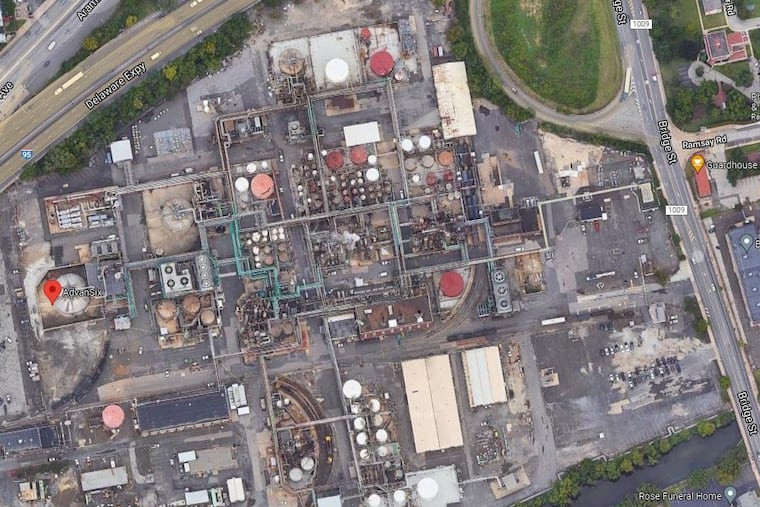
The AdvanSix Frankford plant is the only chemical facility granted an exemption in Pennsylvania, according to a map published by The Times. The Natural Resources Defense Council, which produced its own map, also reports that the AdvanSix plant received an exemption.
AdvanSix could not be reached for comment by The Inquirer.
AdvanSix makes products for building and construction, fertilizers, agrochemicals, plastics, solvents, packaging, paints, coatings, adhesives, and electronics, according to its website.
An EPA database shows that the facility, formerly owned by Honeywell, emitted greenhouse gases, volatile organic compounds, fine particulate matter, phenol, cumene, sulfur dioxide, and other compounds in 2020.
A 2022 spill at the facility occurred when a worker failed to shut off a valve and up to 2,000 gallons of phenol spilled near Bridge Street, with some possibly entering the sewer system. The fire department responded but did not call for an evacuation.
» READ MORE: Thousands of gallons of toxic phenol reportedly spilled this week at a Philly chemical plant
In July, the AdvanSix plant was cited for a clean air permit violation and was assessed a $20,000 penalty in September, according to EPA records.
The new Biden-era rules required chemical plants, medical sterilizers, and steel facilities to monitor for emissions of cancer-causing gases along their property lines by 2027, The Times reported. If the companies detected certain levels of the gases escaping into communities, they had to fix the leaks and post the findings publicly.
The chemical industry said the rules were expensive, unnecessary, and unworkable, and its lawyers sought to overturn or delay the regulations.
Almost as soon as Trump returned to office, trade groups asked Lee Zeldin, the administrator for the U.S. Environmental Protection Agency, to urge Trump to drop the industry from the rules.
The Times reported that a trade association for the medical device industry donated to Trump’s inauguration fund and to MAGA Inc., his campaign affiliate. Companies also wrote to Trump asking for exemptions.
Soon, Trump began using an obscure provision of the Clean Air Act that allows the president to issue exemptions. The waivers were good for two years, with the possibility of an extension.
Meanwhile, Trump staffed the EPA with former industry insiders who worked from within to gut the rules altogether, The Times reported.
The Times story cites the U.S. Steel facility in Clairton, Pa., as an example of an exemption. The plant near Pittsburgh bakes coal at up to 2,000 degrees to turn it into coke for steel making. Its smokestacks release chemicals.
For now, the plant no longer has to curb some of its toxic emissions, the Times reported.
A spokesperson for U.S. Steel, Andrew Fulton, told The Times that Clairton Coke Works had never been fined for exceeding benzene emissions standards. The company plans to invest up to $2.5 billion in its plants in Southwestern Pennsylvania, Fulton said, but none of that will be spent on new pollution controls at Clairton.
“It would be premature for U.S. Steel or any other regulated company to invest in controls while the rule is under reconsideration,” he told The Times.
In an interview with The Inquirer, Sarah Buckley, an attorney with the environmental advocacy group Natural Resources Defense Council, said the administration’s reliance on broad presidential proclamations threatens to undermine core protections under the Clean Air Act.
Buckley said she feared the goal of the two-year exemptions, which have been granted on a rolling basis, is to delay the Biden-era rules until the EPA can rewrite rules in favor of industry.
Trump has cited national security and a lack of technology for industries to be able to comply with the new rules as his reason.
In July, a batch of chemical plants — including AdvanSix in Philly — were added to the exemption list just days before compliance deadlines took effect, Buckley said.
The Biden-era rules were needed, she said, because scientific assessments of chemicals have changed. For example, ethylene oxide is 30 to 60 times more carcinogenic than previously understood, she said.
“This is not an actual concern with the availability of technology and national security,” Buckley said. “This is just a ploy to let industry off the hook.”