Swarthmore Borough passed an earned income tax. Officials say it will bring in $2 million in 2027.
Swarthmore’s earned income tax will take effect on Jan. 1 and will be levied on both working Swarthmore residents and non-residents with jobs in the borough.
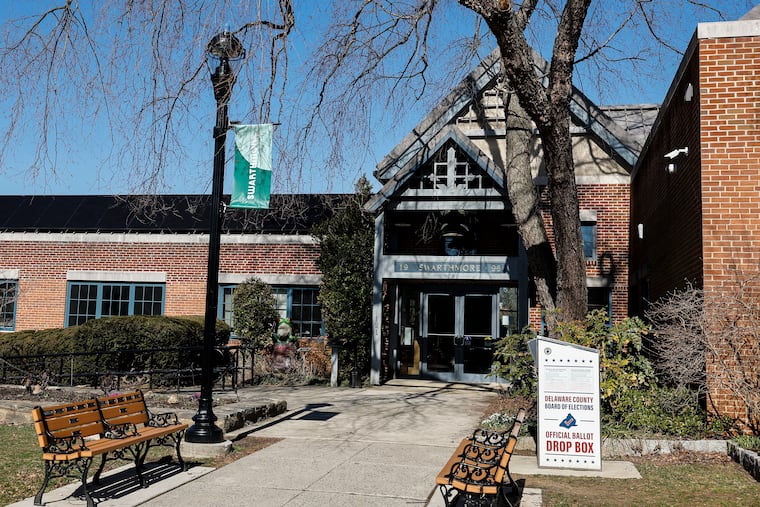
Swarthmore Borough voted to implement a 1% earned income tax last week, a move officials say will generate nearly $2 million next year as the borough contends with deferred maintenance and rising operational costs.
Swarthmore’s earned income tax will take effect on Jan. 1 and will be levied on both working Swarthmore residents and non-residents with jobs in the borough. The borough estimates the tax will bring in about $1.9 million in 2027 and about $2.9 million annually after that.
Disability benefits and retirement pay such as pensions and Social Security will not be taxed. Individuals making $12,000 or less annually will be exempt.
Swarthmore joins 28 of 49 municipalities in Delaware County, and nearly 97% of municipalities across the commonwealth, that levy earned income taxes.
In Pennsylvania, earned income taxes are reciprocal, meaning if a person works in one municipality with the tax and lives in another that also has it, the tax revenue from their income goes to their home municipality.
In Swarthmore, about two-thirds of working residents already pay an earned income tax or wage tax to another municipality. The new tax will allow the borough to recapture about $1 million in revenue that residents are currently paying elsewhere, according to a presentation from consulting firm Keystone Municipal Solutions.
Philadelphia is a notable exception. Those who work in Philadelphia but live in a municipality with an earned income tax must pay Philadelphia’s non-resident wage tax instead of their home municipality’s tax. One-third of employed Swarthmore residents worked in Philadelphia as of 2023, according to Keystone Municipal Solutions.
Residents are projected to contribute about 80% of Swarthmore’s income tax revenue, and people who work there but live elsewhere will contribute the remaining 20%, according to the presentation.
The tax, approved at a Nov. 9 council meeting, faced pushback from residents in attendance, many of whom said it will unfairly burden lower-income workers who do not benefit from the borough’s services.
Resident and local business owner Gus Pappas called the tax “aggressive” and that it will land “on the backs of people who don’t live here.”
“Supposed good intentions do not excuse poor fiscal stewardship, and taxpayer dollars are not an unlimited resource to fund every program that council members consider worthwhile,” said resident Stephen Kraftschik, who criticized council’s spending decisions.
Council members described the tax as an unfortunate necessity, as the borough faces a “sobering” financial reality.
In the absence of an earned income tax, the borough would face a budget shortfall of more than $1 million, said council member Cindy MacLeod.
“There is no great way to approach this problem, and I’ve racked my brain and I’ve been uncomfortable and squirming and this is a horrible position to be in as council,” said council president Jill Gaieski.
“I do think that we’re in this period of righting our financial ship and figuring out where the money is actually coming from and where it’s going,” said council member Angie Tseng.
Council members described years of overdue maintenance, including fire trucks that are beyond their usable life and bridges that need to be replaced.
Swarthmore floated an earned income tax last year, but dropped the proposal after a $638,000 contribution from Swarthmore College. The borough instead voted to levy an emergency service tax, which will be eliminated in 2027.
Swarthmore’s borough council voted to approve the new tax in a 6-1 vote. Council member Jared Therrien voted against the tax, arguing it would burden working people and young families.

Inquirer Greater Media
This suburban content is produced with support from the Leslie Miller and Richard Worley Foundation and The Lenfest Institute for Journalism. Editorial content is created independently of the project donors. Gifts to support The Inquirer’s high-impact journalism can be made at inquirer.com/donate. A list of Lenfest Institute donors can be found at lenfestinstitute.org/supporters.