Philly’s ban on stopping in bike lanes violates federal disability protections, lawsuit says
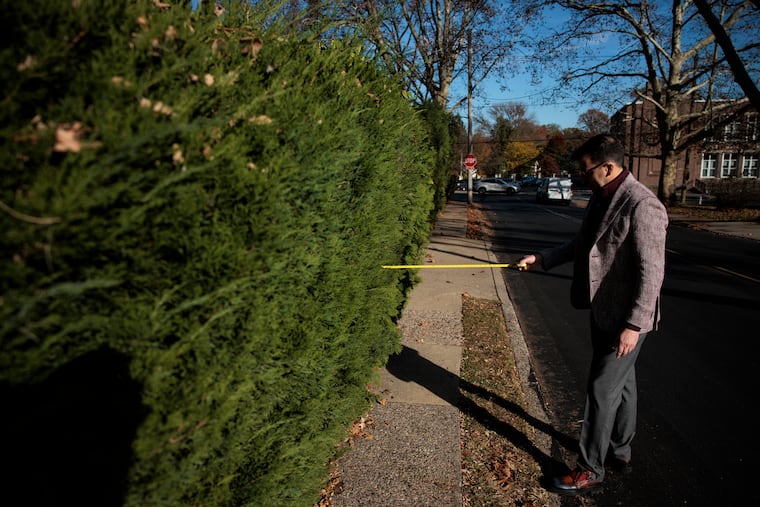
The federal disability lawsuit opens a second legal front in the battle over the bike lanes on Spruce and Pine Streets, which has been causing skirmishes between residents and cyclists since 2009.
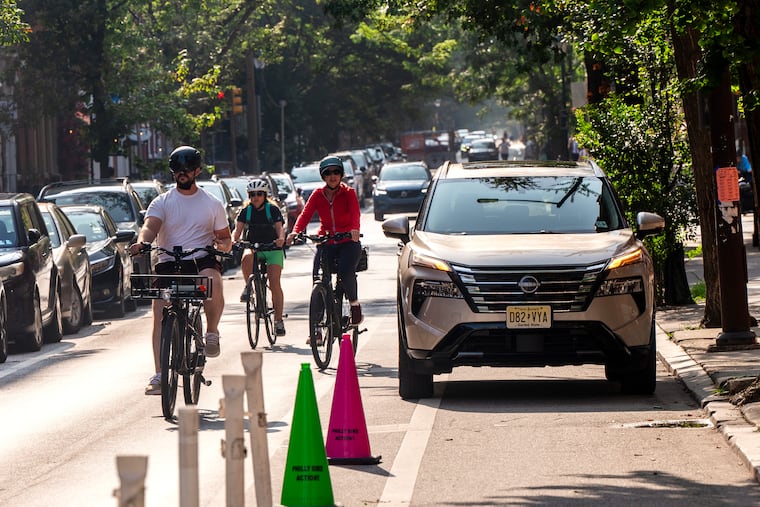
The legal fight over bike lanes on Pine and Spruce Streets took a citywide turn with a new federal lawsuit.
Safety upgrades for bike lanes on the streets’ Center City blocks have been stalled for more than a year following a Philadelphia Common Pleas judge’s order.
And now, two residents of Pine and Spruce with mobility impairments argue in a proposed class action lawsuit that the city violated the Americans with Disabilities Act when it banned all cars from stopping on a bike lane.
The ban on stopping contains no exception for a vehicle transporting people with mobility impairments, the complaint says.
Susan Herskovits, a Spruce Street resident in her 80s, and Carl Roeder, a Pine Street resident in his 60s, sued because they say they are unable to safely reach their homes because of the ban.
Both have had trouble getting in and out of rideshares safely since the prohibition took effect.
“A person who cannot walk a block, or cannot carry what she brings, may have no practical way from the vehicle to the door,” the suit says.
The lawsuit asks a judge to order the city to adopt a disability exception to the ban, creating a process for people with disabilities whose home is adjacent to a bike lane to receive a parking or loading permit, and conducting an accessibility evaluation for the planned safety upgrades on Pine and Spruce.
George Bochetto, the attorney who filed the lawsuit on behalf of the two residents, said the city ignored attempts to resolve the issue outside of court.
“The Americans with Disabilities Act requires municipalities to make reasonable accommodations for the disabled,” Bochetto said. “We are not going to go away.”
A spokesperson for the city’s law department declined to comment.
The citywide stopping ban and planned safety upgrades for bike lanes on Spruce and Pine in Center City followed the 2024 death of Barbara Friedes, a 30-year-old physician at Children’s Hospital of Philadelphia who was killed when a drunk driver veered into the Spruce Street bike lane.
The city also unveiled a plan to harden the bike lanes on the two east-west corridors by erecting concrete barriers, and designating loading zones across from the bike lane for residents to use.
Friends of Pine and Spruce, a group representing some residents, sued in 2025 over the loading zones plan, calling it regulatory overreach. That summer, Philadelphia Common Pleas Court Judge Sierra Thomas-Street ruled that the city had no legal authority to remove parking spaces for the loading zones, and issued an injunction prohibiting the city from making changes to the bike lanes.
The city asked Common Pleas Judge Damaris L. Garcia to dissolve the injunction in June after City Council passed legislation empowering the Streets Department to make decisions on parking changes. But the judge denied the request.
The city’s appeal in Commonwealth Court is pending.
The federal disability lawsuit opens a second legal front in the battle over the bike lanes, which has been causing skirmishes between some residents and cyclists since 2009.
The city knew about the accessibility concerns, the suit says, which were aired in public hearings related to the plan and in the previous court case.
Disability Rights Pennsylvania, a watchdog nonprofit, asked the city in December to “retract and remove” the ban on stopping and revise the plan for the bike lanes in “a manner that allows individuals with disabilities to freely enter and exit their premises, to have access to their transportation, and to move about in the community,” according to the federal lawsuit.
While the federal complaint focuses on the two narrow Center City corridors, the suit says, the lack of a disability exception is a citywide problem.
“The same rule strands relatives, friends and guests with mobility disabilities who come to those homes,” the lawsuit says. “Each resident faces one rule and one missing exception, and one order can fix it.”