Data centers, energy costs, and fracking loom as Democrats finally get full control of Pa. legislature
Democrats could be under pressure to act quickly on hyperscale data centers and energy costs. But they'll only have a slim majority in the Senate.
For decades, Pennsylvania’s Democratic legislators have been stymied in their attempts to pass environmental and energy-related bills amid political gridlock.
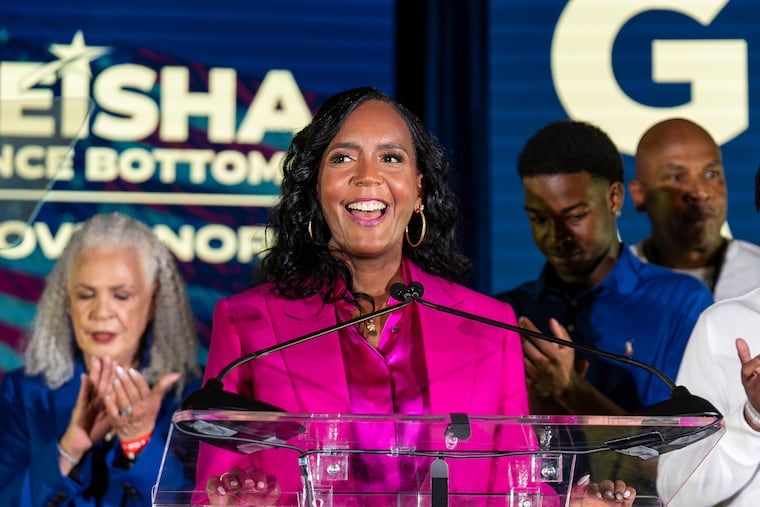
Now Democrats have control of the Senate, House, and governorship for the first time since 1993. But getting legislation passed won’t be easy with a slim margin of 26-24 in the Senate.
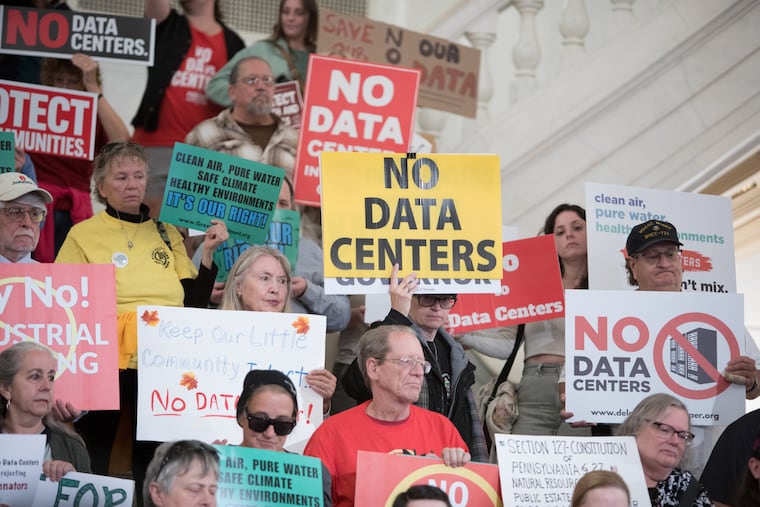
Regardless, legislators will be under pressure to act fast on one major issue: Hyperscale data centers.
The data centers are not only a pressing environmental issue but are intertwined with rising consumer energy costs as the electrical grid and utilities struggle to meet the power demand.
Six such data centers meant for AI and totaling millions of square feet are proposed for Bucks, Chester, and Montgomery Counties.
“The data center issue is the environmental issue of our generation,” said Ginny Kerslake, the Eastern Pennsylvania organizing manager for the nonprofit advocacy group Food and Water Watch. “You cannot talk about the environment without talking about data centers in Pennsylvania right now.”
Republicans have been able to thwart many Democrat environmental bills in the past. They’re out of excuses, she said.
Data centers
Currently, a bill with strong bipartisan support has passed the House and would allow municipalities to voluntarily impose a moratorium on data center proposals for up to 180 days.
The goal of the bill, sponsored by State Rep. Paul Friel, a Democrat from Chester County, is to give towns breathing room to craft ordinances that could put limits on how and where data centers are built. The bill has been referred to the Senate.
But activists like Kerslake want more. She supports a bill sponsored by State Sen. Katie Muth, a Democrat from Chester County, that would impose a three-year statewide moratorium on hyperscale data center development and permitting. The bill has been referred to a committee.
Now that Democrats control the governor’s office and both houses of the legislature, they can no longer blame Republicans for failing to enact protections, Kerslake said.
The only reason Democrats would fail to take up or pass a statewide moratorium, she argued, is if they bow to pressure from tech companies, the energy industry, or building trades.
If Democrats fail to act, she believes, lawmakers would face voter backlash by their own party and Republicans, many of whom also support moratoriums.
Over the summer, Shapiro signed a sweeping executive order that would restrict data center development in Pennsylvania, marking a major shift from his initial embrace of the increasingly unpopular projects.
Biggest change in 50 years
David Hess, who served as secretary of the Pennsylvania Department of Environmental Protection (DEP) under former Republican Govs. Tom Ridge and Mark Schweiker, said state leaders face an immediate burden of addressing not only data centers and energy costs, but also shale gas reform.
Hess, who also runs a popular environmental blog, called the Democrats’ control of all three branches the biggest change he’s seen in state politics in 50 years.
“Democrats have to show progress on those issues,” Hess said, “or they’ll suffer the same fate the Republicans had in this election. People want results.”
Anxiety over utility bills is high, he said. Voters’ patience will run out quickly if Democrats don’t come up with a highly targeted agenda soon.
That would include transitioning from a dependence on the state’s vast natural gas reserves in the Marcellus Shale to an “all of the above” energy policy that incorporates renewables, Hess said.
Environmental protections surrounding natural gas drilling have remained unchanged for 23 years and need to be updated, he said. That would include increasing the distance of gas projects from communities and a ban on dumping drilling wastewater on roads.
Democrats have their work cut out for them, he said, as both the House and Senate would have to work with Shapiro, who has his own plans.
Low-hanging fruit
David Masur, executive director of the nonprofit advocacy group PennEnvironment, predicted that getting things done might not be easy, even though Democrats have full control in Harrisburg.
Lawmakers must navigate a slim Senate majority that leaves no margin for error. Tie votes in the Senate, he noted, automatically fail.
Additionally, party leaders must bridge a caucus that spans progressive members and conservative Democrats who represent districts that rely on fossil fuel energy.
“It’s much different being in charge than being in the minority,” Masur said. “They have to build the ship while they sail it. And they can’t lose a single vote.”
Masur urges leaders to focus on popular bills already approved by the House.
He believes priorities should include community solar energy expansion, banning PFAS “forever chemicals” in personal care products, appliance efficiency standards, and the 180-day data center moratorium.
“If there’s low-hanging fruit like these bipartisan bills,” he said, “why not come out of the gate fast and send them to the governor’s desk?”