A man who was in debt over an online girlfriend helped commit $2.8 million in fraud. Now he’ll spend a year in prison.
David Ray, 68, sent money to a woman he was chatting with online. To recoup his debts, he sent her his colleagues' personal information, which she used to apply for fraudulent unemployment assistance.

What started as a search for love on a “sugar daddy” website ended with nearly $3 million in taxpayer fraud — and, in Philadelphia’s federal courthouse Wednesday, a one-year prison sentence.
In 2019, prosecutors said, David Ray, of Ione, Calif., set up a profile on a website to search for a potential girlfriend. On the site — which prosecutors did not name — Ray struck up a conversation with Aryanah Davison, of Harrisburg, and the two began chatting online for months.
Ray became so smitten, prosecutors said, he agreed to take out lines of credit to send Davison money. He even bought her a luxury SUV.
Then, awash in debt, Ray — who worked at a California trucking company for 38 years — agreed to a novel scheme to try to make the money back: He decided to send Davison personal identifying details of 375 of his colleagues.
And Davison then used that information to file fraudulent claims for pandemic unemployment assistance in 27 states, prosecutors said — leading the government to pay $2.8 million in improper benefits.
The scheme unraveled several years ago, and in 2023 Ray agreed to plead guilty to wire and mail fraud and identity theft charges.
During their investigation, authorities also charged Davison with similar offenses. And they learned that she had been persuaded to set up her profile and start looking for potential victims at the urging of another man, Ardavan Alamoutinia, of Hummelstown.
Alamoutinia, prosecutors said, was a key part of the scheme to manipulate Ray — and, ultimately, to defraud a government program intended to benefit people harmed by the COVID pandemic.
“While anxiety and division engulfed this country, [Alamoutinia] saw dollar signs,” prosecutors wrote.
And although they acknowledged that Ray was, in a certain sense, a victim of Davison and Alamoutinia, they also said Ray knew it was wrong to send Davison his colleagues’ personal information. And they said he shared in some of the benefits, when Davison and Alamoutinia sent him back some of their proceeds.
“When life got tough, David Ray sold out his co-workers and friends — and earned over $144,000 doing it,” prosecutors wrote. “The defendant knew better.”
In court Wednesday, Ray said that was true — he did know better.
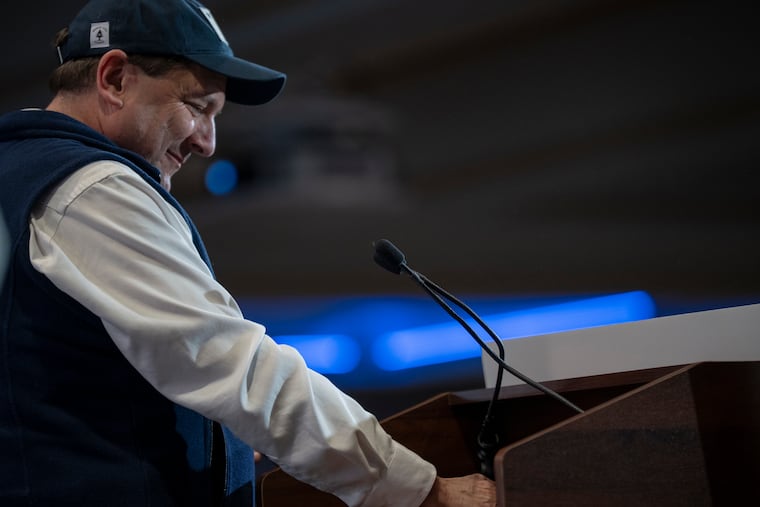
Ray, 68, told U.S. District Judge Juan R. Sánchez that he’d failed to control his impulses while communicating with Davison. Since his arrest, he said, he’s relied on therapy, his family — including his wife, who was in court with him — and his faith to hold himself accountable and avoid similar temptations.
“I allowed myself to be corrupted,” he said.
Sánchez called Ray’s actions in the case “bizarre,” but said he’s been impressed with Ray’s efforts to get his life back in order.
As for Ray’s accused coconspirators, Sánchez sentenced Alamoutinia earlier this year to 10 years in prison. Davison has pleaded guilty and is awaiting sentencing.