Horsch gave feds information on child prostitution ring, drugs, and fraud in exchange for greatly reduced sentence
Newly unsealed court filings show part of a long-hidden plea agreement between Raymond Horsch and federal prosecutors in exchange for a lesser sentence for drug and gun charges.
In an effort to reduce his prison sentence, Raymond “R.C” Horsch gave federal prosecutors information about a child prostitution ring, drug trafficking operations, and an existing fraud case, according to newly unsealed court records.
The information offered by Horsch, in a filing unsealed by U.S. District Judge Paul S. Diamond on Thursday, was part of a long-hidden plea agreement between Horsch and the federal government following his 2009 arrest on drug and gun charges.
The filing shows, for the first time, that Horsch, a well-known pornographer, had firsthand knowledge of child sex trafficking operations in the Philadelphia region and was willing to offer that information to the government in exchange for a lighter sentence.
Following the 2009 raid of his home in Bucks County, Horsch pleaded guilty to manufacturing marijuana and possessing multiple firearms in connection to drug trafficking, offenses that carried a mandatory minimum sentence of 20 years in prison, according to court records.
But in 2012, Horsch entered a plea deal with the federal government. He offered up information about ”crimes against minors, including child prostitution, marijuana and cocaine trafficking, and fraud,” and in exchange, federal prosecutors filed a motion in July of that year asking that the mandatory sentence be waived and that Horsch face 9 to 11 years in prison, the records show.
U.S. District Judge R. Barclay Surrick ultimately sentenced Horsch to 4½ years, plus five years probation. He was released from prison in 2013.
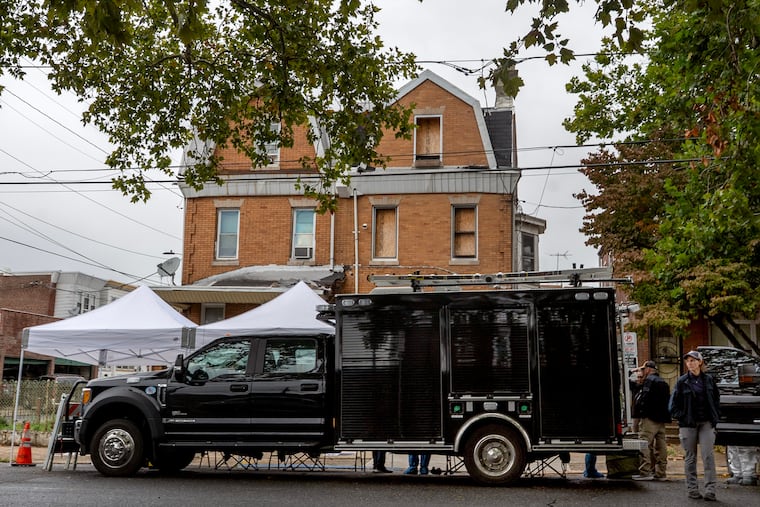
Philadelphia police now say that, in the years that followed, Horsch may have killed several women who struggled with addiction. Police said they’ve found video footage of Horsch apparently strangling one woman to death on camera, and photos of several other missing women alive inside of his house and then dead.
Seven missing women have been tied to Horsch and his home on Chew Avenue. Five have been presumed dead.
Horsch died last year at the age of 82 from lung issues.
The exact details of what Horsch shared with prosecutors was not made public.
The government’s motion states the intelligence offered by Horsch around child prostitution and drug trafficking was “deemed credible and reliable” but too old to be useful in a prosecution.
“Regarding the crimes against children, because of the age of the information and the guarded contacts between the defendant and the targets, the agents could not identify the targets with sufficient specificity to further an investigation,” federal prosecutors wrote in the filing.
Prosecutors said the information Horsch provided around fraud charges was more useful.
Judge maintain enormous discretion in sentencing decisions. The unsealed documents did not offer any explanation for why Surrick ultimately halved the sentence for Horsch that was recommended by prosecutors. Richard Zack, a former prosecutor in the Eastern District of Pennsylvania, said it struck him as unusual given the limited utility of Horsch as an informant.
“This seems like a large departure from the mandatory minimums given that government described the information as having limited value,” Zack said.
The filing was unsealed at the request of The Inquirer, after the news organization filed a motion seeking to make public more than dozen records in Horsch’s 2009 case.
In a Wednesday filing in response to that motion, Assistant U.S. Attorney Justin Ashenfelter requested Diamond keep certain documents that he described as “law enforcement sensitive” under seal — including a transcript of Horsch’s sentencing hearing that might offer answers about the judge’s leniency in the case.
The filings also makes clear that federal prosecutors, while gleaning information from Horsch, were aware of an earlier misdemeanor child corruption charge lodged against Horsch in Philadelphia Municipal Court after he allegedly attempted to lure a nine-year-old girl into his car.
Horsch was found guilty, but later sought a new trial in the Court of Common Pleas. When the young victim failed to reappear, the case was dismissed and conviction vacated. Because the conviction was vacated, it did not appear to impact his sentencing.
The filing seems to nod to Horsch’s unusual background as a drug manufacturer, forger and international fugitive, facts that prosecutors at the time were also aware of.
“Although most of his convictions are well in the past, the defendant’s involvement in crime is longstanding,” the document reads. “The defendant possesses skills and intelligence far beyond those of most defendants who turn to crime. While the defendant apparently applied his skills to some lawful pursuits, he remained involved in criminal activity.”
This is a developing story and will be updated.