‘The War of the Worlds’ radio broadcast terrified Philadelphians on this week in Philly history
Scores of people missed the disclaimer that the broadcast was a radio adaptation of the classic sci-fi novel.
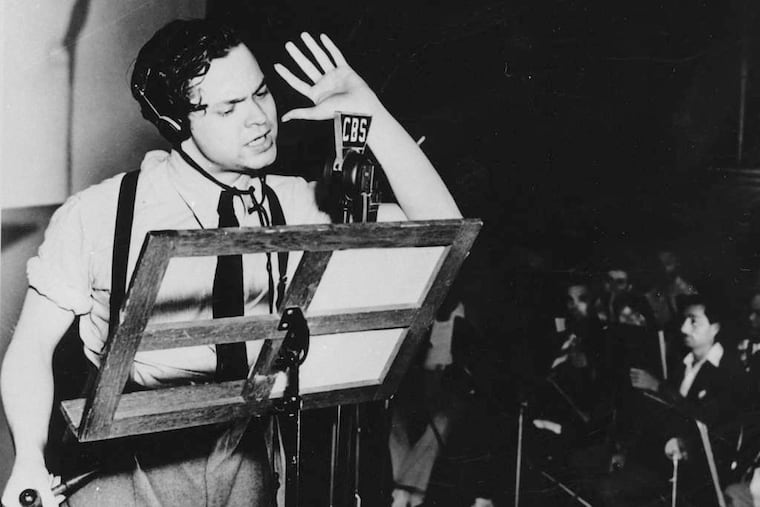
The premise of one of the most famous radio broadcasts in U.S. history was established in the first few minutes of the Oct. 30, 1938, transmission.
Orson Welles had adapted for radio a classic sci-fi novel: H.G. Wells’ The War of the Worlds.
But scores of people missed it. A second disclaimer, reminding listeners the program was a dramatization, would not air for nearly 40 minutes.
In the meantime, a series of escalating news-like bulletins featuring first-person accounts from authoritative voices reached an incredible conclusion.
Martians had invaded New Jersey.
Space invaders
The novel started it.
Prior to its publication, life existing outside of our earthly bubble was a thrilling concept.
And then Wells published The War of the Worlds, serialized first in magazines before taking book form in 1898. The allegory for British imperialism planted a worrisome thought: What if the Martians were not friendly?
Science fiction started transitioning from stories about peaceful space visitors to tales of aggressive invaders.
Fast-forward to October 1938: The United States was in the throes of the Great Depression, violence was spreading across Europe, and it was Mischief Night.
And this broadcast, despite two more times reminding listeners it was a fictional account, made it seem realistic that meteorite-shaped spacecrafts had landed in the farmlands of New Jersey carrying “the vanguard of an invading army from the planet Mars.”
Martians shooting ray-guns and spreading poisonous gas was a perilous thought, and it didn’t make listeners feel better when the invaders could not adapt to our atmosphere and were defeated by earthling germs.
Fact and fiction
People panicked.
In Philly, “women and children ran from their homes screaming,” and “families packed their belongings and prepared to leave their homes,” The Inquirer reported.
The Inquirer offices reportedly fielded more than 1,000 phone calls from frantic readers who wanted to know if the sky was falling and, if so, how city leaders planned to stop it.
But many newspapers, which were now second fiddle to the nearly ubiquitous radio, got carried away. Reports of emergency vehicles being dispatched, and neighbors kneeling together in prayer, were a bit overblown.
On Halloween, newspaper reporters interrogated Welles. Did he want to frighten people, and blur the line between fact and fiction?
They never did get a good answer.
And all the attention and controversy elevated Welles’ performance into an instant classic and then a legend. It helped catapult the actor’s career, which peaked with his movie Citizen Kane, which detailed the rise and fall of a newspaper magnate.