Israelis surge to polls with nation’s future on the ballot
Officials said voter turnout was the largest in decades, but assembling a governing coalition under Israel’s parliamentary system could take weeks or months.
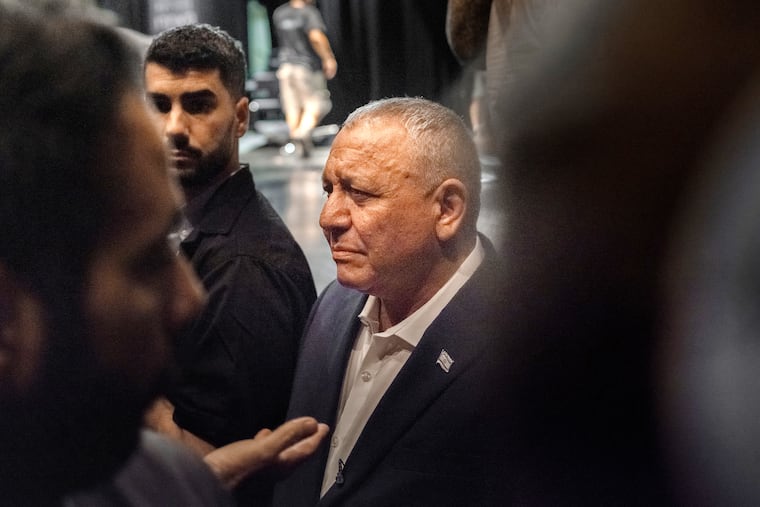
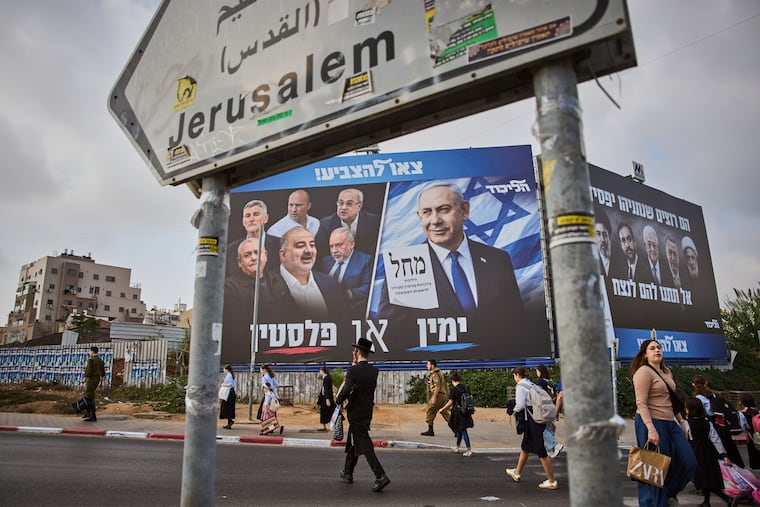
Israelis surged to the polls in record numbers Tuesday as they chose whether to keep Prime Minister Benjamin Netanyahu and his far-right coalition in power or chart a new course in what many described as a make-or-break moment for the nation.
Opinion polls heading into the election suggested that Netanyahu’s allies and his rivals were roughly tied, and that assembling a governing coalition under Israel’s parliamentary system could take weeks or months.
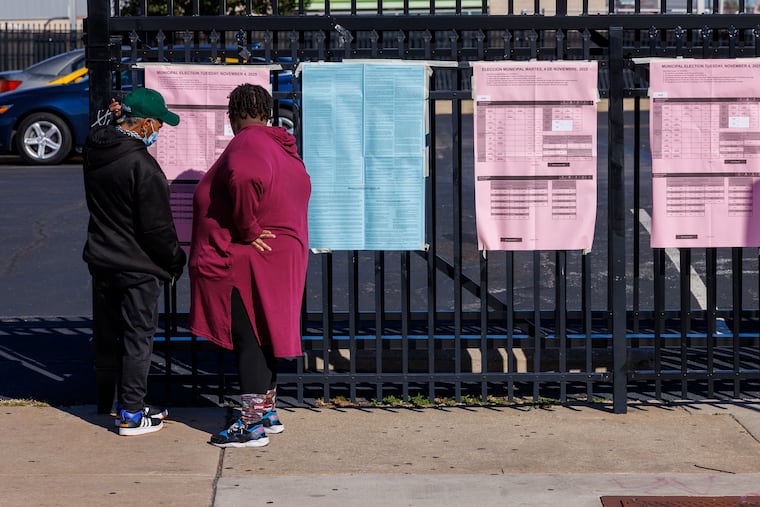
By 8 p.m., two hours before polls were scheduled to close, 74.3% of voters had cast ballots — the largest percentage by that time since 1988, according to Israeli election officials.
Turnout appeared to be particularly high, compared with previous elections, among Arab citizens, who make up about a fifth of Israel’s population. By late afternoon, turnout in some Arab-majority towns had exceeded the totals from the last election, in 2022. By contrast, turnout in the five towns where Netanyahu’s Likud party won its strongest support in 2022 was lagging.
The Likud party said in a statement that it had asked Israel’s Central Elections Committee to extend voting hours past 10 p.m. The committee said it would not act at that stage of the vote.
The extension request came after Netanyahu urged his supporters to head to the polls, claiming that Israeli Arab citizens were “trying to steal the elections.”
Those comments, which were roundly condemned as racist, were the latest entry in Netanyahu’s long record of trying to motivate his political base by ringing alarms about Arab Israelis.
Yashar, the center-right political party of Netanyahu’s leading rival, Gadi Eisenkot, said it strongly opposed an extension of voting hours. It argued that the Likud was making the request to sow doubt about the election’s integrity.
The election was Israel’s first since the Hamas-led attack on Oct. 7, 2023, battered Netanyahu’s reputation as “Mr. Security” and ignited Israel’s devastating war in the Gaza Strip.
The contest pitted Netanyahu’s coalition, dominated by hard-line nationalists and ultra-Orthodox Jews, against a fractious group of opposition parties loosely led by Eisenkot, a former chief of staff in the Israeli military whose son was killed in the war in Gaza.
Both sides framed the election as a potential turning point. Netanyahu suggested that Israel could face annihilation without him in charge, a message he reinforced by posting an artificial intelligence-generated image on social media this week of a mushroom cloud exploding over Tel Aviv.
As Israel’s longest-serving prime minister, he has a deep well of support among conservative Israelis who regard him as an indispensable defender of the Jewish state.
“Bibi flows in my blood,” Shoshi Ashtbeker, 47, a school secretary from Tel Aviv, said Tuesday, referring to Netanyahu by his nickname, after she cast her vote for him. “No one can replace Bibi. He’s strong — a world leader.”
Others said they were ready for a change.
“Netanyahu did a lot of big things, but I think he’s done his job,” said Ayelet Veprinskiy, 25, a student in Jerusalem. She voted for the party led by Naftali Bennett, a former prime minister. “He’s had 20 years in this chair. He can go now.”
Netanyahu’s opponents cast the election as the last chance to preserve Israeli democracy and to pull the country back from the brink of becoming a pariah state under international sanctions.
Eisenkot accused Netanyahu of embroiling Israel in intractable wars, destroying its international standing, and dodging responsibility for security failures that preceded the Oct. 7 attacks. He promised to create a national commission to investigate the security failures that led to those attacks.
Eisenkot also vowed to enforce mandatory military service for ultra-Orthodox Jewish men, a major flashpoint in Israel as the country mobilized thousands of reservists for the war in Gaza.
Eisenkot has criticized Netanyahu’s prosecution of the war but has said he is prepared to carry out more attacks in Gaza if necessary. He has also promised to curb settler attacks on Palestinians in the Israeli-occupied West Bank, an issue that Netanyahu has played down.
But Eisenkot, like Netanyahu, has said he opposes Palestinian statehood.
Pollsters had expected Israel’s Arab voters to turn out in force to oppose Netanyahu’s coalition, and hours before the polls closed turnout figures suggested that many Arab voters were highly motivated.
“Overall, the feeling is very good,” said Fidaa Shehadeh, 42, an Arab Israeli voter in Lod, a city southeast of Tel Aviv, who cast her vote for an Arab party. “We’re seeing people getting involved. I expect that we can change the current government, because this government has been one of the worst for our community.”
Though Israeli Arabs have the same right to vote as all other Israelis, many have long felt that they are treated as second-class citizens. Netanyahu cast their high turnout in the direst terms in a last-minute bid to get his supporters to the polls.
“There are buses heading to the polls and long lines in Arab towns,” he said on social media. “Meanwhile, right-wing strongholds have yet to wake up! If we don’t go vote now, we will find ourselves with a government of Arab parties.”
Israeli Arab political leaders accused Netanyahu of racist fearmongering. Yousef Jabareen, who leads an alliance of Arab parties, said the prime minister was “inciting against Arab citizens and undermining the legitimacy of our vote.”
“I’m telling you: the Arab community knows how to punish you,” Jabareen said on social media. “Today we’re sending you and your bloodstained government packing.”
The Likud party and some far-right ministers in Netanyahu’s government also deployed incendiary messages about high Arab voter turnout.
In a video recorded near the entrance of an Arab-majority town in central Israel, Itamar Ben-Gvir, the national security minister, said that Arab voters were heading to the polls “at never-before-seen rates,” threatening Israel’s Jewish character.
The comments were not out of keeping for Netanyahu and his allies. On Election Day in 2015, Netanyahu declared that Arab voters were “being bused to the polling stations in droves” by left-wing organizations. He later apologized for the comments after they prompted criticism in Israel and abroad, including from the Obama administration.
This article originally appeared in the New York Times.