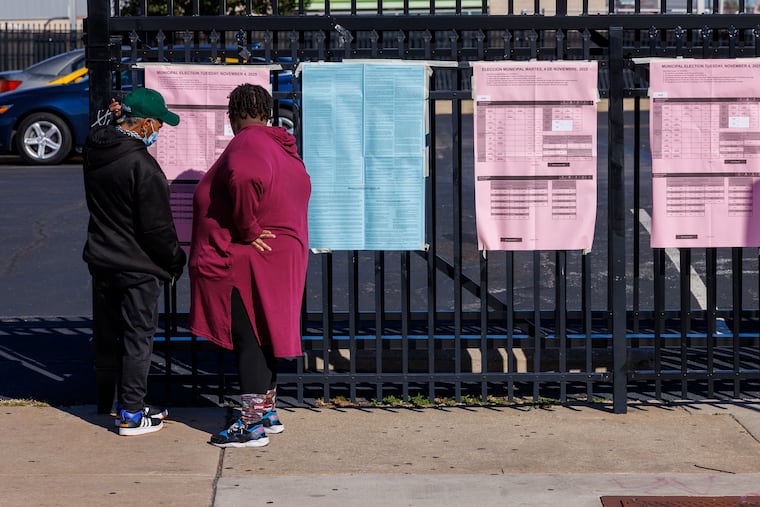
AI generated attack ads are new. But they build on decades of targeted direct mail.
Conservative pioneers in the 1970s revealed that incendiary direct mail targeting specific slices of the electorate and arousing their emotions could motivate voters and raise funds.
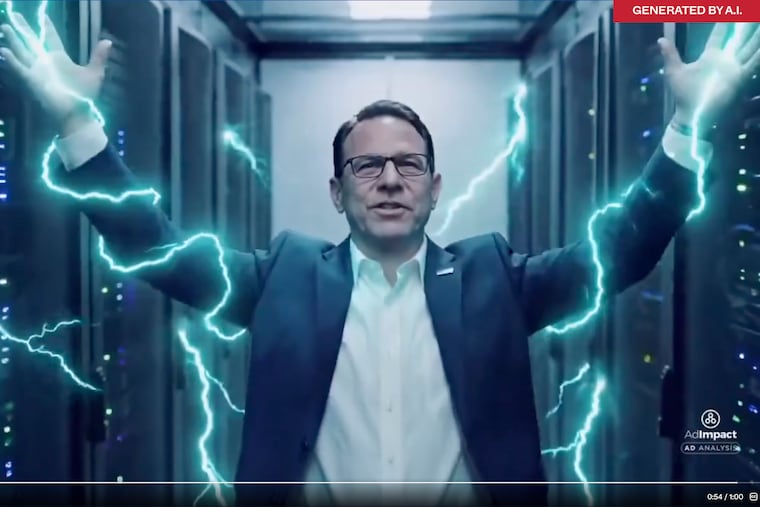
Artificial intelligence has upended advertising in the midterm elections. The use of AI by campaigns is so widespread that Axios described the midterms as “the AI election where your eyes lie to you.”
Michael Franz, a political scientist and co-director of the Wesleyan Media Project, estimated that, as of mid-October, over 220 political advertisements had been generated or enhanced by AI during this election cycle. According to the Project’s analysis, Republicans and their political allies account for more than 80% of these ads. They frequently appeal to emotions rather than reason and sometimes rely on disinformation.
For example, in June, a conservative group also published an AI-generated video that showed James Talarico, the Democratic Senate candidate in Texas, dressed like Maria from The Sound of Music and singing a parody song about transgender children. More recently, another AI-created ad featured a synthetic version of Pennsylvania Gov. Josh Shapiro portraying himself as politically corrupt and scandal-ridden. The video alleged that Shapiro had accepted millions of dollars from someone linked to Jeffrey Epstein, and that he accelerated the construction of data centers in Pennsylvania after receiving big donations.
Yet, while these ads feature something distinctly new (AI), their strategic use of personalized political messages to appeal to voters’ emotions has deep roots in American politics. Long before the advent of big data politics, operatives were using direct mail to identify supporters and mobilize them with emotional appeals. Overshadowed by mass media and the internet, the history of direct mail is largely forgotten. Its history, however, offers important lessons that explain why these AI ads are probably here to stay — even if they’re bad for democracy.
By the 1950s, Washington, D.C., and Madison Avenue had constructed a close relationship. While labor unions provided Democrats with grassroots campaign workers, advertising agencies worked with Republicans, introducing commercial communication techniques and marketing strategies into politics. These professionals helped candidates craft their public images, recruit volunteers and raise funds.
To win elections, these consultants sought to mobilize politically disengaged voters through aggressive rhetoric.
Robert Humphreys, who was responsible for Dwight D. Eisenhower’s campaign planning in the 1952 and 1956 presidential elections, highlighted the significance of “stay-at-homes,” those who would go to the polls only when driven by discontent. Recognizing that these voters had played a critical role in several pivotal elections, including Franklin D. Roosevelt’s victories during the Great Depression, Humphreys advocated aggressive media campaigns to mobilize them. His strategy was summed up by the slogan “Attack! Attack! and Attack!” He urged Republican candidates to vigorously criticize Democrats and exploit national anxiety about communism throughout their campaigns.
Direct mail emerged in this moment as a cutting-edge way to enhance the effectiveness of these political attacks. Consultants worked to identify prospective supporters and target those most likely to respond. Only they would receive mailings from the campaign.
The advent of the computer age enhanced the sophistication of this tactic. Political operatives could now compile extensive personal data, including not only names and addresses but also magazine subscriptions and campaign donations, which enabled them to discover likely backers and segment voters into distinct groups. Unlike newspapers and television, which circulated the same information to mass audiences, computerized direct mail empowered campaigns to tailor messages to individual preferences with an eye toward both motivating voters and raising money.
Among the first politicians to amass funds through direct mail was Barry M. Goldwater, the conservative Republican presidential nominee in 1964. Although he was politically conservative, Goldwater was an enthusiastic adopter of advanced technologies. “You and I are living in an age of electronics,” he declared, describing how his staff had used IBM computers in their efforts to reach voters in his 1958 Senate campaign.
In 1964, the Goldwater campaign dramatically expanded its direct mail fundraising efforts, while also gathering and storing information about small dollar donors. As a result, Goldwater successfully solicited substantial sums in small contributions by targeting politically indifferent voters, Democrats growing disgruntled with their party and other potential supporters. A report by Congressional Quarterly observed, “For the first time in national politics, direct mail and television appeals for funds proved fully successful.”
While Goldwater’s campaign is typically remembered for its resounding defeat, it left behind a valuable legacy for the growing conservative movement: the mailing lists that had produced these small dollar donations.
The man to recognize the value in these lists was Richard Viguerie, a political consultant widely known as the “Funding Father” of the conservative movement. He compiled a list of 12,500 Goldwater donors, which enabled him to become one of the most influential political consultants of the 1960s and 1970s.
Viguerie proved particularly adept at using direct mail, not because other activists overlooked the medium, but because he understood the importance of partisanship, ideology and emotion for making it effective. In the 1970s, Viguerie and other conservative operatives who shared these crucial insights arose as prominent members of what became known as the “New Right” — conservatives who specialized in brass-knuckled politics and who wanted to push the Republican Party and the country significantly to the right.
Ironically, the breakthrough for Viguerie’s direct mail operation came not from a Republican campaign but from a Democratic one. In 1976, the conservative Democrat George Wallace hired Viguerie to work on his fourth presidential campaign. The strategist used computers to organize the information about contributors to Wallace’s previous campaigns, as well as data on other conservative Americans.
Using this information, Viguerie dispatched direct mail solicitations and successfully collected a then-whopping $6 million for Wallace between 1974 and 1976. On Viguerie’s side, the engagement with the Wallace campaign provided a great opportunity to expand his mailing lists, enabling the strategist to gain access to more conservative Democrats (or former Democrats) in the South.
The alliance with Wallace highlighted a contrast between the New Right and an earlier generation of right-wing intellectuals; the vanguard of the conservative movement, like National Review’s Frank Meyer for example, had described Wallace as “the radical opposite of conservatism.” Viguerie, however, did not regard the Alabama governor (and former segregationist) as beyond the pale and was happy to ally himself with anyone sufficiently right wing. This ideological flexibility helped the New Right expand its reach, and Viguerie’s direct mail operation continued to grow throughout the 1970s.
New Right activists were masters at raising funds for conservative causes by appealing to negative emotions. “Their language is always extreme,” an AFL-CIO report observed in 1977.“ Doomsday is imminent, right around the corner.”
When President Jimmy Carter signed treaties providing for the transfer of control of the Panama Canal from the U.S. to Panama, Viguerie launched a fierce direct mail campaign designed to appeal to patriotism. “I need your immediate help to prevent our country from making one of the most serious mistakes in its 200 year history,” he wrote. Although some conservatives did not consider the Canal essential to American national security, the New Right’s campaign on the issue exemplified its use of emotional and populist appeals.
In 1980, Viguerie’s direct mail operations were a driving force behind the “Reagan Revolution,” helping scores of Republicans to raise money, while motiving conservative voters, including many Democrats, to turn out for Ronald Reagan and others in the GOP.
Ironically, however, the political influence of the New Right began to wane after Reagan took office, as he proved insufficiently conservative for their tastes.
Viguerie subsequently established an independent political party, yet the effort failed to attract wide support. His consulting firm eventually went bankrupt, and the New Right declined significantly by the mid-1980s. Its ideological extremism, which had propelled the movement into national prominence, hindered its transition to mainstream politics.
Yet, even decades after the collapse of the New Right, it still exerts significant influence over our politics. The success of operatives like Viguerie revealed to strategists in both parties the value in stoking anger and emotional partisanship.
In the 1950s, ad agencies attempted to mobilize politically uninterested voters through fear and anxiety. In the 1970s, conservatives savvily realized that using targeted direct mail advertising enabled them to deliberately stoke such hostilities — which would help them produce a reaction and raise money.
AI threatens to intensify these tactics — as some of the ads this cycle reveal. At their root, many of these ads are untrue, and they capitalize on voters who aren’t paying that much attention to politics. Their impact on politics could be described as negative.
But AI-fabricated advertising is merely the latest example of political messages based on negative emotions and falsehoods. As the history of direct mail demonstrates, the political consulting industry has made these messages a staple of American politics for decades — long before the rise of President Donald Trump and the advent of the internet.
Takahito Moriyama is an associate professor at Nanzan University in Japan, and the author of Empire of Direct Mail: How Conservative Marketing Persuaded Voters and Transformed the Grassroots (University Press of Kansas, 2022).
Made by History takes readers beyond the headlines with articles written and edited by professional historians. Opinions expressed do not necessarily reflect the views of The Inquirer.