Raymond Horsch had access to a Kensington crematorium linked to illegal body parts sales, years before missing persons investigation
Police are examining Horsch’s ties to the crematorium as part of their investigation into at least seven missing women.
Years before police launched an investigation into the missing women connected to Raymond “R.C.” Horsch, the late pornographer stood inside a Kensington art gallery and presented what appeared to be the autopsy photos of a dead, unidentified woman.
His exhibition at the 2014 show ended with a video of the woman’s body being loaded into an incinerator — footage that he said was filmed at “a Kensington warehouse where the city morgue would send unidentified remains,” according to a review published on an art blog at the time.
“The Medical Examiner totally botched the autopsy and didn’t even bother to sew her up properly. My horrible photograph is all that is left of her, the only trace of her short, sad existence,” Horsch wrote in a release promoting the exhibition. “She has nothing else, not even a name.”
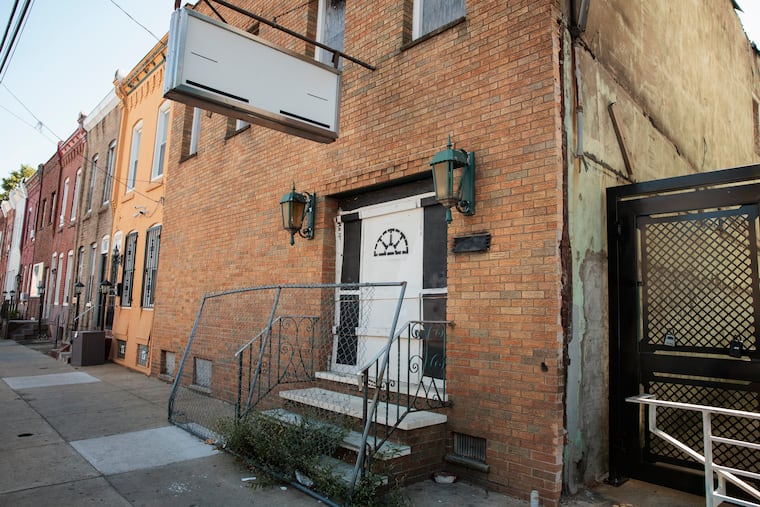
While Horsch was known to distort, embellish, or completely fabricate events, a law enforcement source and people familiar with this period of his life said this much is true: The pornographer had access to a Kensington crematorium connected to the notorious Garzone Funeral Home, which was shuttered over illegal body parts sales.
There, sources said, Horsch gave an employee drugs and cash in exchange for access to the crematorium so he could photograph and film the remains of the dead.
The funeral home and crematorium operated until 2007, when state authorities brought charges against the family-run business alleging the owners were selling body parts on the black market, according to court records and news reports.
Horsch, who died in May 2025 of a lung condition, was not named or charged in that scandal.
But police are looking into Horsch’s relationship to the crematorium as part of a sprawling local and federal investigation into at least seven missing women, according to a law enforcement source who spoke on the condition of anonymity to discuss an ongoing probe.
No bodies have been found, and five women police have identified as likely deceased went missing from 2016 to 2023, years after the crematorium connected to the Garzone Funeral Home had closed. Police are still investigating the women’s whereabouts, including ongoing searches for evidence in Horsch’s Olney home and basement.
The case has been complicated by Horsch’s tendency to blur fact and fiction, and many of his pornographic works featured staged death scenes and fake blood. But police have also recovered numerous videos and photos from Horsch’s home they have said seem to show real violence and actual killings.
At least as far back as the early 2000s, Horsch was known to prowl the streets of Kensington, offering drugs and cash to women in exchange for starring in his violent pornographic films.
» READ MORE: ‘Consumed by anger’: Inside the 1985 psych profile of Raymond Horsch
He was public about his obsession with taking degrading photographs of women in addiction. Years after Horsch staged his 2014 art show in Kensington, he uploaded a photo series to his website featuring women “imagining and acting their own deaths” interspersed with images of fatal overdose victims. In a description of the gallery, Horsch wrote he took the photos in “unknowing collaboration with the Philadelphia Medical Examiner,” as well as local paramedics.
The Philadelphia Medical Examiner’s Office declined to confirm whether the city sent unclaimed corpses from the morgue to the Garzones’ crematorium.
Louis and Gerald Garzone, who together operated the crematorium connected to the funeral home under the name Liberty Cremations, pleaded guilty to selling over 240 corpses to a New York-based biomedical tissue company in 2008. The tissue cutters illegally stripped the bodies for bones, tendons, and organs, then sold them to hospitals.
Some of the tissue was infected with disease, officials said at the time, and was transplanted into patients without their knowledge. Law enforcement seized the crematorium and funeral home as part of the criminal case, court records show.
Horsch once bragged that he had access to the crematorium through an employee named “George,” whom he paid with drugs, and had filmed a scene for a movie there, according to a woman who worked with Horsch on several films beginning in 2003. She spoke on condition of anonymity to avoid being publicly linked to the pornographer.
Gerald Garzone said in a phone interview that he had never heard of Horsch and had no knowledge of corpses being photographed in his former business. He acknowledged knowing a man named George from the neighborhood but declined to say whether he had ever employed him.
“I don’t know anything about that,” he said.
Four people familiar with Horsch and Garzone’s business operation identified the man as George Newsome, a Kensington resident who lived a block away from the crematorium at a house on Ruth Street that Horsch was known to frequent.
Newsome was arrested for heroin possession in 2011, court records show, and again for cocaine possession in 2013. He died a year later, according to an obituary.
Investigators continue to sort through more than a million photos and videos on hard drives recovered from Horsch’s home on West Chew Avenue. Local and federal investigators said they have reviewed about 30% of the materials so far and have identified 58 different people in the footage.
Among them, police said, are images of four women who appear to be dead: Maribel Fresses; Gabrielle Amarando; a 25-year-old whose identity relatives asked to remain private; and a woman in her mid-20s whom investigators are still working to identify. Police said they also recovered footage of Horsch filming himself choking 27-year-old Nicole Fusaro with a zip tie until she was dead.
» READ MORE: A pornographer’s obsession and criminal past blur fact and fiction in Philly’s missing women mystery
Police began searching Horsch’s Chew Avenue property shortly after a chance car stop on June 19 involving his son, Eugene, uncovered an ID in the name of Blair Tonzelli, who was reported missing in 2023.
Investigators then began reexamining the disappearance of Amy McHale, Raymond Horsch’s ex-wife, who was last seen at the Olney home in 2016.
Inside the property, police found five urns full of cremains, two of which police are still working to identify. The basement contained vats of unknown chemicals and a 55-gallon drum with connections to a sewer drain. There were also pages of writings that referenced serial killer Ted Bundy and described how someone enjoyed hurting a woman with a zip-tie.
Raymond Horsch had previously written in self-published novels about dissolving a woman’s body in chemicals. Police have sent the chemicals and liquids recovered from the basement to a specialized lab in Chicago for testing.
Eugene Horsch remains incarcerated on federal gun and drug charges. He has not been accused of any violent crimes involving the missing women.

The Inquirer’s journalism is supported, in part, by the Lenfest Institute for Journalism and readers like you. News and editorial content are created independently of The Inquirer’s donors. Gifts to support The Inquirer’s high-impact journalism can be made at inquirer.com/donate. A list of Lenfest Institute donors can be found at lenfestinstitute.org/supporters.