A memo to my fellow Black men: Here’s why we have a duty to stand up for Black women
I don’t pretend to comprehend the various intricacies of Black womanhood. I do understand that among the duties of Black manhood is giving support to our sisters.
Less than 24 hours before legendary feminist Gloria Steinem died, my Instagram post about defending Black women crossed the million-view threshold.
For me, the two moments melded into one because it underlined that two things can be true at once.
In this case, it’s true that Steinem was a fierce hero for the feminist movement.
It’s also true that American feminism has too often minimized the unique needs of Black women.
And while I don’t pretend to comprehend the various intricacies of Black womanhood, I do understand that among the duties of Black manhood, one of them looms larger than most.
We must stand up for our women.
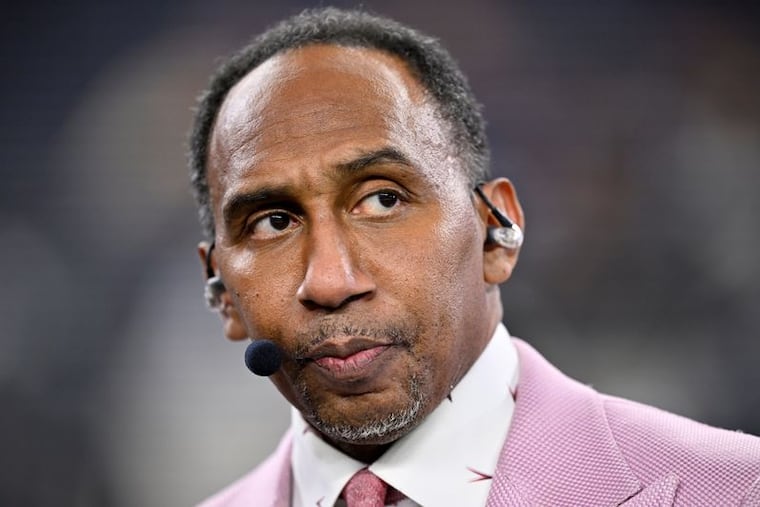
In recent months, it’s become increasingly clear that some of our most prominent men have spent far too much time doing anything but that. In fact, national figures like ESPN analyst Stephen A. Smith have been rightly castigated for their inordinate criticism of Black women, including former Vice President Kamala Harris, U.S. Rep. Jasmine Crockett, and journalist Joy-Ann Reid.
In fact, the National Association of Black Journalists, of which I am a member, gave Smith a thumbs-down award for precisely that reason. In protest, Smith appeared on Fox News and complained to right-wing journalist Sean Hannity. In my view, that made things worse. He has since circled back and debated the issue with journalists Jemelle Hill and Cari Champion — two Black women. The results of that remain to be seen.
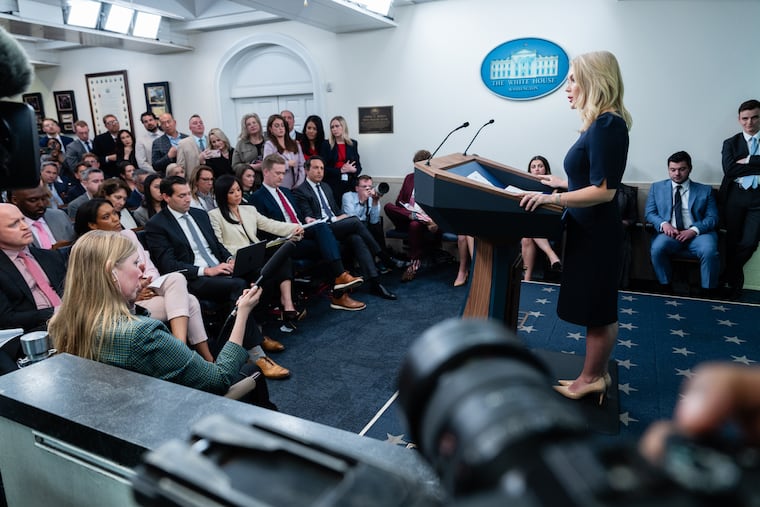
But the call to protect and defend Black women is not just about Smith and his cutting criticism of national figures. It is also about the Black men I have watched cast boulders at the first female mayor of Philadelphia.
As a matter of full disclosure, I have known Cherelle L. Parker for more than 20 years. As neighbors, we’ve watched each other’s children grow up. And while I don’t agree with her on every policy or political priority, I respect her because she has always been the same steady person, the same tenacious fighter, the same Black woman I met so many years ago.
On this point, I will not waver, whether the Black woman in question is Michelle Obama, or Parker, or Miss Dot from 25th and Oxford.
This does not mean there will never be disagreements between us. It does not mean arguments will never happen.
In truth, disagreement is a normal and healthy aspect of any functioning relationship. It is when those disagreements spin into hateful diatribes and rhetorical violence that we lose ourselves in the chaos.
This is not the time for abject pettiness, for a crabs-in-the-barrel mentality, or for fomenting discord under the guise of holding leaders accountable.
The racists who say Obama “is a man” do not need our help.
The bigots who call Crockett “ghetto” are not in need of our assistance.
The misogynists who question the intelligence of Harvard graduates like Reid can do that all by themselves.
To put it plainly, there is no circumstance under which Black men should help our enemies to disparage and disrespect our women.
» READ MORE: NABJ’s Thumbs Down Award should be a wake-up call for ESPN’s Stephen A. Smith | Jenice Armstrong
After watching 300,000 Black women lose their jobs in just a few months after the Trump administration’s cuts in the federal workforce, we have to know that sisters are under attack, and we must act accordingly.
That means standing beside them as they lead in communities.
It means standing in front of them when they are under attack.
It means standing behind them when they need someone to push them forward.
Black men understand, in ways others simply don’t, that Black women are stronger than they look, more vulnerable than they seem, and more beautiful than they know.
When they present all that to the world, the totality of their power can be intimidating — especially for those who harbor insecurities of their own.
But as the husbands, brothers, and sons of these strong women, we cannot afford to see them as competitors.
We must see them as partners, because in these uncertain times, when racism removes its hood and stands boldly in America’s streets, Black men and women can ill afford to turn on one another.
We must instead turn toward one another, and face the slings and arrows of this world together.