Bitcoin memes and Ponzi schemes | Editorial
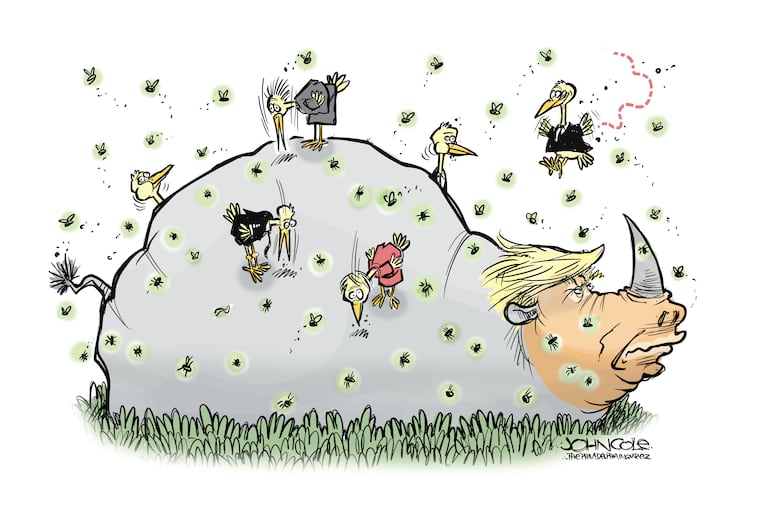
Having once dismissed it as a “scam,” the president has embraced cryptocurrency — to the tune of $1.4 billion.
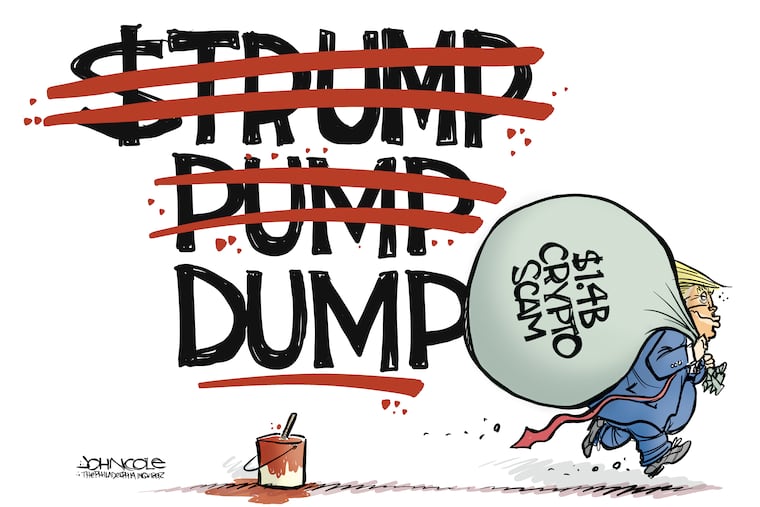
Much has been made of Donald Trump’s apparent about-face on cryptocurrency. This is particularly notable since the president’s dealings in the virtual cash he once spurned have earned him at least $1.4 billion since he returned to office. Not bad for something he had called “a scam” and an asset “based on thin air.”
Of course, that assumes he meant those things as derogatory.
After a lifetime of pushing real estate, casinos, liquor, and steaks, one may think the Art of the Steal has finally gone high-tech. But at least for retail investors, Trump’s crypto ventures reek of old-fashioned Ponzi schemes.
Launched a few days before his inauguration in 2024, the $TRUMP memecoin — a digital token with no intrinsic value — reached a peak price of around $74 as the president hyped up the asset to his followers. The coin’s value cratered soon after and was trading under $3 in September.
A few dozen early investors made multimillion-dollar profits, but most buyers fared poorly, losing almost $4 billion as of earlier this year, according to a New York Times analysis.
Even if Trump supporters and less savvy investors played along willingly, the game was always rigged in the president’s favor — regardless of the memecoin’s price, Trump and his business partners were always going to rake in transaction fees.
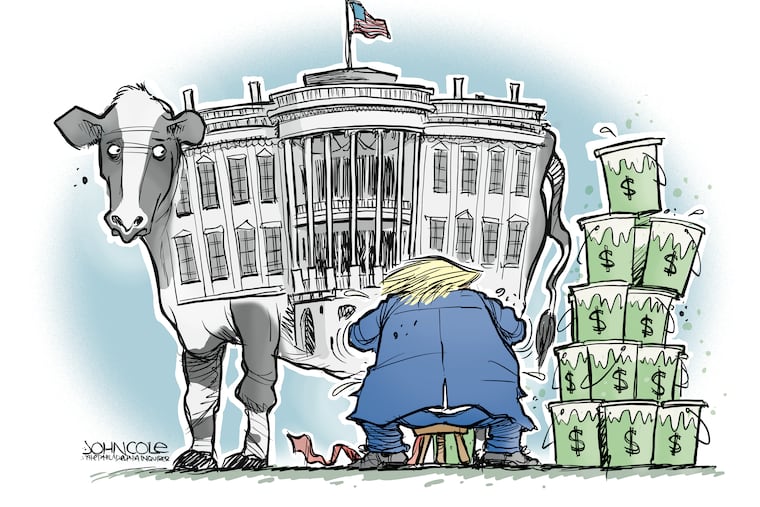
All told, Trump walked away with a $636 million payout.
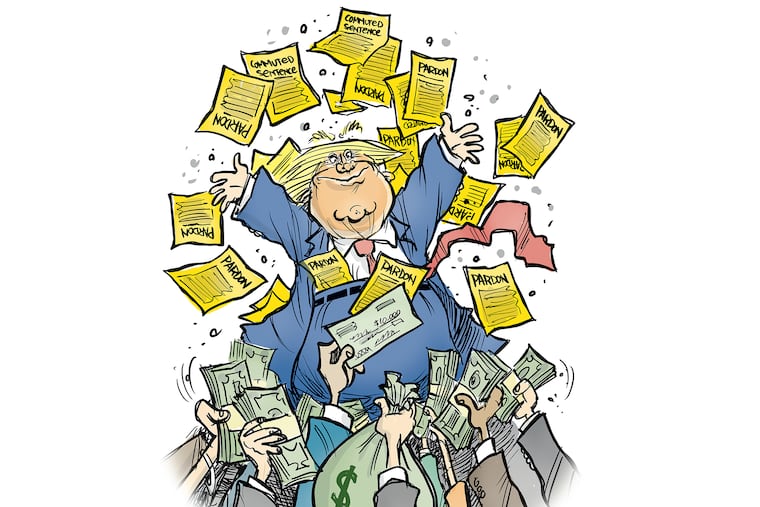
It is unseemly and deeply unethical for Trump to use the office of the presidency for personal benefit. But profiting off the sale of a worthless tchotchke is very much on-brand for the inveterate huckster whom voters returned to the White House.
Much more troubling than his déclassé dealings is how individuals and foreign governments with interests before the United States, including government regulation of the crypto industry, have made large investments that have gone to line Trump’s pockets.
The president has repeatedly brushed off ethical concerns about his crypto windfall, saying there is “nothing illegal” and “nothing wrong.”
Yet, there can be little question that Trump’s memecoin remains a way to funnel large amounts of money to him with little transparency or oversight.
Speaking at a Center for American Progress event recently, U.S. Sen. Chris Murphy of Connecticut called the president’s crypto business “a bribery conspiracy,” and said the very founding of Trump’s crypto empire was “bathed in corruption.”
Murphy pointed to the half billion dollars Sheikh Tahnoon bin Zayed Al Nahyan put up to secure a 49% stake in the Trump family’s crypto company, World Liberty Financial, shortly before Trump assumed office. The Abu Dhabi royal, the United Arab Emirates’ national security adviser and brother of that country’s president, is also backing the launch of a new Trump crypto bank, according to the Wall Street Journal.
There is no evidence of a quid pro quo, but there is also little explanation as to why long-standing bipartisan national security concerns were ignored and the UAE was given access to advanced AI chips by the Trump administration, long a goal for the Gulf nation.
Tahnoon was not the only investor in World Liberty Financial who benefited from his relationship with Trump. Justin Sun, a Chinese billionaire accused of fraud, sank $30 million into World Liberty Financial and saw a lawsuit by the Securities and Exchange Commission put on hold soon after, with a settlement reached in April in which Sun admitted no wrongdoing.
(Sun is now accusing World Liberty Financial of “criminal extortion” after he was prevented from selling off the memecoin, allegedly once he declined to sink more money into the Trump-owned company.)
Earlier this month, legislation long sought by the crypto industry as a way to legitimize its business failed to move forward in the Senate, as Democrats demanded stricter ethics guidelines to prevent further Trump profiteering.
Crypto companies have spent hundreds of millions of dollars lobbying for this legislation — and they are likely willing to spend much more — but Congress should hold firm. Lawmakers must ensure that any legitimate use for cryptocurrency does not include the ability to bribe a president.