The family that grifts together | Editorial
When it comes to plundering the presidency, the thief-in-chief brings the wife and kids.
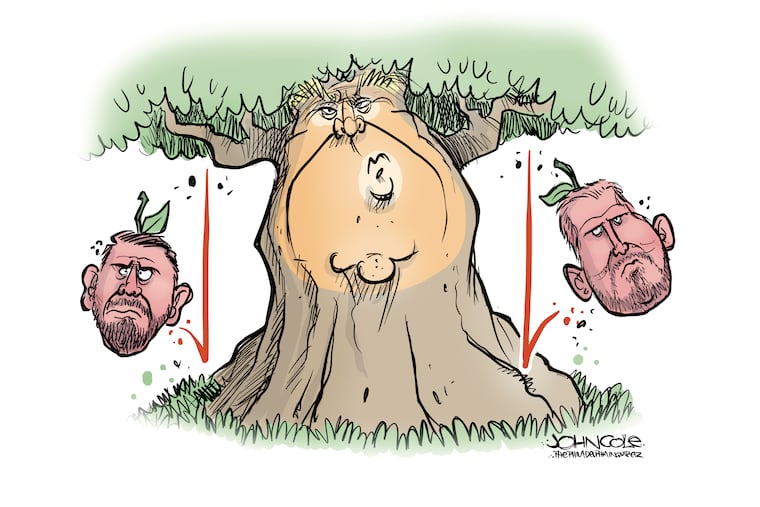
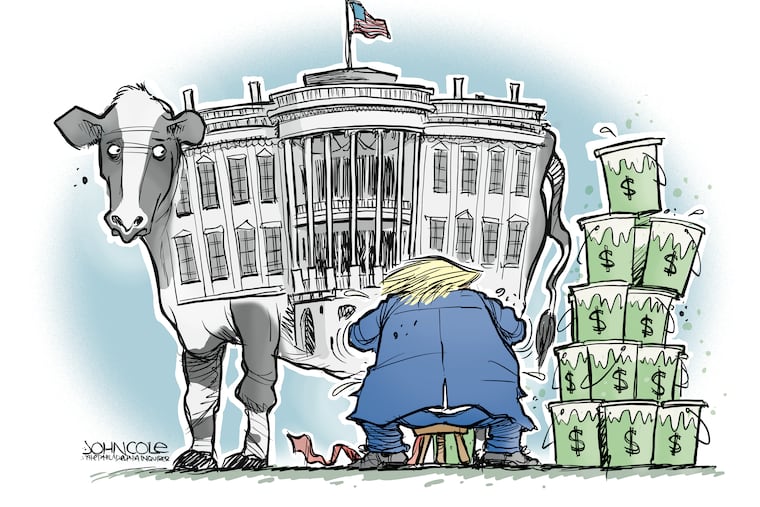
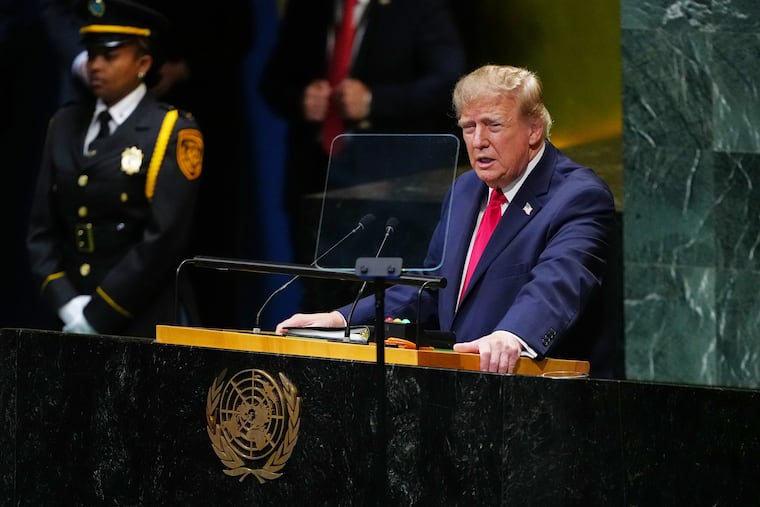
Donald Trump is not the only Trump profiting from the presidency.
Nearly everyone in the Trump family is cashing in, raising concerns about self-dealing and hundreds of potential conflicts of interest.
While relatives of past presidents sought to make money off their family name — see: Billy Carter, Roger Clinton, and Hunter Biden — no one has been anywhere near as brazen or greedy. Nor has anyone dared to mix policy with profiteering like the Trump family.
It is all part of Trump’s shameless Art of the Steal.
Often lost amid the Trump administration’s daily chaos, destruction, and incompetence is the unprecedented profiteering as the felonious president takes from America while he and his family grow richer.
In just over a year, Trump’s two oldest sons, Donald Jr. and Eric, have seen their net worths jump six- and 10-fold to $300 million and $400 million, respectively, according to Forbes.
Recent revelations that a Russian oligarch with close ties to Vladimir Putin paid hundreds of thousands of dollars for a party on a private island after Don Jr.’s wedding in May were brushed off as merely a gift from a friend — though Trump later said his son paid back the oligarch.
Trump’s third and current wife, Melania, is also cashing in. She received an estimated $40 million from Amazon for documentary projects during her husband’s term in the White House. She also pocketed an undisclosed amount for her memoir titled Melania.
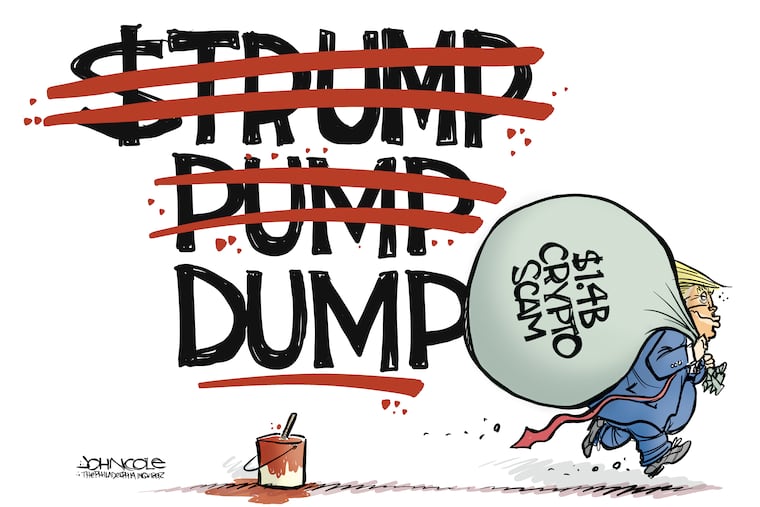
The first lady is also involved in cryptocurrency. She launched $MELANIA, a memecoin that had an initial market capitalization of about $1.7 billion, but quickly plummeted by about 95%.
But not before some insiders reportedly made roughly $100 million. A lawsuit accused the designers of Melania’s cryptocurrency of orchestrating a “pump-and-dump” scheme.
Overall, the Trump family reportedly pocketed $1 billion in pretax profits from several cryptocurrency-related products and companies since Trump’s return to the White House.
Even Trump’s youngest son, Barron, 20, who is still in college, made an estimated $40 million off the family’s crypto venture.
Trump’s older daughter, Ivanka, has maintained a low profile in his second term. But during Trump’s first term, she and her husband, Jared Kushner, reported between $172 million and $640 million in outside income while working in the White House.
After Trump’s first term ended, Kushner received a $2 billion investment from a fund led by the Saudi crown prince for his fledgling private equity venture — even though he had no private equity experience.
In Trump’s second term, Kushner continues to mix personal business with diplomacy.
Kushner is reportedly trying to raise $5 billion for this private equity fund from Middle East governments, even as he serves as Trump’s point person in negotiating a peace deal with Iran.
Kushner’s role as Trump’s special envoy for peace has been a struggle since he and his peace partner, Steve Witkoff, a New York real estate developer and Trump crony, knew nothing about Iran’s nuclear capabilities.
More troubling, Kushner has raised questions as to whether he is focused on peace or personal profits.
“You cannot both be a diplomat and a financial pawn of the Saudi monarchy at the same time,” said U.S. Rep. Jamie Raskin (D., Md.), who called for an investigation into Kushner’s foreign financial entanglements.
Trump dismisses any critiques of his family’s money-making ventures and maintains he always puts the nation’s interests first. Likewise, the Trump Organization, his family business, insists it is “fully compliant with all applicable ethics and conflicts of interest laws.”
But watchdog groups and historians have said Trump’s profiteering is unprecedented.
The Trump Organization, the family real estate company run by Eric and Don Jr., has announced a dozen international development deals since their father returned to the White House.
But most of Trump and his family’s newfound wealth stems from crypto ventures — a business he once dismissed as “a scam.”
Trump changed his tune during the 2024 presidential campaign after he met with Bitcoin mining executives. One executive said his industry would raise over $100 million and turn out more than five million votes in the 2024 presidential race.
Once in office, Trump returned the favor.
Three days after his inauguration, Trump signed an executive order that officially declared it U.S. policy to support the growth of the digital asset economy and blockchain technology.
He then proceeded to gut crypto regulations, eliminate watchdogs, and drop investigations.
In March 2025, he signed an executive order to create a new U.S. crypto reserve. The following month, Trump’s Justice Department disbanded the unit that investigated cryptocurrency crimes. By December 2025, the Securities and Exchange Commission dropped or paused nearly 60% of crypto cases.
Under Trump, the Commodity Futures Trading Commission slashed crypto enforcement actions, purged career officials, and shrunk the agency’s workforce, while paving the way for crypto and prediction markets to blossom.
All that occurred as the Trump family embraced cryptocurrency — even though none of them had any experience in the risky and complex business.
In September 2024, Trump, Don Jr., and Eric unveiled World Liberty Financial, a cryptocurrency start-up that sparked immediate concerns regarding conflicts of interest.
Four days before Trump’s inauguration, World Liberty Financial landed a windfall: An investment firm tied to the United Arab Emirates invested $500 million to acquire a 49% stake in the company.
A few months later, the Emirati government reached a deal with the Trump administration involving the export of hundreds of thousands of advanced computer chips to power AI technology. Lawmakers and intelligence experts warned the sale presents a national security risk of the technology being diverted to China.
Trump also used his presidential power to do a favor for a convicted executive who gave his family’s crypto company an early boost.
World Liberty Financial benefited from a business alliance with Binance, the world’s largest crypto trading platform, founded by Changpeng Zhao, a billionaire mogul who pleaded guilty to money laundering in 2023.
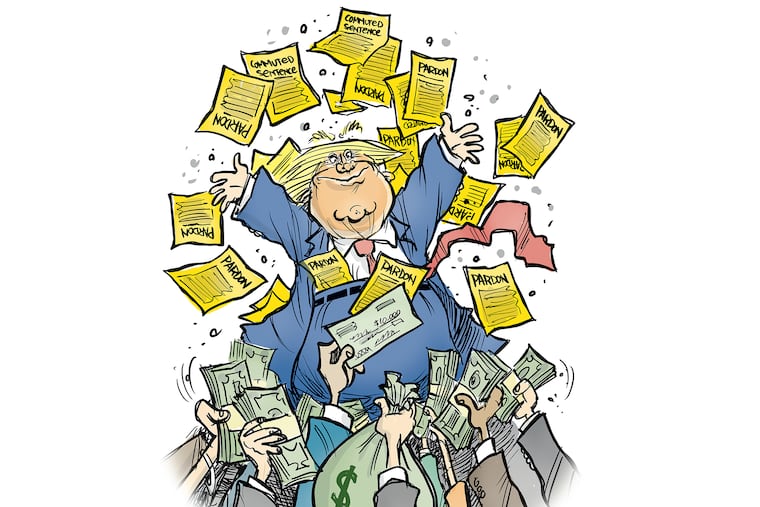
President Trump pardoned Zhao in 2025. Days after that pardon, Binance began promoting a digital coin offered by World Liberty Financial on its U.S. site, making it more accessible to American buyers.
In March 2025, Don Jr. and Eric expanded their crypto portfolio by buying a 20% equity stake in American Bitcoin, a cryptocurrency company.
Trump’s oldest sons have jumped into other businesses in which they have little to no expertise. Since their father’s election, Don Jr. and Eric have joined 10 company boards, where they receive stock and other financial benefits.
After Trump was elected to a second term, Don Jr. became a venture capitalist. He was hired as a partner at 1789 Capital, a firm based in Palm Beach, Fla., founded in 2022. Companies backed by 1789 Capital have since received government contracts valued at $735 million.
Drones have also become a lucrative part of Don Jr. and Eric’s portfolio, even though they had no experience in that business, either.
In November 2024, Don Jr. became an investor and adviser at Unusual Machines, a tiny drone manufacturer with fewer than 200 employees. The announcement caused the company’s stock price to jump 100%.
Just over six months later, Trump signed an executive order directing federal agencies to prioritize American-manufactured drones and accelerate domestic production for military applications.
Four months later, Unusual Machines won its largest contract ever to supply drone motors to the U.S. Army.
In an unusual deal, a golf club company backed by Trump’s two oldest sons merged with Powerus, a Florida-based drone manufacturer with fewer than 100 employees.
Companies are learning that hiring a Trump can make their troubles go away.
After Don Jr. joined the board of PublicSquare, the company’s stock price jumped 180%. The Consumer Financial Protection Bureau then closed a yearslong investigation into a subsidiary of Public Square called Credova Financial, claiming the probe was biased.
Don Jr. is also an investor and board member at Polymarket and a strategic adviser at Kalshi, the controversial and unregulated prediction betting market companies. Yet another business in which he had no experience.
A number of states have sued Polymarket and Kalshi, alleging the companies operate a gambling business in violation of state laws.
But the Trump administration has sided with the prediction companies and sued three states, insisting the prediction industry should be regulated by the federal government.
Apparently, the golden age of America Trump promised largely stops at his family tree.