Neighbors struggle against a decade-plus of South Philly sinkholes | Shackamaxon
Plus: Gov. Josh Shapiro’s embrace of “slopulism,” the Cecil B. Moore Library’s limited renovations, and the Academy of Natural Sciences’ museum closure.
Welcome to Shackamaxon, a weekly politics column focused on what’s happening at City Hall and in Harrisburg. It is named for the place where the Lenape chiefs would meet to conduct the people’s business, which is now known as Penn Treaty Park.
This week’s edition covers sinkholes, the embrace of “slopulism,” the ongoing struggle over the future of the Cecil B. Moore Library branch, and the loss of a venerable museum.
Sinkhole street
How long does it take for a 311 request to be resolved? For residents of the 1600 block of South Lawrence Street, it has been 13 years — and counting. In the meantime, city officials have repeatedly ignored their emails and offered excuses.
It all began with a 2013 complaint about road instability. According to residents, their block once hosted a factory, which means that when their homes were built and their street was initially paved, it had to be filled in. Their concern is that, over time, this fill may have eroded, leading to the repeated formation of sinkholes and putting their buried utility pipes at risk.
Given that one of the neighbors who contacted me, Tim Dunn, is a civil engineer, I would say this is a credible worry.
While the city paid to fix three water laterals after the main broke, the neighbors believe three or four additional laterals were damaged and should have been covered, too. They also report that the laterals the city replaced experienced issues almost immediately. The block is scheduled to be repaved next year, and if underlying problems remain, the effort could be futile.
You would think that would lead officials at the city’s Streets and Water Departments to investigate. But until this week, that wasn’t the case.
The neighbors have compiled a timeline, complete with notes and evidence, of their efforts to get the departments to take their concerns seriously. Councilmember Mark Squilla, who represents the street, confirmed their account. Even he had trouble getting emails answered about this situation.
Out of 36 requests from Squilla or residents for help or information, 19 went unanswered. Adding insult to injury, the neighbors told me the city has repeatedly deployed no parking signs, only to not send anyone to do any work. This was perceived as an intimidation tactic.
When I reached out to the city to get their side of the story, they said they are now on top of the situation. On Tuesday, after my initial outreach, they finally sent a sewer operations team to investigate exactly what is happening underground.
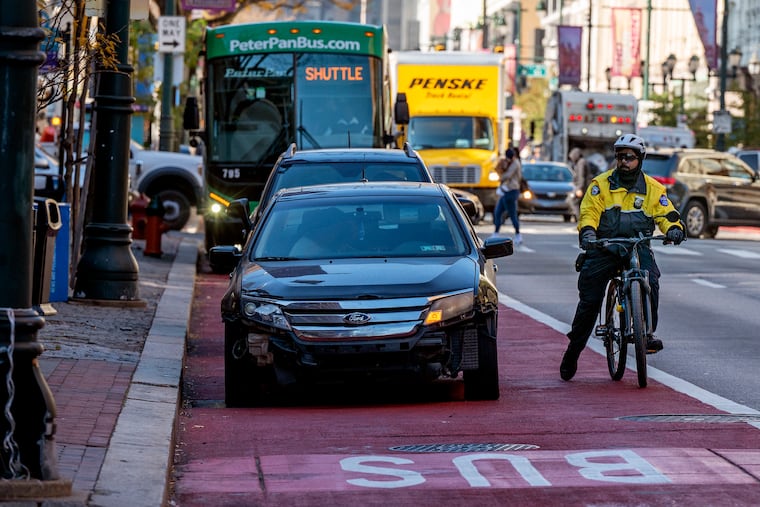
Changes in how we get around and how we shop have had an impact on our streets. When these homes were built back in the 1920s, cars were rare in Philadelphia. The most popular model, Ford’s famous Model T, weighed up to 1,500 pounds. People increasingly use SUVs and heavy-duty trucks as their daily rides, putting strain on roads created without them in mind. The total weight rating for a loaded Amazon delivery van can be almost 10,000 pounds. This is part of why Mayor Cherelle L. Parker proposed a “pothole tax” on deliveries.
More money, however, would not fix what went wrong on South Lawrence Street. If existing communication and coordination issues aren’t resolved, residents will understandably see the pothole tax as yet another cash grab from City Hall.
Shapiro’s slopulism
One of the most frustrating parts of post-pandemic politics is the rise of “slopulism.” Short-form videos make it easy to build support for ideas that pander to our biases but are either not factual or impractical. From inciting claims about voter fraud to the idea that we can “just make transit free,” no one wants to read the boring evidence when there’s a cool, colorful video that tells them what they want to hear.
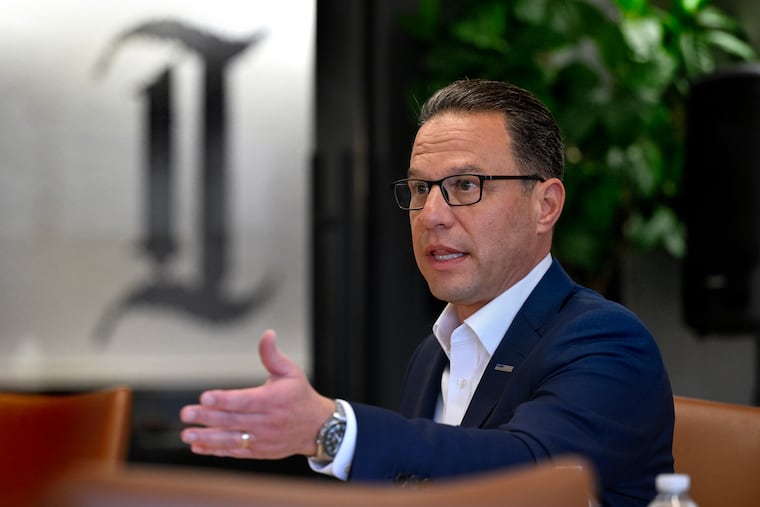
Gov. Josh Shapiro, a dedicated performer in the TikTok and Reels sphere, has embraced slopulism before. During his 2022 gubernatorial campaign, he promised to pursue “gas tax rebates,” an idea that would have depleted the state’s reserves and disproportionately sent cash to wealthier households. Mercifully, it doesn’t seem to have come up since he won.
While Shapiro’s critics will often say that the Ambitious Abingtonian watches the polls like a hawk, he’s mostly avoided relapsing into slopulism as governor. At least, until recently.
First came his about-face on data centers. Now he’s indicated support for a ban on automatic license plate readers known as Flock cameras.
There are real concerns about their misuse. Many feel uncomfortable with a private company like Flock Safety playing such a big role in law enforcement, and there have been troubling instances of police officers using the devices to stalk ex-romantic partners. Guardrails must be established.
At the same time, automatic license plate readers and other cameras have become an essential law enforcement tool. They can help identify stolen cars, track shooters after an incident, find hit-and-run drivers, and ensure detectives get the right perpetrator. While a spokesperson made clear that the governor’s statements were not meant as an endorsement for any particular piece of legislation currently before the General Assembly, Shapiro must ensure whatever restrictions are placed on the technology don’t curtail the important gains in reducing violence and solving crimes.
Limited library
One politician who can’t be accused of following the polls is Jeffery “Jay” Young, City Council’s quarrelsome contrarian. After years of conversation, Young has agreed to allow renovations at the Cecil B. Moore Library in North Philadelphia to move forward. There’s just one big problem: His plan is only a fraction of what neighbors had asked for.
Instead of adding a teen space, a private study room, new computers, and other physical improvements for which proponents had raised $8 million, the library will get a bare-bones approach. Young prefers building a new library and has so far been unwilling to reconsider that vision.
Residents, for their part, are passionate and organized about saving their original plan. Sadly, councilmanic prerogative, the tradition that keeps Council members from second-guessing each other’s decisions, gives neighbors next to no recourse to stop Young.
Use it or lose it
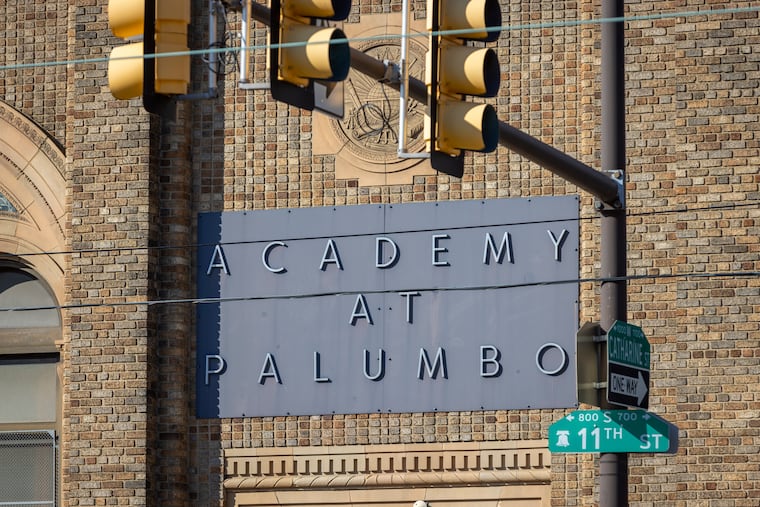
Since 1828, the Academy of Natural Sciences’ museum has offered visitors a glimpse into the planet’s living past. Like many Philadelphians, I have gawked at the massive, reconstructed Tyrannosaurus rex many times. The museum, however, has announced it may go the way of the dinosaurs.
This set off a firestorm of criticism of both the Academy and Drexel, its partner. How could they do this to us? Why don’t we have more time? Did anyone ask for help?
Almost in response, longtime civic leader and former Mayor Ed Rendell lieutenant David L. Cohen revealed that he had been trying to save the Academy for some time — and was close to a deal to keep the Academy in the city, even if the museum closes.
While his efforts are welcome, this closure and the financial struggles at the Philadelphia Museum of Art are a reminder that a critical part of keeping these illustrious institutions around is showing up.
After all, declining ticket sales and attendance are a running thread in this post-pandemic world. As much as the ornate stone buildings these collections reside in suggest permanence, they can and do close when support is not offered. I’ll include myself in saying that all of us need to appreciate and utilize the tremendous legacy past Philadelphians have left behind before it is gone.