Letters to the Editor | Oct. 9, 2026
Inquirer readers on Medicare changes, the state’s receivership in Chester, and the role of alcohol in the Cornell sexual assault case.
No exit plan
Chester has lived under state financial oversight since 1995. The current receivership began in 2020. Six years later, it still has no end date.
Responding to a request from the Chester Water Authority, the state Department of Community and Economic Development offered a list of accomplishments but no end date and no exit plan. Its letter conceded “the City’s fiscal emergency is ongoing” without committing to benchmarks or a process for ending it.
Thirty-one years of oversight, including six years of receivership with no defined exit, is not stewardship.
If this were a country, they would call it an occupation.
The receiver’s occupation of the city sidelines Chester’s elected officials and the voters who chose them. Taxpayers fund it, and the water authority’s ratepayers bear the cost of defending their system against it.
At a minimum, the Department of Community and Economic Development should set measurable exit criteria and a public timeline to end the receivership when the current receiver’s term expires, or sooner. That is the same accountability the department demands of everyone else.
Noel Brandon, chair, Chester Water Authority
Reverse eligibility restrictions
Thank you for covering Medicaid changes denying healthcare to thousands of lawfully present immigrants in Pennsylvania and local leaders’ responses. But this is a problem Congress must solve, and they must act now.
The Congressional Budget Office reports that this policy, a part of last year’s partisan budget law, will deny care to 1.4 million lawfully present immigrants nationwide. As we know from experience and research, U.S. citizen children will also lose access to care when their parents become uninsured. Four hundred sixteen thousand Pennsylvania kids live in immigrant families, so the consequences are likely much larger.
Taking healthcare away from people doesn’t mean they won’t get sick or injured. It just means providers will no longer be paid, threatening the viability of hospitals and clinics. One hospital industry consulting firm estimates the law will increase uncompensated care costs by nearly 40%.
The LIFT the BAR Act would reverse these restrictions. U.S. Reps. Madeleine Dean, Chris Deluzio, Summer Lee, and Mary Gay Scanlon have cosponsored the bill, and we applaud their leadership. But we have to wonder whether their colleagues don’t understand the threat or just don’t care.
This is not a natural disaster — Congress created this problem, and Congress must fix it.
Adriana Cadena, executive director, Protecting Immigrant Families Coalition
Dueling programs
The Sept. 17 article about Philadelphia City Council introducing two competing plans to retool trash and recycling systems shows how the city is trying to modernize an outdated waste system. It also underscores a challenge that is bigger than any one city. Nearly 10,000 different recycling systems currently operate across the U.S., each with its own guidelines about what can be recycled. This patchwork leaves residents confused about what should be tossed in the recycling bin.
Pennsylvania’s senators have a rare opportunity to come together and help solve this problem. The bipartisan Recycled Materials Attribution Act (RMAA) would create one national standard for recyclable and recycled content claims, and the PACK Act would extend that same clarity to how those claims are marketed to consumers. That consistency would also help scale innovative recycling technologies that complement traditional systems, so more types of plastic can be recycled and reused.
All Pennsylvanians across the commonwealth deserve one clear recycling system. We urge Sens. John Fetterman and Dave McCormick to help deliver it by supporting legislation to reduce plastic waste and protect the affordability of everyday consumer goods.
John Hewitt, senior vice president, Consumer Brands Association, and spokesperson, Recycling Leadership Council
Meeting halfway
In these trying times, why can’t we compromise on daylight saving time? Here is a permanent solution that would give 50% to each side of the debate over the twice-a-year time switch. When we’re scheduled to change our clocks on Nov. 1, we could turn them back only half an hour instead of the usual one hour. Has anybody seriously considered such an obvious and logical compromise? And if not, why not? Let’s start compromising on this apolitical time issue.
Dave Siegfried, Langhorne
Campus excess
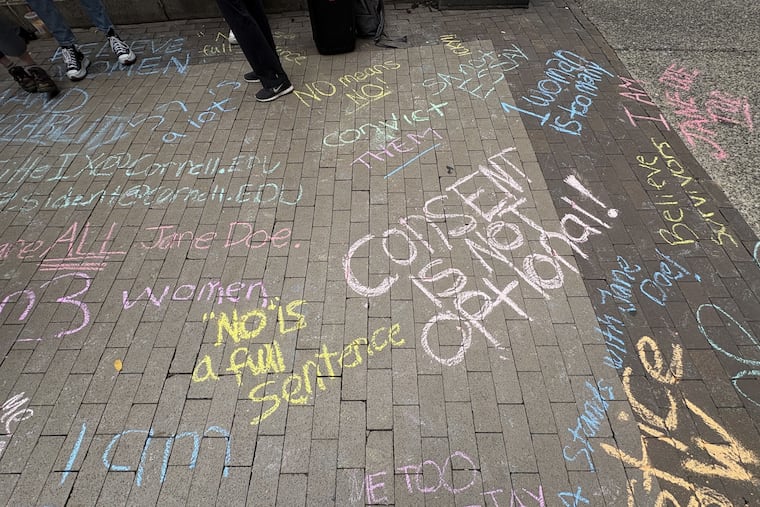
Thank you, Jonathan Zimmerman, for calling out the role of alcohol in sexual assaults on the campuses of our colleges and universities.
For me, one of the biggest problems is the glorification of alcohol abuse in fraternities, sororities, and other parts of the American higher education experience, and the complicity of those educational institutions in facilitating — if not permitting — this abuse. Alcohol and drug abuse on college campuses leads to addiction, substance abuse, brain damage, and a litany of dysfunction while contributing little of merit to the mission of higher education.
I wish more colleges and universities would severely penalize students for violating campus policies around alcohol and substance abuse. At the risk of sounding like a party pooper, think of how many thousands of student lives could be saved.
Jeffrey Plaut, Elkins Park
Rising socialism
The rise in socialist leanings across Pennsylvania and the nation (“Pa. Dems view socialism in a mostly positive light”) has not happened in a vacuum. It is a response, especially among the youth, to the rising power of corporate America and the increasing gap between the rich and everyone else. When people feel they cannot make ends meet and get ahead in a capitalist system, socialist ideals will seem appealing.
Nearly a century ago, in light of the economic ravages of the Great Depression, President Franklin Delano Roosevelt recognized that in order to preserve capitalism, it had to be regulated and feature a strong social safety net. His New Deal helped prevent the United States from falling to the extremist movements engulfing Europe at the time. In 2026, we have a president and a Republican Party intent on making the problem worse by embracing deregulation and shredding the social safety net. The Republicans claim to hate socialism, but to the extent that it does rise in America, the fault ultimately will lie with them.
Bill Fanshel, Bryn Mawr
State of mind
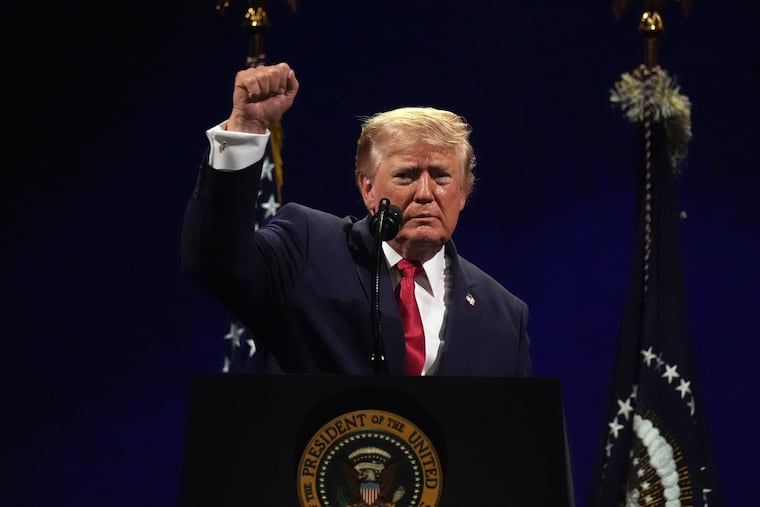
In the 250 years of our republic, we’ve had hundreds of local, state, and national elections. We’ve had landslides, and we’ve had some so close that it took days and even weeks to determine the winner. For the first 240 years, once the election was decided, we had a peaceful transfer of power. This has all changed, and one man has changed it. While Donald Trump will not rule out the use of the rarely used Insurrection Act around the time of this year’s midterms, we live with the knowledge that there has only been one insurrection after an election, and that was the one he provoked on Jan. 6, 2021. Incredibly, he still won’t concede that he lost the 2020 election.
We normally look forward to elections with hope that our preferred candidates will win, with exhaustion from the barrage of ads and appeals for contributions, and with the anticipation that we might get meaningful changes. This year, I am tired of the president’s promises that will not be kept, and I am fearful there will be violence and intimidation on Election Day. I am worried the votes we cast will be contested if the president doesn’t get the results he wants. Still, we must follow our beliefs. We must do what we can to have an impact, and we must vote.
Elliott Miller, Bala Cynwyd
Join the conversation: Send letters to letters@inquirer.com. Limit length to 150 words and include home address and day and evening phone number. Letters run in The Inquirer six days a week on the editorial pages and online.