The public execution of No. 558
We should all be appalled at the police killing of a restrained black man in Baton Rouge, Alton Sterling. But we should be equally appalled that America has done nothing to reduce its worst-in-the-world rate of police killings.
No. 558 never had a chance.
One moment, he'd been engaged in normal, if messy, human stuff. He was a 37-year-old father of five hustling to make a few dollars for his family, selling CDs in the wrong place or perhaps in a way that someone — the someone who called the Baton Rouge, Louisiana, police — apparently didn't like.
The next moment, No. 558 wasn't treated like a human being, or a number...or even a beast of burden on some dusty bayou farm. Two white police officers were slamming his black body against the trunk of a car and then down hard on the asphalt. Then, shockingly, as a bystander continued to film with his smartphone, the shout came: "He's got a gun!"
No gun is visible in the video, however. The man is in a supine position, incapable of serious resistance. Yet one officer pulls out his service revolver and fires the shots that — according to the medical examiner — struck his chest and back and killed him. Police later said that they pulled a gun from the pocket of the dead man's trousers, where — according to witnesses — it had remained during the entire encounter.
No. 558 had a 15-year-old son named Cameron, who wailed uncontrollably as his mother spoke on national TV. He had a partner named Quinyetta McMillon who described Sterling's life struggling to get by as a cook and as Baton Rouge "CD Man," and who told the cameras: "As a mother, I am forced to raise a son who is going to remember what happened to his father. That, I can't take away from him."
Most importantly, No. 558 had a name, Alton Sterling.
Alton Sterling was the 558th American killed by the police in 2016, according to The Guardian's award-winning website The Counted — one of two newspaper web pages that were created to count the fatalities, a grim task that the nation's law enforcement agencies still refuse to do.
There was something different about Sterling's death. The difference was this: He was executed — a difficult word, but I don't know what else to call it — after a disturbance over selling CDs. That's not the same as Eric Garner, the Staten Island man whose chokehold death almost exactly two years ago — July 17, 2014 — came after he was selling loose cigarettes. Or Tamir Rice, killed by the Cleveland cops in nanoseconds when he had a toy gun. He wasn't buying Skittles, or making a left turn without signaling. The set-up, you see, is always different. It's only the brutal punchline that never seems to change: A lifeless black body on the asphalt.
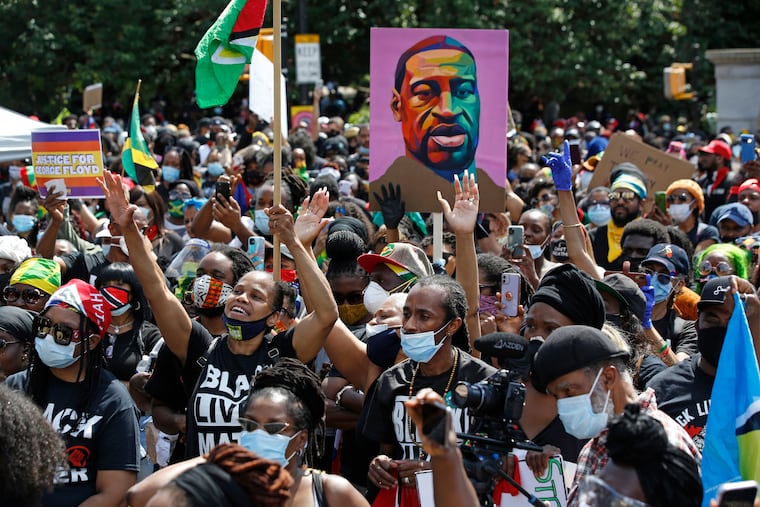
Say the name, Alton Sterling. But remember the number, 558. And then think about this. It's been 720 days since the killing of Eric Garner, and 697 days since Michael Brown was gunned down in the streets of Ferguson. Since then, people have formed a movement called Black Lives Matter and clogged the streets and blocked traffic from the West Side Highway to the streets of Oakland. Committees have been formed, studies have been launched, police departments have — in slow motion, for the most part — purchased body cams. Governments and district attorneys have been changed, in Ferguson, in Cleveland, in Baltimore and Chicago. A handful of cops have been charged with crimes, and then of them most have been exonerated by the American way of justice.
But the one thing that matters most — the killing of civilians by police at a rate that would be unfathomable in any of the world's other developed nations — has barely budged. Last year, according to the Guardian, 1,146 people were killed by police in America (with blacks, like Alton Sterling, killed at a rate five times higher than whites). This year's total of 560 (yup, that's right...two more tallied since the Baton Rouge case), with the year barely half over, means that the all of the protests have barely moved the number.
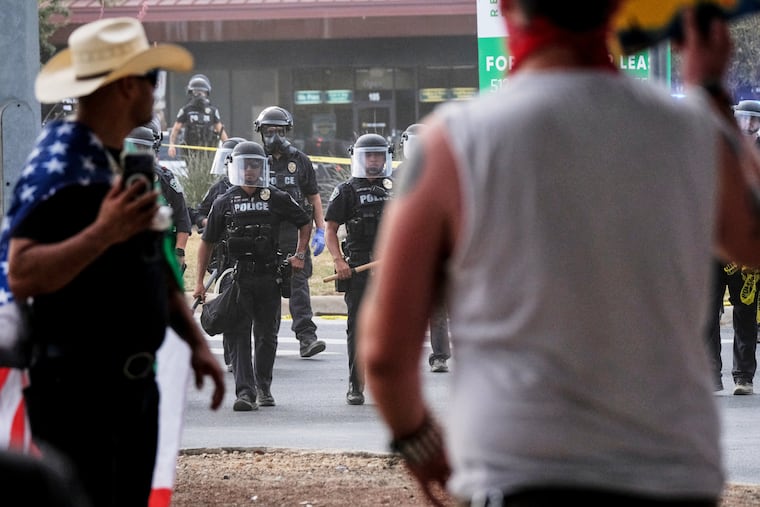
America is terrible at making radical change, but pretty darn good at reactionary change. The most forceful response by lawmakers since the summer of 2014 has been not to tackle police killings so much as to find ways to reduce the influence of Black Lives Matter calling attention to the killings. In Louisiana, just a month before Sterling was gunned down, a new Democratic governor signed a "Blue Lives Matter" who makes it the first state in the nation to make killing a police officer a "hate crime."
The power of police unions is greater than ever. Also in Louisiana, as in many other jurisdictions, police officers have a remarkable amount of time — 30 days, in fact — before they can be required to undergo an interrogation, thanks to something there called "the Police Bill of Rights." Contrast that with the handful of seconds it took to deliver unwarranted frontier justice to Alton Sterling. Maybe after 30 days, Officers Blane Salamoni (who told the Baton Rouge Advocate in 2011 that his favorite part of the jobs is "pursuits and chases") and Howie Lake II can explain the miracle of how both of their body cameras managed to fall off at the same time (much as the audio in the dashcam failed at the precise moment that Chicago cops gunned down Laquan McDonald in 2014.) Funny how these things happen.
But then the public has joined the politicians and the police in the anti-Black Lives Matter bandwagon. At February's Spanish Town Parade through Baton Rouge, one float called "Pink Lives Matter," according to McClatchy News Service, "showed a flamingo getting beaten with police batons with a sign around its neck saying 'I can’t breathe'" — Eric Garner's dying words. Another float had a "joke" about a "Freddie Gray Goose" — invoking the black man who died in a police van in Baltimore -- as some watchers cheered with Confederate flags. Such displays of hateful arrogance must surely filter down to the cops on the beat.
Look, we've been through this drill a lot now, and there are certain things we can all stipulate. The majority of police officers are good public servants doing a hard-as-hell job under difficult conditions. Those conditions include an epidemic of gun murders in struggling neighborhoods like the one where Alton Sterling died, the poorest zip code in Baton Rouge. Here in Philadelphia, the 300 or so folks who attended a vigil this week for 16-year-old murder victim Asir Brown are a testament to that ongoing tragedy.
But we all need to stop using that as an excuse for unjust and unwarranted force by the state. American society has no shortage of "solutions" when it comes to urban crime — stop-and-frisk, mandatory minimums, mass incarceration, etc., etc. In the last two years, people have literally screamed out for the injustice of police killing to stop, and on this front, American society has done next to nothing. That's not exactly the can-do spirit that we celebrated with fireworks this week, is it?
Remember the name of Alton Sterling — but don't lose that number, 558. This country can do so much better than this. We must.