Why we’re still fighting over COVID-19 | Will Bunch Newsletter
Plus, can Kamala Harris pull a Nixon-style comeback?
Today’s newsletter is all about things I thought I was done writing about: COVID-19, Kamala Harris, and the World Cup. Regarding the latter, FIFA strongman Gianni Infantino walked off the pitch after last month’s final like the hero in Steve Miller’s “Take the Money and Run”: He got the money — an ungodly $15 billion in revenue — thinking he got away. But instead, just like Icarus, Infantino flew too close to the sun. A plan to make even more cash off the world’s greatest sporting event — by selling a share to private investors led by the brother of Donald Trump’s son-in-law — outraged so many folks that the FIFA chief could lose his job. What a shame.
If someone forwarded you this email, sign up for free here.
The right can’t shut up about COVID-19 because it needs your outrage against experts
Honestly, I thought — and hoped, frankly — that I’d written about the COVID-19 pandemic for the last time by the end of 2021. The issues it raised — about everything from public health preparedness to conspiracy theories — had seemed important enough, but I was more than ready to move on from empty baseball stadiums and masks in the supermarket.
I thought most folks felt the same way — that we were all eager to put the coronavirus in the rearview mirror. Clearly, I was wrong. The people we call MAGA still can’t stop yelling about it.
Last week brought the acid flashback of the government’s communicable disease czar when the pandemic erupted in 2020, Anthony Fauci, getting dragged before a U.S. Senate committee in a Joe McCarthy fashion, forced to take the Fifth Amendment to avoid any perjury traps that would satisfy the senators’ mouth-breathing constituents’ raw lust to imprison the 85-year-old public health icon.
The realization that they weren’t going to send Fauci — who was pardoned for his past actions in January 2025 by outgoing President Joe Biden to protect the good doctor from GOP wrath — up the river led these Republican statesmen to do the only thing left: scream at him.
“Who the f— do you think you were for doing that?” Ohio Sen. Bernie Moreno yelled at Fauci, even as it’s hard to understand what “that” was, except for working tirelessly to give Americans the best information about a rapidly evolving, deadly pandemic. “It is a total disgrace what you did to this country.”
The baseless attacks on Fauci by right-wingers — who’ve convinced themselves that the real crisis of 2020-2021 wasn’t the invisible virus that caused the early death of more than 1.2 million Americans, but an authoritarian government (led at the time by Donald Trump, but no matter) making them wear those masks and avoid those baseball games — were both infuriating and unconscionable. Still, maybe because of my aversion to reliving the pandemic, I was going to let the subject slide.
But then the current government’s top health official, Health and Human Services (HHS) Secretary Robert F. Kennedy Jr., went on CNN to double down on the Trump regime’s Big Lies about what really happened during the COVID years. And like Moreno, RFK Jr. turned the volume up to 11.
“Anthony Fauci was mismanaging the COVID pandemic and was doing it under the Biden administration. President Trump wanted to end the lockdowns,” Kennedy loudly told CNN’s Dana Bash, inventing a farcical, backward timeline. An agitated RFK Jr. insisted the government’s priority during COVID-19 should not have been saving lives, but “protecting constitutional rights,” yet to make this fiction sound less ridiculous, the HHS chief also had to lie about the extent of the crisis.
“There were ICUs that were empty all over the country, including in New York, at the height [of the pandemic],” Kennedy insisted.
This can no longer be ignored. There are two very important points that need to be made here.
First, when a high-ranking government official tells a lie on national television, this must be debunked immediately. The truth here is that the hospital emergency rooms and intensive care units, especially in New York City but other locales as well, were overwhelmed in the spring of 2020. So were many morgues and funeral homes, which struggled to keep up with the dead.
“I worked for New York’s largest medical center at the start of the pandemic,” Lucky Tran, a Columbia University scientist, posted on Bluesky. “There were morgue trucks on the streets. They set up emergency medical tents in Central Park. Healthcare worker colleagues died. It is horrific that RFK Jr is on national TV lying that ICUs were empty.”
Of course, this is just one of a number of lies about the pandemic — that the vaccines released to the public in early 2021 are dangerous (they’re not), that the virus came from a Chinese lab (it almost certainly didn’t) and not animal-to-human contact, and that Fauci led some kind of Watergate-level cover-up (his personal diaries, obtained by the senators, revealed exactly the opposite) — that are matters of faith among the political right.
Which brings us to the second big thing: Why? Why are all of these petty grievances about inconveniences we experienced six years ago still so gosh-darned important to these yelling people in 2026? Why do they want to send an octogenarian Fauci — a grandson of Italian immigrants whose life was the kind of American dream 20th-century Republicans would have celebrated — to prison?
The real virus here is anti-intellectualism — a strain that has always existed in American life, as the historian Richard Hofstadter famously wrote in 1964 — that has metastasized from a small, well-contained syndrome to overtaking the entire Republican Party. So-called rural resentment leads angry voters to think people like college professors or doctors in white coats are looking down on them.
It’s an antisocial worldview that was encouraged from on high by the likes of Big Oil executives who love it when the masses scoff at climate scientists. But the rejection of expertise reached a whole new level in 2020 when doctors like Fauci started telling Americans to wear masks or avoid social gatherings to slow the spread of COVID-19.
Sure, there were tough calls around issues like how long to close schools, but in real time, health experts were erring on the side of caution — the right thing to do — while shell-shocked regular folks stewed about an assault on their liberty.
As the revived Fauci controversy continued online this week, Mike Adams, whose website has been accused of spreading medical disinformation, posted Monday on X that getting a COVID-19 vaccine “reveals a twisted and artificial obedience to the falsified appearance of authority. People like that should never be trusted, because they are not in control of their own minds.”
They believe experts like Fauci don’t want to help you, but control you — welcome to the far right’s Bizarro World.
But still, why? At the end of the day, these extremists might care somewhat about thwarting climate science or not wearing masks, but the real reason they despise educated experts is because facts shatter the ancient, lie-based hierarchies such as white supremacy, the patriarchy, or homophobia that give meaning to their broken world.
I think some of the reason they still care so much about Fauci is that the pandemic spring of 2020 also brought the police murder of George Floyd and the subsequent Black Lives Matter marches that shocked many of the communities where they occurred. In their minds, all of it — masks, diversity training, vaccines, calls to “defund the police” — merged into one giant threat.
Which brings us to: Why now? There’s no question that the lingering resentments of 2020-2021 over both the coronavirus and the Floyd protests were the rage fuel that revived Trump, who looked dead in the water after his failed coup of Jan. 6, 2021. Now, it’s less than 100 days until a new election that could cripple Trump and his MAGA movement. And they are desperately waving the bloody shirt of COVID-19.
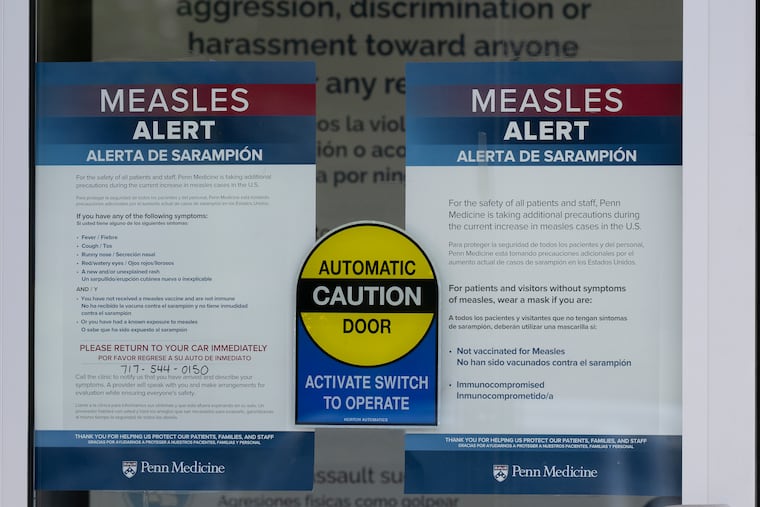
We must never forget the truth about 2020, Fauci, or the necessity of public health in a true democracy. Our anti-science government is seeing rising cases of measles and of the bacteria that causes explosive diarrhea (which has now been linked to two deaths), and God only knows what else is in the pipeline.
Experts like Fauci aren’t here to tell you how to live your life — just how to not die.
Yo, do this!
I remain fascinated with the hidden history of American reactionary movements, which is coming out of the shadows during the Trump era. I’ve been listening to the audiobook of The Biggest Lie: The Prehistory of American Fascism, 1818-1915 by College of Charleston historian Joseph Kelly, which looks at how the defense of slavery in the antebellum South, Jim Crow, and the early 20th century revival of the Ku Klux Klan all bore the defining characteristics of an American strain of fascism, often for the self-preservation of monied interests. In the same mode, I highly recommend a recent New York Times guest essay, “It Wasn’t a Civil War. It Was the Slaveholders’ Rebellion,” by history writer Anthony Conwright, who argues persuasively that the name most of us have always used to describe the 1861-1865 conflict is actually a whitewash pushed by the South. The piece is a real eye-opener.
Did I mention that 2026’s summer of soccer isn’t over? The Philadelphia Union have emerged from the two-month World Cup break with a completely different look from the group that tanked in the first half of the MLS season, with the return of Kai Wagner (from England) and Quinn Sullivan (from injury) and rising young stars Neil Pierre and Cavan Sullivan, Quinn’s brother. They’ll also get a fresh start for a trophy opportunity with the arrival of the Leagues Cup tournament against the best teams of Mexico’s Liga MX. Check out their first match Thursday night at 8 p.m. against traditional powerhouse Cruz Azul, live at Subaru Park in Chester and on Apple TV.
Ask me anything
Question: Do you believe the Dems have a chance to take the Senate in November? — Elise (@bnat4.bsky.social) via Bluesky
Answer: Elise, I’d almost bank on it happening, and here’s why. Since the early months of the Trump 47 presidency, Democrats — who need to gain four seats for a majority — have consistently run double digits ahead of past performance in special elections. That should put seven states in play, with the strongest possible candidates in places like North Carolina (ex-Gov. Roy Cooper), Alaska (ex-Rep. Mary Peltola), and Iowa (Josh Turek). Maine voters will forget the Graham Platner fiasco long before they forget Sen. Susan Collins’ vote to confirm Justice Brett Kavanaugh. Ironically, the battle to hold a Democratic seat in Michigan looks toughest, but likely primary winner Abdul El-Sayed is an excellent campaigner. As Trump’s popularity plummets, there’s even a chance for shockers in places like Florida or with independent candidates in Nebraska or Idaho. For me, the bigger question is whether 51-plus Dems will dump Chuck Schumer as their leader after November. Stay tuned.
What you’re saying about …
Many of you had great ideas for a fall Democratic message that’s about more than just “affordability” — the preferred mantra of the party’s consultant class. Many sought to widen the conversation to issues around corruption and inequality. Here are some pithy ones. Roberta Soules wants to “take power away from the large corporations and oligarchs.” Meg Berlin suggested “More Butter. Fewer Guns.” Dane Madsen prefers “Stop the Trump Crime Family,” while Frank Friedman went with an even simpler, “We will be honest with you.” Stephen R. Rourke wrote simply, “Peace, prosperity, and justice for all.”
📮 This week’s question: CNN is reporting that the Pentagon recently took the highly unconventional step of asking rank-and-file troops for creative new ideas on how “to punish Iran.” But what should be done about this mess? Can the United States simply walk away at this point? Or do big problems like the flow of oil through the Strait of Hormuz or Iran’s nuclear ambitions require a response, and what is that, exactly? Please email me your answer and put the exact phrase “Iran war ideas” in the subject line.
Backstory: Is Kamala Harris ‘the new Nixon’?
Although it’s true that, as a 5-year-old kindergartner in 1964, I nearly got into a fight with a kid who said he supported Barry Goldwater, the first presidential election I really followed came four years later in 1968. I was probably waiting for the baseball scores when I saw news reports that the GOP front-runner was a “New Nixon,” which made this 9-year-old wonder what was wrong with the old one. Indeed, a Californian who’d lost a presidential election (and a gubernatorial race just two years later) stunned America with the political comeback that made him the 37th president. We’d spend the next six years of Kent State and Watergate learning the kinder, gentler Richard Nixon of 1968 was all a lie.
It would be a Nixon-level comeback if Kamala Harris were to win the Democratic nomination in 2028, let alone the presidency. Like Tricky Dick, Harris is a child of the Golden State and former vice president to the oldest-ever POTUS at that time (Dwight Eisenhower was 70 when he left office, which was unprecedented before Ronald Reagan, Joe Biden, and now Donald Trump), and a failed nominee, although she was smart enough not to run for governor when she returned home. People forget the brief lightning bolt of excitement when she replaced Biden on top of the 2024 ticket, and so the smart money has been that her moment has passed, as the Democratic base looks for new blood.
But it feels like the earth has shifted a bit, and the reason can be summed up in two words: South Carolina. Last week, the Democratic National Committee unveiled its list of the first six presidential primary states, and the South Carolina primary tops the list. The same South Carolina where, in 2020, the state’s main Democratic voting bloc — older, center-left, Black members of the middle- or working classes — turned the race around for Biden, the man who then tapped Harris as his veep. The same South Carolina whose Democratic power broker, Rep. James Clyburn, is close to Harris. A state that seems tailor-made for a Harris comeback.
But the Palmetto State isn’t the only reason to start taking a Harris return seriously. In politics, your weakness is often also your strength, or vice versa. Harris has long been a political chameleon — from tough 2010s prosecutor to a sharp left turn during Trump’s first term that she backpedaled away from in 2024. Today, Harris is feeling the zeitgeist. She is drifting left again, but perhaps more importantly, she understands the desire by core Democrats to support fighters, not milquetoast cowards.
“They are ruthless,” Harris told the annual gathering of the National Urban League in Nashville on Friday, referring to Republicans. “We need to be ruthless, too” — explaining that Democrats should not be “cruel,” but “uncompromising.” She added: “For example, and I know this is going to be controversial coming from me, in particular, we need to revisit the Electoral College. We need to revisit the point of expanding the court to 13 justices, like we have 13 district courts. We need to revisit, if they so want, statehood for Puerto Rico and D.C.” Harris has also been holding extensive meetings with some of the pro-Palestinian activists who often clashed with her over Israel policy in 2024.
She’s running? It sure sounds like it.
To be clear, while I thought in the fall of 2024 that Harris had the potential to become a very good president, and I still do, I’m also very much in the “new blood” camp when I think about 2028. I’d love to see what someone from the progressive Bernie Sanders-Alexandria Ocasio-Cortez wing of the movement could do in wiping away the stain of Trumpism. But establishment Democrats, intentionally or not, have thrown Harris a lifeline with their South Carolina gambit. The coming months will reveal whether this former vice president can be “the new Nixon” of the left.
What I wrote on this date in 2013
I was reminded that the 25th anniversary of the 9/11 terror attacks is almost upon us. Expect a lot of what you might call negative nostalgia about that wretched day in 2001, but also the bad times that followed. Do you remember the terror alerts? Many of us thought those would vanish when George W. Bush left the White House, so it was a little jarring when Barack Obama continued the practice, including this major one 13 years ago. I wrote that “the problem with the terror warning of 2013 is not the warning itself but the decade of government baloney that preceded it. Washington needs to acknowledge the reality: If it wants to do a better job of keeping the public safe, it will need to start doing a much, much better job of telling the public the truth.”
Read the rest: “The U.S. government who cried ‘Wolf!’”
Recommended Inquirer reading
The Trump regime’s cruel campaign against our immigrant neighbors is the biggest story of our time. Last week, I traveled to a tiny borough in Central Pennsylvania, Mount Holly Springs, where a budding partnership with U.S. Immigration and Customs Enforcement has seized 32 immigrants in just four months, and angrily divided a rural community. Pennsylvania’s small towns are becoming the front line of mass deportation. Over the weekend, the immigrant crackdown was central to my essay about the rising death toll that’s attributable to Trump’s misrule, which includes murdered deportees in Guatemala, a woman left by ICE agents to die at a Pittsburgh bus terminal, the latest civilian bombing victims in Iran, and many, many more. It’s a humanitarian crisis that demands our immediate attention.
No two people define the world-class journalism that we regularly produce here at The Inquirer more than my longtime friends Wendy Ruderman and Barbara Laker, who could have rested on their laurels after winning the Pulitzer Prize for investigative reporting in 2010. Instead, both are working harder than ever. Ruderman has applied her talent for digging to Philadelphia’s leading industry, healthcare, with remarkable results. Check out her latest exposé about a Main Line psychiatrist who lost her license after a wildly inappropriate affair with a troubled younger client. Laker remains a linchpin of The Inquirer’s investigative unit, and — joined by her colleagues Ryan W. Briggs, Max Marin, and Ellie Rushing — she has been digging into the dark tale of a Philadelphia pornographer and his family’s mysterious ties to two missing women. Investigative reporting is essential to democracy and forging better communities, but it’s costly, time-consuming, and won’t happen without your support. Subscribe to The Inquirer today.
By submitting your written, visual, and/or audio contributions, you agree to The Inquirer’s Terms of Use, including the grant of rights in Section 10.

Sign up for the Will Bunch Newsletter