Trump’s fixation on Nixon is also a warning | Will Bunch Newsletter
Plus, what Texas Senate ads during an Eagles game really mean.
I guess this is the reason they call autumn “the fall.” Here in Greater Philadelphia, the mornings are crisper, the nights are longer, and the sports fans are apoplectic, to the extent we can even roust ourselves from bed. It’s a bad week for the good guys when a 7-0 opening-night loss for the Flyers didn’t make the list of worst things that happened — not when the Phillies crashed and burned while the Eagles are failing to launch. Cavan Sullivan, our city turns its lonely eyes to you.
If someone forwarded you this email, sign up for free here.
Why Nixon still stands in the way of Trump’s dictator dreams
Although he later pretended it was not so when it came up in his first GOP primary debates, Donald Trump was never a fan of his party’s golden idol, Ronald Reagan. Most famously, the Manhattan developer at the peak of his 1980s fame surge lashed out at the Gipper as weak on defense policy, adding that late in Reagan’s second term “people are beginning to question whether there’s anything beneath that smile.”
No, Trump always liked bad boys. No wonder the ex-president he had a crush on back then was Richard Nixon.
“You are a great man, and I have had and always will have the utmost respect and admiration for you,” Trump wrote the 37th president in 1993, nearly two decades after Nixon became the only president to resign, leaving the White House in the disgrace of the Watergate scandal. “I am proud to know you.”
The former president and the future felon had been exchanging letters for more than a decade by that point, as they shared their resentment over perceived media persecution. Nixon died in 1994, but after Trump’s first impeachment trial in 2020, he said in an interview that “I think of Nixon more than anybody else.”
All that said, one has to think it was a little more than merely a mutual-admiration thing when the bizarre news broke last week that — more than a half-century after the Watergate prosecutions scored 41 criminal convictions and a grand jury named Nixon as a co-conspirator in the cover-up — the Justice Department is weighing reopening the case. Their theory: Tricky Dick and all the president’s men got a raw deal.
The Wall Street Journal reported that Trump’s DOJ is in the early stages of a probe into the early 1970s special prosecutor’s office that investigated Watergate, presumably in an effort to prove that its judicial assault on Nixon and his underlings was an overreach, perhaps with the goal of a written condemnation.
There’s a couple of very different ways to look at this. The MAGA era in American politics has produced more than its share of out-there people with at least slightly kooky causes who are able to capture the ear of a Trump regime that is populated by fellow conspiracy theorists.
In this case, the out-there gentleman is Geoff Shepard, a lesser-known aide to Nixon who now bills himself as a revisionist historian with a theory that the so-called “Deep State” — lifers in the CIA and FBI, corrupt judges, the liberal news media, etc., etc. — conspired against his former boss. Shepard has crafted a two-hour presentation called “Watergate as Lawfare” — meaning Nixon’s “enemies” (and he had so many that he kept a list!) twisted the law to accomplish what they failed to achieve at the ballot box in the 1968 and 1972 elections.
It’s an interesting theory as long as you’re willing to forget that Nixon’s White House created a team of “plumbers” who — financed by illegal campaign contributions — conducted unlawful break-ins and wiretapping of the president’s foes, and that Nixon oversaw a hush-money operation to silence the burglars once they got caught, and also commanded the CIA to obstruct justice.
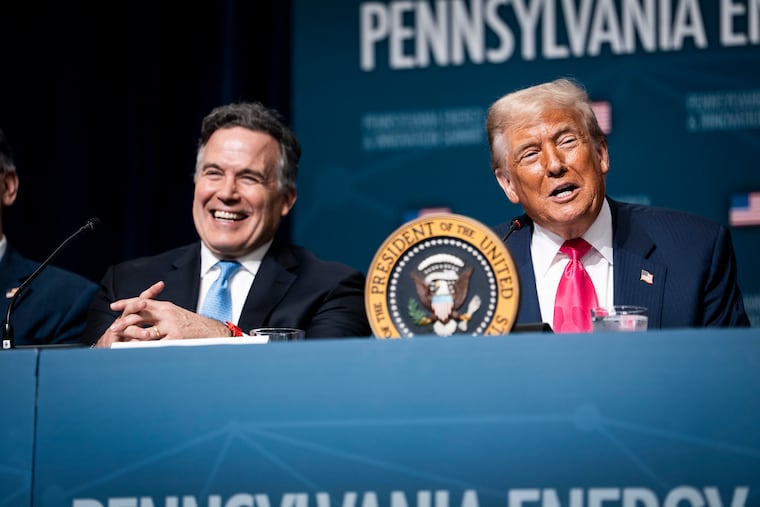
Of course, the Trump regime is willing not only to forget the basic facts of Watergate, but laugh them off. Most famously, Vice President JD Vance told an audience back in June that the scandal that provoked Nixon’s resignation would be “like a 12-hour news story” today, adding: “The idea that it would have taken down a presidency is crazy.”
Which is exactly what this renewed interest in Watergate is all about. They seek a new American reality in which the notion that a presidency can become a criminal enterprise, and — more importantly — that there could be consequences for doing that is, well, “crazy.” That a POTUS cannot fail, but he can only be failed by the permanent “deep state.”
What’s crazy is that, as terrible as Nixon was — and, make no mistake, Nixon was terrible — there is no comparison between his cut-and-dried high crimes and misdemeanors and the far worse ones committed by Trump. For example, it was a mini-scandal that Nixon increased his net worth during his first term … by $700,000. Trump increased his net worth in just one year, 2025, by an estimated $2.2 billion. Nixon has an enemies list but Trump has sought — and occasionally received — invented felony indictments against his political rivals.
The Justice Department scheme to reopen Watergate might not be the most nefarious thing that’s taking place right now, but it is part of much a bigger mosaic of actions that all aim to show that Trump can govern with total impunity — that he is untouchable.
This road to perdition started even before Trump’s second inauguration, when the Supreme Court in 2024 granted a president sweeping immunity for “official acts” — in essence, confirming Nixon’s famous interview comment to David Frost that “when the president does it, that means it is not illegal.”
Since returning to office nearly 21 months ago, Trump has been road-testing his newly granted imperial powers. In the waters off South America, drone strikes on fishing boats ordered by Trump’s Pentagon have murdered at least 238 people, without any due process, in attacks that independent experts have labeled a war crime. That’s just one of the numerous examples of the Trump White House testing the outer limits of defying Congress, or the courts, or the rule of law.
Yet just as important to the president’s agenda is the implied notion that there is a straight line from 1973 to today, in the existence of an unelected “Deep State” that wields the real power in America, or at least until Trump arrived to smash their hegemony.
This is why the Trump regime’s obsession with Nixon and Watergate is more than just a trivial matter. On one hand, Nixon’s full pardon from Gerald Ford unfortunately muddied the waters about whether or not the president is above the law. On the other hand, the overall message from Watergate was that most of the nation’s big institutions — Congress, the courts, the news media — have a role in preserving democracy when the White House is breaking bad.
The reality that the system still worked when Nixon boarded that helicopter in August 1974 is the history that the Trump regime wants to toss down the memory hole. Indeed, they are working on all cylinders to control the past so that Trump can control the future.
Watergate remains as an increasingly faint beacon of hope that America is not a dictatorship and that a rogue president can be sanctioned for wrongdoing. That’s why Vance ridicules Watergate. That’s why Trump wants to erase it. Because the criminality that’s likely to come after Republicans go down in flames in November’s midterm election will probably make Watergate look like a candy-store shoplifting.
Honestly, we should all reinvestigate Watergate — as the road map for 90% of what we need to do when our president is a crook. Then we should cover the remaining 10% of that ground and make it perfectly clear that Nixon was wrong about one more thing, that when a president does it, and when it’s against the law, that means it is illegal.
Yo, do this!
Autumn is peak season for foliage, for sports (well, quantity if not quality), for movies, and for books. It’s been hard to keep up with all the excellent tomes coming out — including the new one by Astra Taylor (who has appeared in this space as a fierce critic of the student-debt crisis) and the acclaimed left-wing author Naomi Klein, End Times Fascism: And the Fight for the Living World. They two made a riveting appearance on one of my favorite podcasts, Know Your Enemy, to discuss how the political right wing and Silicon Valley billionaires have found common cause in a frightening, apocalyptic vision of the future. But their book also promises hope and potential solutions, so I look forward to reading it after I whittle down the current pile.
We all need hope in these troubled times, which is why my new north star is Cavan Sullivan, the straight-outta-Northeast-Philly soccer phenom who just turned 17 about 10 days ago and has fans of the world’s greatest sport dreaming he can a) finally deliver an MLS Cup to the beleaguered Philadelphia Union before he leaves us in roughly a year for England’s (now scandal-plagued) Manchester City and b) help the U.S. men’s squad compete for the 2030 World Cup, when he’ll still be too young to legally drink at age 20. Check out his highlight reel goals for the Union and the USMNT, and then catch him twice this week: Tuesday night for the Americans against our arch rival Canada (8 p.m., TNT) and then back with the Union here in Chester on Saturday night against Real Salt Lake (7:30, Apple TV).
Ask me anything
Question: What do you think will happen at the midterms? — @dbottinick.bysky.social via Bluesky
Answer: That’s a more general question than I usually answer, but it’s clearly what’s on everybody’s mind. Of course there are two layers here. On the voting that wraps up Nov. 3, the Democrats seem to be consolidating their gains, with taking the Senate along with the House (which is a slam dunk) looking increasingly likely. In a normal year, I’d expect a GOP recovery in the home stretch, especially with all their billionaire cash. But this is not a normal year, or a normal president. The bigger layer of uncertainty is what happens after Nov. 3 when Donald Trump doesn’t like the results. Some shocking attempt to reverse the outcome — in Congress, or the courts, or the streets — is a given. Are we ready for this level of dictatorial tomfoolery?
What you’re saying about …
I need to remember more often that it’s the simplest questions that bring the most impassioned responses. A lot of you wanted to weigh in on a proposal from Major League Baseball that initially drew interest from the Trump regime: building a new field of dreams to stage an MLB game in a national park such as scenic Grand Teton. And the outrage — echoing the framing of my question, that it would be “a crime against Mother Nature” — was pretty much unanimous. “It’s maddening,” Rosann McGinley wrote. “What the Trump regime is doing to our parks is bad enough without MLB adding insult to injury.” Stephen LoRusso speculated that “Trump will insist if they name the [ballpark] after him, and erect a statue of him, he will approve it.” But you know who else realized this was a dumb idea? MLB. They dropped the plan after all the bad publicity.
📮 This week’s question: Thinking (still) about Cavan Sullivan made me wonder, what from the cultural world — like, a TV series or a favorite musician — is getting you through these otherwise troubled times? Please email me your answer and put the exact phrase “Cultural escape” in the subject line.
Backstory on what’s so bad about Texas Senate ads during an Eagles game
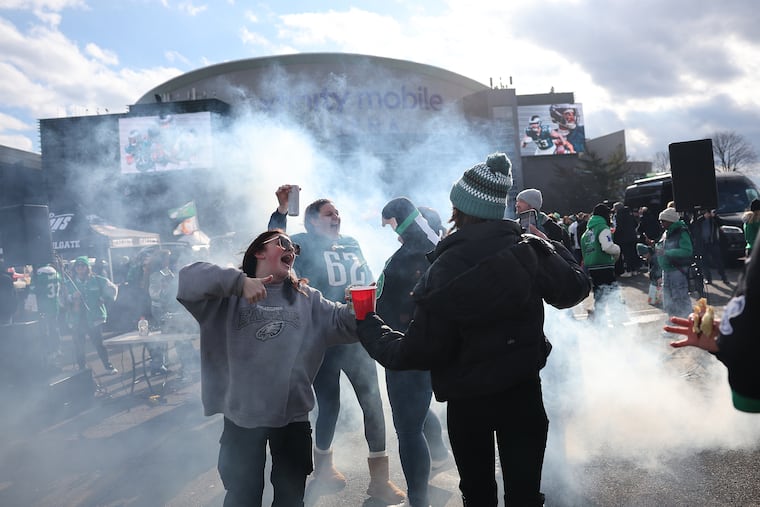
If you’re one of the folks who tortured themselves for three hours by watching the Eagles’ excruciating loss to the Los Angeles Rams, you witnessed many head-scratching things. But while coach Nick Sirianni’s decision to go for it on fourth-and-goal from the two-yard-line instead of taking three much-needed points on a field goal was baffling, it made more sense than something else on your TV screen: the several expensive ads that aired for the Texas GOP U.S. Senate candidate Ken Paxton, in a game that was played some 1,662 miles northeast of the Austin city limits.
Football fans hoping for three hours of escape from the existential dread of modern America not only got a lousy game, from the Philly perspective, but had to watch a vicious smear job falsely claiming that Paxton’s opponent, Democratic Texas state Sen. James Talarico, had supported using taxpayer dollars for gender-assignment surgeries. That was followed by a second commercial supporting the current Texas attorney general’s Senate bid, in which Paxton’s soon-to-be ex-wife, who happens to also be a Texas state senator, urged voters to ignore the stench of scandal and vote a straight Republican ticket.
The ads appeared not just during the Fox telecast of the Eagles-Rams matchup, but on NFL games from coast-to-coast — the first time I can remember in a lifetime of obsessing over politics that I witnessed ads for a statewide race on a national telecast. The weirdest part? The ads appeared at the same time that Texas’ two NFL teams, the Dallas Cowboys and the Houston Texans, were playing each other, so how many registered Texas voters were even watching the out-of-town games?
The appearance of the ads prompted several outlets, including The Inquirer, to write news articles noting that many fans were not just annoyed but angered by the spots, and speculating why they ran at all. Some noted the quirks of political advertising may have made it cheaper to buy a national spot than the high local ad rates in Dallas, Houston, or Austin. Or maybe the target audience was potential small donors, as campaigns like Paxton’s increasingly bombard Joe Sixpack with emails, seeking $5 donations from folks jacked up about national politics. But does that make sense? Spending a fortune on ads in Philly to raise money so you can buy ads in Texas? Why not just advertise in the Lone Star State with the first batch of cash?
No, I think the real answer is the alarming state of money and power in America right now. Those Paxton ads were funded by billionaires who want everyday voters to know they have money to burn on foolish political ad placement, because they will spend anything and everything to retain control of Capitol Hill.
Specifically, the pro-Paxton, anti-Talarico ads were paid for by a political-action committee called the Texas PAC, which is currently pumping a whopping $131 million into the neck-and-neck Senate race. The actual source of those dollars comes through a separate PAC supported by the GOP Senate leadership committee, creating a series of nesting dolls to obscure who the actual donors are. That opaqueness is a feature of American campaign finance, not a bug.
Reporters have found that the top 10 billionaire donors have so far donated a stunning $734 million toward the November election, with more to come, and that 16 of the top 20 donors are supporting Republicans. Among the filthy rich supporting the GOP Senate candidates, including Paxton, are Silicon Valley’s Marc Andreessen ($115.3 million), the richest Pennsylvanian Jeff Yass ($93.8 million), casino heiress Miriam Adelson ($67.6 million), and many more.
The oligarchy’s financing of Texas ads from Seattle to Jacksonville is a raw power play, pure and simple. They are projecting an air of omnipotence — total domination of the U.S. body politic. In a moment when all the things that voters actually care about — affording groceries or the rent, and staying out of dumb wars and our immigrant neighbors’ backyard — are going badly for the billionaires’ preferred Republican Party, the ads are a show of dominance. But will it work in November? In a democracy, it should be better to have the people on your side than the money.
What I wrote on this date in 2020
Every so often, it pops into my mind that Pennsylvania used to have a U.S. senator named Pat Toomey, and I think: Wow, that was weird. The pangs of regret that I felt for not writing more columns about everything that was wrong about the conservative Republican ex-Wall Streeter before his 2016 reelection exploded into a series of pieces those next few years, including multiple columns about the large protests outside his Philly office called Tuesdays with Toomey. When the senator shocked the political world six years ago by announcing he would not run for a third term, I hailed the demonstrators. “Protests, marches, calling your representative, writing letters to the editor, sending postcards and knocking on doors — all of it matters, in ways that are sometimes clear but often intangible.” I wrote. “What Tuesdays with Toomey has done is your living proof.” Read the rest from Oct. 6, 2020: “Think protest doesn’t work? Ask Pat Toomey.”
Recommended Inquirer reading
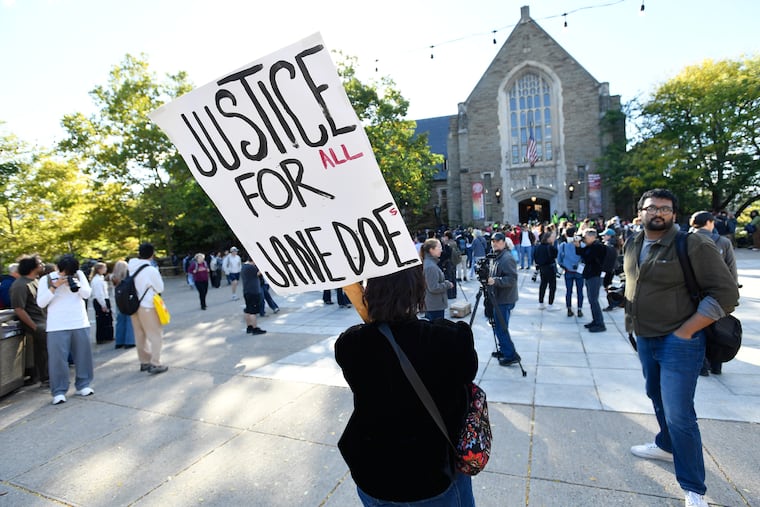
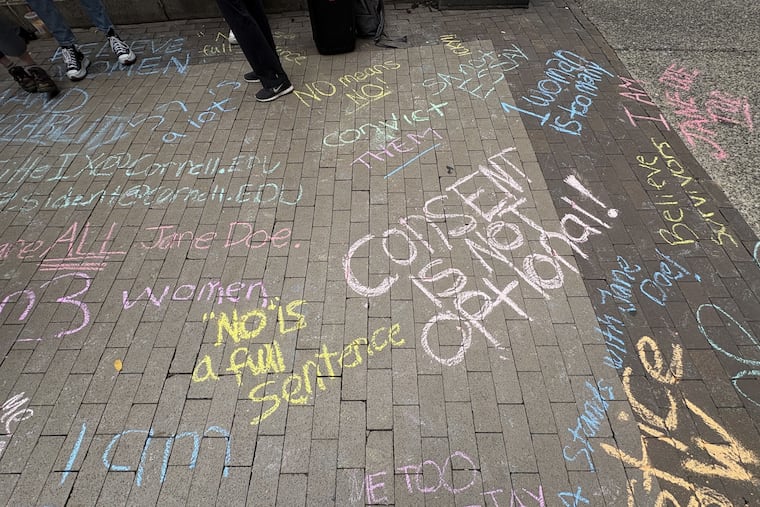
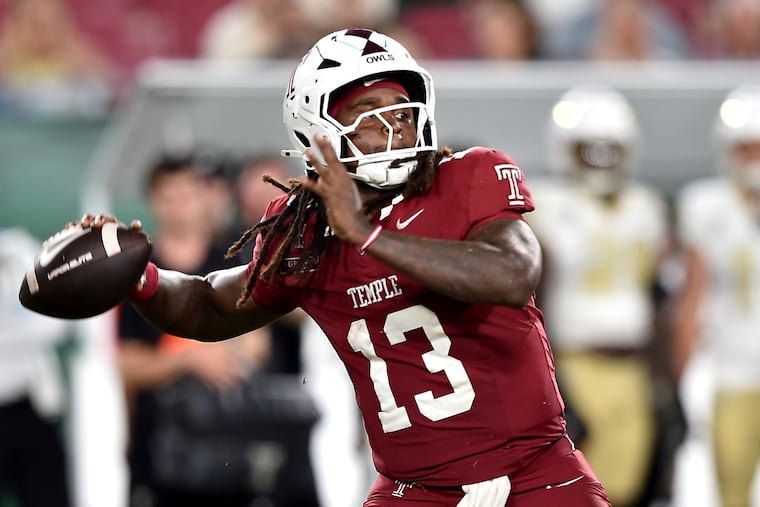
Only one column this week as I continue to toil on a major project, coming in a few days. In that column, I took a step back to look at the shocking Cornell gang-rape allegations from a wider lens. With campus sex crimes depressingly common, why did this case break through? I argued that the roots are found in rage over elite impunity, in a world where a man with multiple misconduct allegations can get elected president, or get a second chance as an NFL quarterback. People see the same instinct to protect the privileged in the minimalist punishments for Ivy League boys, and they are furious.
Those of you who read this newsletter from out-of-town have probably come to learn that here in Philly we hang a lot of our identity, as well as our mental health, on our sports teams. Now we’re discovering that — on top of the bottomless pit of losses — there’s another downside to our city’s sports mania: a propensity for gambling addition. I told you recently about the amazing scoop by my friend and Inquirer colleague David Gambacorta, who revealed that FanDuel solicited a paid Cameo video from Phillies superstar Bryce Harper that it used to buck up an addicted local gambler while he accumulated $1.5 million in debt. That piece triggered a congressional hearing and more revelations, but it also hinted at a much bigger problem. This weekend, Gambacorta and William Bender (yay, Daily News alums!) did a deep dive into Pennsylvania’s bet-addiction crisis, backed by some stunning stats. The Keystone State is now the largest online gambling market in the United States, and the whopping $3.46 billion in revenue here is up 27% year-over-year. The article looked at the shattered lives behind the numbers, and this saga is only beginning. This is in-depth reporting you can’t read anywhere else, and it only happens with your support. Please consider subscribing to The Inquirer.
By submitting your written, visual, and/or audio contributions, you agree to The Inquirer’s Terms of Use, including the grant of rights in Section 10.

Sign up for the Will Bunch Newsletter