N.J. ups incentives in courtship of Subaru
The Economic Opportunity Act approved by New Jersey lawmakers was designed to give tax breaks to a broad range of businesses, including companies outside urban areas and small businesses that create as few as 10 jobs.
The Economic Opportunity Act approved by New Jersey lawmakers was designed to give tax breaks to a broad range of businesses, including companies outside urban areas and small businesses that create as few as 10 jobs.
The 82-page bill, passed last month by the Senate, also contains a provision that lawmakers acknowledge targets a specific company: Subaru.
The car manufacturer, which has its U.S. headquarters in Cherry Hill, is expanding and has been on the hunt for a new location, possibly at Philadelphia's Navy Yard.
So in June, when the state Senate's Budget and Appropriations Committee amended the bill, it added a line defining "a priority area housing the United States headquarters and related facilities of an automobile manufacturer" as a "mega project" eligible for extra tax credits on its corporate tax bill.
Besides Subaru, BMW, Jaguar Land Rover, Mercedes-Benz, and Volvo also have their U.S. headquarters in New Jersey.
But the car-manufacturer provisions were added because South Jersey lawmakers raised concerns about Subaru, said Assemblyman Albert Coutinho (D., Essex), one of the bill's sponsors.
"Is the Subaru situation in South Jersey part of the equation? Yes, it was," Coutinho said in a phone interview. Assembly "Majority Leader [Louis] Greenwald had a specific concern to that, and Sen. [Donald] Norcross."
He said Greenwald and Norcross, both Camden County Democrats, "mentioned there could be opportunities if we included" the language.
A spokesman for Greenwald said in an e-mail last week that the majority leader was on vacation and unavailable, but that he was concerned about Subaru.
Norcross said in a phone interview it was extremely important to keep Subaru in New Jersey, though the bill's "verbiages were suggested by many folks."
"The playing field, whether we like it or not in New Jersey, is people are competing for these major corporations, throwing tons of incentives at them," Norcross said.
Subaru is "very much part of the fabric" of South Jersey - the company moved to Cherry Hill in 1986 - and "we hope these incentives will help them stay right where they are," he said.
Pennsylvania officials are in touch with Subaru about the company's possibly moving there, Steve Kratz, a spokesman for the Pennsylvania Department of Community and Economic Development, said Friday.
Asked how aggressively the state was pursuing Subaru, he said only that Gov. Corbett was working "to attract as many job-creating projects as possible."
Critics say tax incentives often are ineffective and that in Subaru's case they may offer little added benefit to New Jersey or Pennsylvania, if that's where the company moves.
New Jersey taxes a corporation like Subaru on its sales in the state, not the number of its employees, said Michael Mazerov, a state-taxation specialist at the Center on Budget and Policy Priorities in Washington. Also, unlike a manufacturing plant, which could prompt suppliers to locate nearby, a corporate headquarters is unlikely to generate a ripple effect, he said.
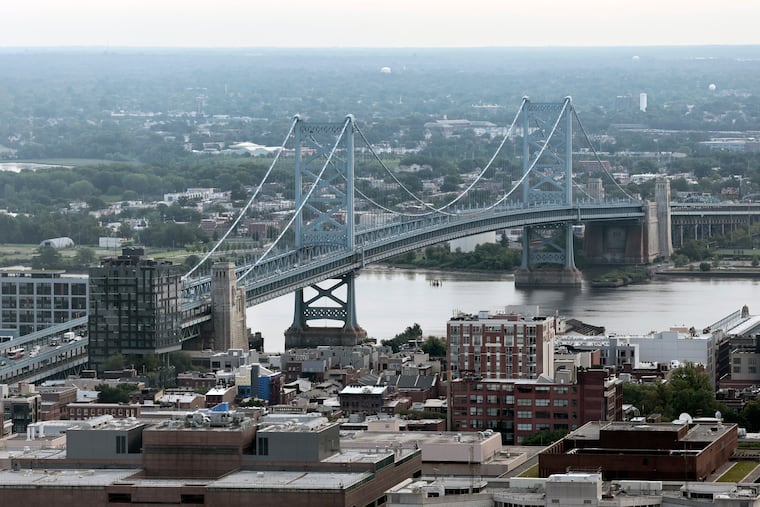
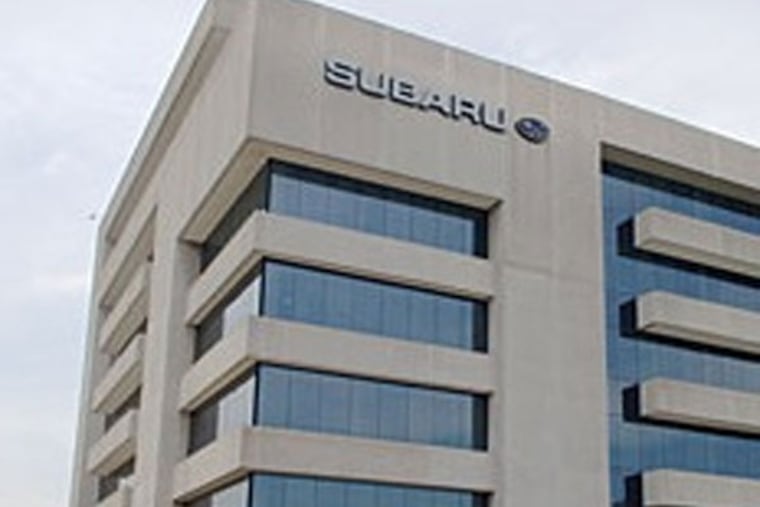
Subaru, which has 500 employees between its Route 70 location and nearby Pennsauken operations center, is looking to consolidate operations in larger quarters than its 115,000-square-foot building in Cherry Hill.
Company officials have said they were exploring sites that include the Philadelphia Navy Yard and hope to make a decision by the end of the year. A spokeswoman said Subaru was "not in a position to discuss further."
Cherry Hill, which is fighting to keep the company, is considering designating two sites as in need of redevelopment, allowing for incentives to be offered to Subaru or another company to locate there.
Erin Gill, director of policy and planning for Cherry Hill, said township officials had been "vocal with our legislators about trying to keep Subaru in New Jersey and specifically in Cherry Hill."
Gov. Christie has not yet signed the legislation.
Under the bill, car manufacturers with headquarters in a "priority area" - a designation that includes all of Cherry Hill, Gill said - qualify as "mega projects" and can receive greater incentives if they make a capital investment of at least $20 million and create or retain 250 full-time jobs, or if they create or retain 1,000 full-time jobs.
It's unclear which category might apply to Subaru. A spokesman has said the company would like to house 900 employees at a new location.
Mega projects - the category also applies to projects in port districts and in urban areas near public transit systems - qualify under the bill for a credit of $5,000 for each new or retained full-time job. The credit can increase with certain criteria - if a company makes a bigger investment - up to a maximum of $15,000 per job per year.
"To me, it's all about creating jobs and maintaining jobs," Coutinho said.
With the car-company provision, he said, "I didn't see the reason why we shouldn't leave the door open, as long as there's a net benefit to the state."
Critics say incentive programs requiring businesses to prove jobs are at risk have spurred a cottage industry of consultants who explore alternative sites for a company, regardless of whether the company plans to leave, said Gordon MacInnes, president of New Jersey Policy Perspective, a liberal-leaning think tank.
Though "we cannot pretend there's no consequence of having no incentives available," MacInnes said, "we can't be sure about the effectiveness of extending tax credits to companies that already have jobs in New Jersey."
Mazerov said that if Subaru is deciding between South Jersey and Philadelphia - the company has not disclosed the extent of its search - "this seems very unwise for these two states to get in a bidding war over this facility where it's not going to make a significant difference for their economic development."
Proponents maintain that tax credits are an essential tool to attract and retain businesses.
"Tax credits and tax incentives do work," said Gil Medina, a former New Jersey commerce secretary who is an executive vice president of CBRE Group, a commercial real estate brokerage.
The availability of a skilled workforce and the overall business climate are factors in a company's location decision, Medina said, but "when you're up against a jurisdiction that matches up well against you," incentives make the difference, he said.
New Jersey has to compete with states that offer a similar quality of life, said Philip Kirschner, president of the New Jersey Business and Industry Association and a former board member of the state Economic Development Authority.
"Yes, it's nice to live here. It's also nice to live in Bucks County, and in Westchester, N.Y., and in Stamford, Conn.," Kirschner said. "It's an economic decision."
Pennsylvania and New York offer "very good tax incentives," he said. "We compete with our neighbors for these jobs."