Kidd Jordan marches to his own improvised tune
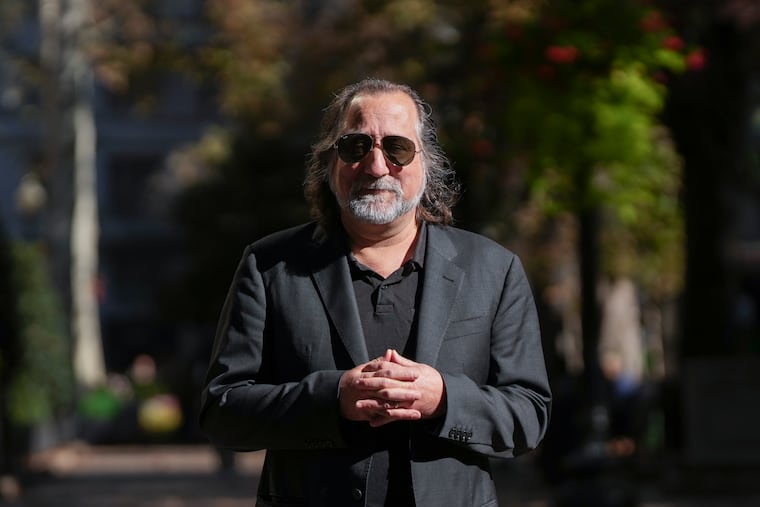
Kidd Jordan didn't expect me to take his word for it that he was practicing just before the phone rang in his Baton Rouge, La., apartment for our interview. Instead, he lifted his horn to the mouthpiece and blew.
Kidd Jordan
didn't expect me to take his word for it that he was practicing just before the phone rang in his Baton Rouge, La., apartment for our interview. Instead, he lifted his horn to the mouthpiece and blew.
"I've been practicing for 50 years," Jordan said.
The fruits of that labor were on display just a few weeks ago as the 70-year-old saxophonist shared the bandstand at a New York restaurant with an amazing group: powerhouse fellow tenorman David Murray, trumpeter Roy Campbell, pianist Dave Burrell, bassist Harrison Bankhead, and drummer Hamid Drake.
With every solo, Jordan seized control, at times visibly compelling his bandmates to push him further and harder.
That interplay among musicians in the moment is what drives Jordan.
His longtime trio with pianist Joel Futterman and drummer Alvin Fielder, which comes to Philly this weekend, plays completely improvised music - though Jordan is quick to distinguish their "creative music" from completely free jazz.
"It's not as free as people think it is," Jordan explained, "because a lot of people play free but they don't relate to one another. You've got to listen all the time. In fact, you have to listen more in creative music than in playing some other kinds of music.
"The majority of the time, cats who play the other music, they done played those songs and played a lot of those progressions over and over and over again. So if you miss something on one chorus, they've got something lined up they can play when it comes around again.
"But if you miss something in this, you can't come back and play it again. If you're truly yourself, you've got to wait until the sound presents itself."
In a sense, that concept dates back far beyond free jazz to the traditional jazz of Jordan's native New Orleans.
"That's what the old men did when they played years and years ago," Jordan said. "But that music's been sterilized and so much other music done came into being, till a lot of people ask me how I can go out on the stand with complete strangers. You have to hear what you're doing in order to do that. But a lot of times I hear people playing free and they just play anything. I can get my little grandson to play free. But that's the misconception about this music."
Jordan's concept involves listening closely to his fellow musicians and responding to their sounds.
"If I was to get on the stand and just play anything, I don't know what would come out," he said, "because I got enough technique to do damn near anything I want to do on the saxophone. I got to relate to something."
Born in Crowley, La., in 1935, Edward "Kidd" Jordan earned a music degree from Southern University in Baton Rouge before relocating to New Orleans. He taught at the university's New Orleans branch from 1974 until his retirement in 2006.
In the meantime, he worked in a variety of settings, playing in musical theater bands and backing R&B stars from Ray Charles to Aretha Franklin while pursuing his own interests in improvised music.
As did many musicians, Jordan suffered during Hurricane Katrina. "My house was totally a disaster," he said. "I've gutted my house out but I haven't started working on it yet."
He continued, "People have been having problems with contractors because they've been doing shoddy work and running off with people's money. We know a contractor from years ago that's gonna do my house, but he's just been so busy. Eventually I'll get back in my house."
Jordan's son, trumpeter Marlon Jordan, faced an even worse situation, being stranded on the roof of his house for five days until he was rescued by helicopter.
Besides his Baton Rouge apartment, Jordan maintains a Federal Emergency Management Agency trailer in New Orleans, where he returns at least twice a week to work on his house and to continue his after-school programs with children, which he's been conducting for so long that he recalls future jazz stars Wynton Marsalis and Donald Harrison in their early days.
"But there's very few of them that traveled in my path," said Jordan with a laugh, pointing to the far more traditional music both artists have pursued in their own careers.
His individualism has left Jordan unfairly overlooked throughout his career and with far fewer recordings to his name than most of his contemporaries.
"I didn't ever want to be a star," Jordan said nonchalantly. "People been criticizing me damn near all my life. But I can live with all of that, because all I want to do is play some music. As long as I can practice five hours a day, that's cool." *
Send e-mail to bradys@phillynews.com.
Kidd Jordan Trio, Philadelphia Art Alliance, 251 S. 18th St., 8 p.m. Sunday, $12, www.arsnovaworkshop.com.