Philly hit hard - but other cities hurt, too
In February, Mayor Nutter unveiled a rosy budget plan that included new spending and continued tax cuts for workers and businesses.
In February, Mayor Nutter unveiled a rosy budget plan that included new spending and continued tax cuts for workers and businesses.
What a difference six months makes.
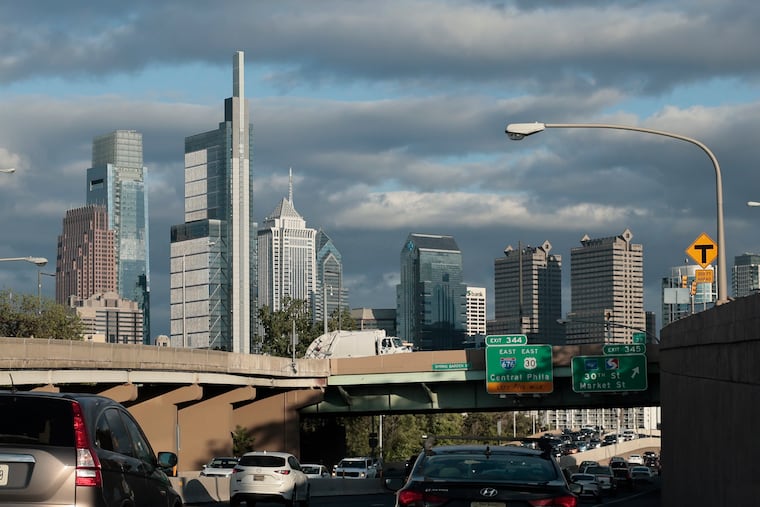
Today, in the wake of a national economic meltdown, the city is grappling with lower-than-expected tax revenues, a poorly performing pension fund and reduced access to credit. A $841 million shortfall is predicted over the next five years.
Next week, Nutter is expected to announce a savings plan that he himself said will contain "significant changes in how we function and operate."
But Philadelphia is not the only city making tough choices. Most other major cities are in the same financial boat and are stalling on capital projects, making service cuts - and, in some cases, laying off workers.
* Last week, Chicago Mayor Richard Daley announced plans to cut over 900 jobs and add six unpaid days to the calendar for city workers due to a $469 million shortfall for the current fiscal year.
* Los Angeles faces a $406 million shortfall this year. Mayor Antonio Villarigosa has said deep service cuts are likely.
* New York Mayor Michael Bloomberg, who is struggling with a $5.2 billion gap over the next two years, has said he will probably have to raise taxes.
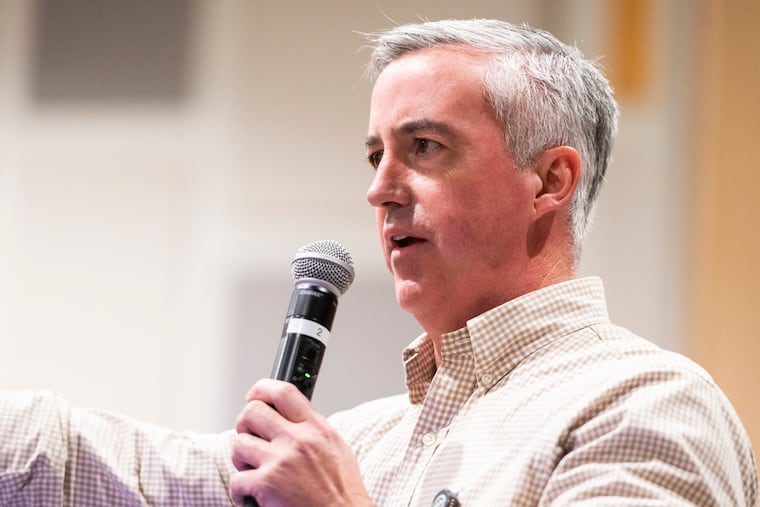
"This is the perfect storm we've not seen before," said Michael Pagano, dean of the College of Urban Planning and Public Administration at the University of Illinois at Chicago.
Since 1991, Pagano has authored a report on city fiscal conditions for the National League of Cities. With tax revenues down, borrowing growing more difficult and expenses increasing, he said that this is the worst he has ever seen.
According to Pagano's report, two of three city finance managers say that they are less prepared to meet their fiscal needs in 2008 than they were in 2007.
Daley defended his deep cuts this week, saying that he had no other options.
"This is a very difficult economy and taxpayers are suffering," Daley said, according to the Chicago Sun-Times. "Ask any taxpayer. You want to increase the real estate tax? You want to increase the sales tax? Do you want to increase the gas tax? How do you pay for things you can't pay for?
"You have to balance your budget. These are difficult times."
Financial experts said that the troubles began with the decline of the housing market and the mortage crisis. With fewer houses selling and prices dropping, cities lose out on property taxes. Then the growing unemployment means less wage and business taxes. And public anxiety is slowing retail shopping, which lowers revenue from sales taxes.
"I don't know whether retail sales will rebound next year," Pagano said. "Unemployment is continuing to rise and property values will continue to decline."
And the descent of the stock market has hurt cities in two ways. Investments, like Philadelphia's pension fund, are not making money. Also, cities are having a hard time doing standard short-term borrowing to pay their bills.
"They really do have to have short-term cash to pay the bills," said Robert Inman, a finance professor at the University of Pennsylvania's Wharton School.
Philadelphia is in a better position than some cities, experts said, because the city has a diverse tax base and the economy relies heavily on two less vulnerable sectors - universities and health care.
"New York has 20 percent of its tax base tied up in the financial markets," Inman said. "Philly is tied up in health care and education, which are a bit more recession-proof. There is the notion that if you can't find a job, go to school."
Still, Philadelphia isn't immune. The massive shortfall makes that very clear. And tax receipts and pension earnings may continue to decline.
So, as the city reviews the books, how should officials approach budget cuts? Nutter has said that everything is on the table, including service cuts, layoffs or stalling planned tax cuts.
Inman said that the city should try to keep some tax cuts to encourage business development.
"I preach the mantra of 'please keep on track with modest tax cuts,' " he said.
Nutter said that his staff is poring over data from every department. He said that the worst thing to do would be "cutting across the board, everybody take x-percent cuts. Some of these departments are as different as night and day."
Nutter also said that he wants to continue to focus on key areas, like economic development, public safety and education.
"You have to look at the proposed cuts and changes in a very broad context," he said. "We're going to have to make some very tough decisions. These are circumstances thrust upon us that for the most part we can't control."
What's tough for Nutter and numbers crunchers in other cities is that nobody knows when things will turn around, making it hard to do any accurate tax projections.
"Through the spring of 2010 it's going to be tight for everybody, everywhere," said Michael Lahr, a professor at the Center for the Urban Policy Research, at Rutgers University. "It's going to take a year for things to rebound. It's not clear to me yet if it's going to be longer than that." *