Fleeing to Philly: Thousands of Liberians seek asylum here
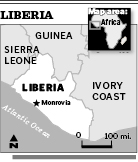
During the 1800s, Americans of African descent moved in the thousands to Liberia, a West African country founded by freed slaves.
During the 1800s, Americans of African descent moved in the thousands to Liberia, a West African country founded by freed slaves.
But two civil wars spanning from 1989 to 2003 turned the tide and Liberians fled their homeland in record numbers for asylum in the United States, with thousands settling in the Philadelphia area.
Between 1990 and 2009, 32,543 Liberian refugees were admitted nationwide, said David M. Santos, northeast regional media manager with U.S. Citizenship and Immigration Services.
By 2006, more Liberian refugees had resettled in the greater Philadelphia area than in any other metropolitan region in the country, according to a 2008 report from the Brookings Institute, a public-policy nonprofit organization based in Washington, D.C.
Current estimates of Liberians living in the Delaware Valley range between 10,000 and more than 15,000, with many in Southwest Philadelphia and Upper Darby, according to the Historical Society of Pennsylvania.
 Often, Liberian refugees followed relatives who had already settled in the area, Santos said.
"If a refugee has a close relative in the U.S., the refugee will likely be resettled where the family member lives," he said. "If not, a resettlement agency will decide the best place for resettlement based on the availability of jobs and services."
Refugees are given employment authorization and after a year are required to apply for lawful permanent-resident status, Santos said. Refugees are eligible for naturalization five years after they arrive in the United States.
In 2006, Liberia was taken off a U.S. Refugee Admission Program's list, which allows people to apply for refugee status if they have a parent, spouse or child in the United States. Liberians can still apply for refugee status if they receive a referral from the United Nations High Council on Refugees, a U.S. embassy or a "specially trained nongovernmental organization," Santos said.
Since 1980, more than 2 million refugees from around the world have resettled in the United States.
The country of origin of refugees fluctuates in line with geopolitical events, Santos said. For example, in the '80s and '90s, many came from the former Soviet Union and Vietnam, but in 2000, the number of refugees from African countries surged.
Today, many of America's refugees come from Burma, Bhutan and Iraq, Santos said. *