Flu status in Phila. region: Not out of the woods yet
As New Jersey saw its first school closure because of the H1N1 flu yesterday, Delaware officials reported 10 new cases among college students.
As New Jersey saw its first school closure because of the H1N1 flu yesterday, Delaware officials reported 10 new cases among college students.
New Jersey had seven confirmed cases of H1N1 flu by yesterday afternoon, including four in Burlington County, unchanged since Friday. All cases around the region have been mild, and none of the people affected required hospitalization, officials said.
The Burlington County cases involved three members of a family that had recently traveled to Mexico and a woman who had had contact with the family.
State officials had been informed of one school closure, Hainesport Township School, because of the flu. The decision to close the school - it will be closed again today - was made locally.
Elsewhere in the region, Delaware yesterday reported 10 new confirmed cases of H1N1, bringing the state's total to 20, all of them students at the University of Delaware.
Pennsylvania, which on Sunday confirmed its first case, in Upper Merion Township, was waiting yesterday for test results on "probables" in several counties, including four in Philadelphia, two in Montgomery, and one in Bucks.
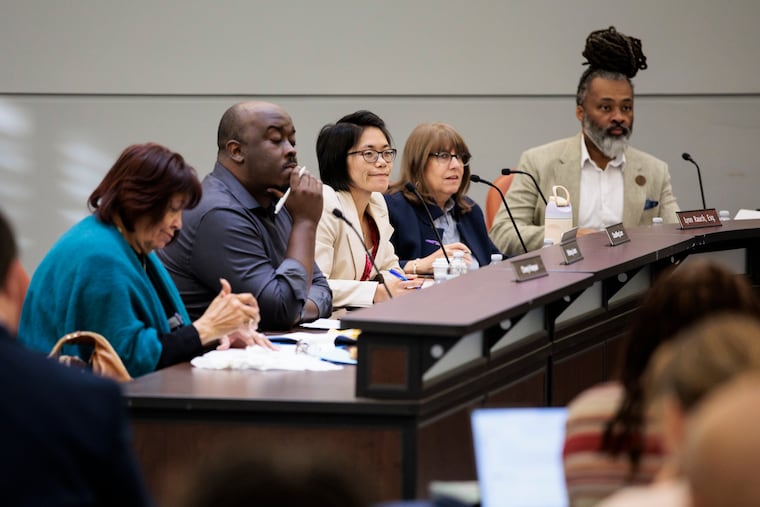
In New Jersey, the state Assembly's Health and Senior Services Committee and Homeland Security and State Preparedness Committee held a joint hearing and heard testimony yesterday from state health, education, and homeland security officials.
"The fact that we have not seen an increase in confirmed or probable cases over the last few days is good news, but we are not out of the woods yet," Health and Senior Services Commissioner Heather Howard said in a statement after the hearing. "New Jersey residents need to stay informed and maintain good hygiene habits. The department will continue to monitor the disease and how it is spreading as we continue to coordinate with federal, state, and local health-care partners."
Assemblyman Herb Conaway, chairman of the health committee and a physician, said after the hearing that "New Jerseyans should feel confident that public places across the state including hospitals, schools, and airports are implementing precautionary measures to better protect the safety of all residents."
Legislators used the hearing as an opportunity to ask many of the same questions their constituents have asked about the swine flu.
Assemblyman John Burzichelli (D., Gloucester), for example, asked why such a big deal was being made of this flu. An estimated 36,000 Americans die a year from seasonal flu-related causes.
"This is different because it's a novel strain that we don't know enough about, and so we do know that the potential for it to mutate is there and the potential consequences could be catastrophic," Howard responded. "What's new is that we don't know enough about it."
Susan Walsh, the state's deputy commissioner of public health services, added that the swine flu still had the potential to mutate into something more dangerous than it has so far appeared.
"It's not overkill to say we still need to be paying a great deal of attention to this, to pay attention to what's happening not only nationally but internationally," Walsh said.
Howard also said New Jersey had now received equipment from the U.S. Centers for Disease Control and Prevention to allow the state to confirm cases of swine flu in-state. Previously, the state was able to determine only a "probable" case - it appeared not to be a seasonal flu - meaning the influenza sample had to be sent to the CDC for confirmation. That sometimes took several days because of a backlog.
Thomas Slater, a spokesman for the state DHSS, said the department hoped to have the new tests up and running by the end of the week, after the department trains staff members on how to use the equipment and performs quality-control tests.
The equipment should allow the state to confirm new cases of H1N1 within two to three hours, Slater said.
Delaware's state lab in Smyrna also has the kits and could start using them as early as today.
Pennsylvania expects its state lab in Lionville, Chester County, to receive and start using the kits by the end of the week.